Covering genealogy, family history, historical events and places, and anything else related!

Showing posts with label Graham. Show all posts

Saturday, November 12, 2016

Society Saturday: Children of America Loyalty League

The Children of America Loyalty League was organized in St. Louis, Missouri on 29 June 1917. Its purpose was to teach children to love their country and to provide aid to soldiers and sailors, the Red Cross, and other children. It was founded by Mrs. Nat Brown.

Dues were 20 cents per year for children. For adults, honorary membership cost $1 per year, and active membership cost $5 per year. The organization's national song was "The Rainbow of the Free" by John L. Herman (music) and Will DeFord (lyrics).

 In 1917, the organization donated socks to soldiers in France, and donated glasses of jelly to war hospitals in France.

The Children of America Loyalty League's events included performances, parties, and fashion shows. On 14 September 1917, the league held a celebration at the St. Louis Coliseum in honor of the 103rd anniversary of the writing of "The Star-Spangled Banner."

 The league held a masque and pageant, "The Song of Truth and the Court of Youth," on October 3, 4, and 5, 1918 at the Odeon Theatre in St. Louis.
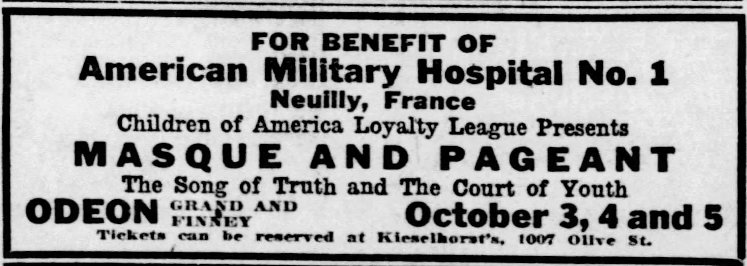
St. Louis Post-Dispatch, 29 September 1918, page 18B

The league gave lawn parties which featured entertainment. On 9 July 1920, a lawn party was held at the home of my great-grandmother Kathleen (Graham) Boe. The entertainers included my grandfather John Boe and his siblings Florence, James, Theodora Catherine, and Geraldine.

St. Louis Star, 1 July 1920, page 19

On 30 April 1921, the league held a children's fashion exhibition.

St. Louis Star, 29 April 1921, page 17

On 29 July 1921, another lawn party was held at Kathleen (Graham) Boe's home. The entertainment included a fortune-teller, a snake charmer, a museum, and a fish pond.

St. Louis Star, 21 July 1921, page 17

 On 10 December 1921, the league held a Christmas party.

St. Louis Star, 9 December 1921, page 19

In 1921, when the Old Glory chapter of the Children of America Loyalty League was reorganized, Kathleen (Graham) Boe became secretary-treasurer.

St. Louis Star, 20 September 1921, page 15

References
"Children of America Loyalty League." Musical Monitor, vol. 8 (1918), p. 223. Available from Google Books.
"Children's Aid to Red Cross to Be Nation-Wide in Scope." St. Louis Post-Dispatch, 8 July 1917, p. 17.
"Children's Lawn Party." St. Louis Star,  21 July 1921, p. 17.
"Children's League to Send Socks to Soldiers Abroad." St. Louis Star, 6 September 1917, p. 2.
"Children's Loyalty League Lawn Parties." St. Louis Star, 1 July 1920, p. 19.
Children of America Loyalty League Christmas party advertisement. St. Louis Star, 9 December 1921, p. 19.
Herman, John, and DeFord, Will. The Rainbow of the Free: National Song of the Children of America Loyalty League. St. Louis: Kunkel Brothers, 1921. Available from Internet Archive.
"League Chapter Reorganized." St. Louis Star, 20 September 1921, p. 5.
 Masque and pageant adverstisement. St. Louis Post-Dispatch, 29 September 1918, p. 18B.
"Summer 1921 Children's Fashion Exhibition." St. Louis Star, 29 April 1921, p. 17.
"Writing of National Anthem Celebrated." St. Louis Post-Dispatch, 15 September 1917, p. 3.

Saturday, July 2, 2016

Assassination of James A. Garfield

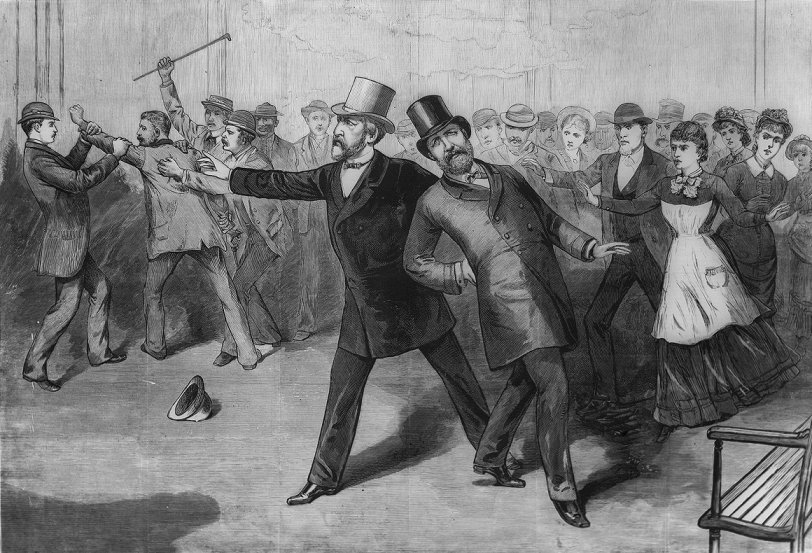
Engraving of James A. Garfield's assassination. A. Berghaus and C. Upham. Frank Leslie's Illustrated Newspaper, 16 July 1881. Public domain. Available from Wikimedia Commons.

On 2 July 1881, President James A. Garfield was shot by Charles J. Guiteau at the Baltimore and Potomac Railroad Station in Washington, D.C. Guiteau had wanted Garfield to appoint him to the position of consul in Paris, but he did not receive the position. He shot Garfield in the back and in the arm. Garfield died on 19 September 1881.

My great-grandmother's brother Garfield Graham may have been named after President Garfield. He was born on  26 May 1881 or 1882 in Quebec, Canada (probably in Montreal). His birth year is recorded as 1881 in the family Bible, but the record may have been made long after his birth, or copied from an earlier family Bible. His World War I and World War II draft cards, his Social Security application, and his death certificate all give his birth year as 1882.

Garfield's parents James Graham and Catherine Elizabeth Winters were American citizens who were living in Montreal, Quebec, Canada. Perhaps they still felt patriotic and that influenced their choice of name. I have wondered if there might be something more, though. Perhaps there was a reason that they particularly liked President Garfield. Maybe they could relate to his background. When James Garfield first left home, he got a job managing the mules that pulled a canal boat. Catherine Elizabeth Winters' father John Bennet Winters probably worked on the first enlargement of the Erie Canal. Although I have not conclusively identified James Graham's family of origin, the family that I suspect was his spent some time living in Sandusky, Erie County, Ohio. They were living there at the time of the 1860 United States census. James Garfield was from Ohio. He had been a state senator and served until 1861. Perhaps James Graham's family had liked him. Maybe Garfield Graham's name is yet another clue that suggests I have identified the right family of origin for James Graham.

References
James A. Garfield

Monday, May 2, 2016

Military Monday: The Boxer Rebellion

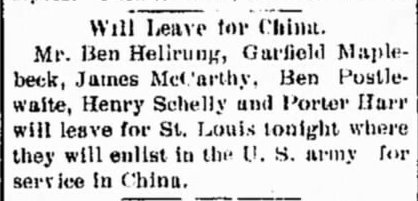
On 2 August 1900, my great-grandmother's brother Garfield Graham (also known as Garfield Mapplebeck) and five other men left Alton, Madison County, Illinois and headed to St. Louis, Missouri. They intended to enlist in the United States Army and serve in China.

Alton Evening Telegraph, 2 August 1900, page 3

The Boxer Rebellion was taking place in China at this time. A Chinese secret society called I-ho-ch'uan (Society of Righteous and Harmonious Fists) was opposed to the influence of foreigners and the Christian religion. They became known in English as the Boxers because they practiced martial arts. The Boxers attacked and killed missionaries and other foreigners, as well as Chinese Christians.

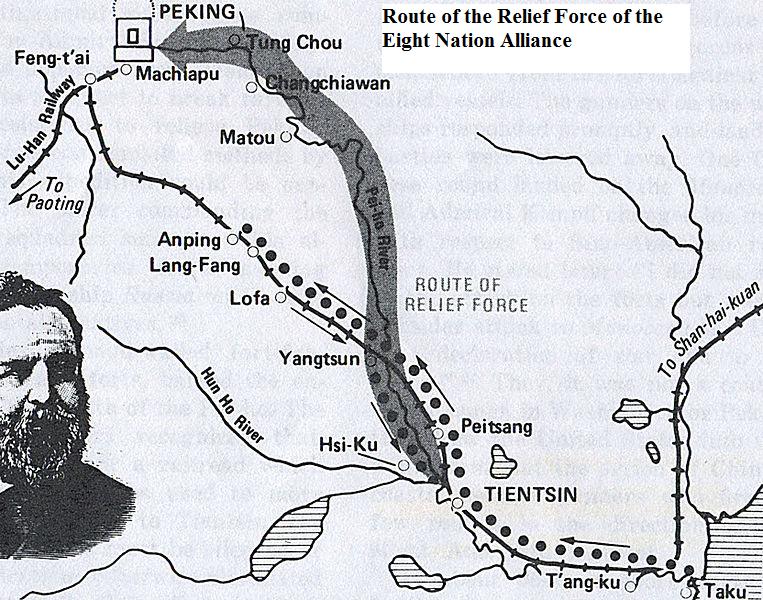
The Eight-Nation Alliance was formed in response to the Boxer Rebellion. It consisted of the British Empire, the United States, Japan, Russia, Germany, France, Italy, and Austria-Hungary. The U.S. Army, Navy, and Marines participated in the China Relief Expedition and attempted to rescue United States citizens and other foreign nationals.

In June 1900, the telegraph line between Beijing and Tientsin was cut, and the railway line between the two cities was destroyed. Violence in Beijing increased. An international expedition led by Edward Seymour was sent to Beijing on 10 June 1900, but was forced to retreat to Tientsin after being defeated by the Chinese Army.

In early August 1900, about 19,000 soldiers from the Eight-Nation Alliance began moving from Tientsin to Beijing. They arrived in the Outer City on 14 August 1900. On 15 August 1900, they entered the Inner City and occupied Beijing.

Route of the Relief Force of the Eight Nation Alliance, China, 1900. Retouched by Smallchief. Original image by U.S. Department of the Army (Military Review Magazine, 1983). Public domain. Available from Wikimedia Commons.

The United States did not participate in subsequent military operations. Most U.S. troops had been sent to Manila by the following winter.

Given the timing of events, Garfield probably did not serve in China as he had intended to do. I am not sure if he even ended up enlisting in the army. According to his 1930 U.S. census enumeration, he was not a veteran. However, since I do not know who provided the information to the census taker, the information could be incorrect. He was still in Alton in 1901, working at the glass company, so it seems likely that he did not end up enlisting. But if the American role in the Boxer Rebellion had continued for a longer period, perhaps he would have gone to China.

References
Boxer Rebellion
The Boxer Rebellion in China 1898-1900 
China (Boxer Rebellion), 1900-01
China Relief Expedition
Eight-Nation Alliance
Leonhard, Robert. The China Relief Expedition: Joint Coalition Warfare in China, Summer 1900.
Seymour Expedition

Saturday, March 26, 2016

Surname Saturday: Graham


According to the Internet Surname Database, the surname Graham comes from the town of Grantham in Lincolnshire, England. It was recorded in the Domesday Book of 1086. When Sir William de Graham traveled to Scotland with King David I, he founded Clan Graham.

My known Graham ancestors are:

Great-grandmother: Kathleen Graham
born 31 October 1879, probably in Quebec, Canada, but possibly in Chicago, Illinois
married John Boe
died 17 November 1967, Brentwood, St. Louis County, Missouri

2nd-great-grandfather: James Graham
born about 1854 in the United States
married Catherine Elizabeth Winters

Tuesday, December 1, 2015

Travel Tuesday: Elizabeth (Winters) Mapplebeck and Granddaughter Vivian Visit Toledo, Ohio

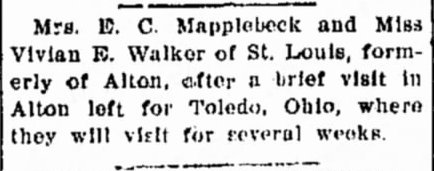
In 1907, my 2nd-great-grandmother Catherine Elizabeth (Winters) Mapplebeck and her granddaughter Vivian briefly visited Alton, Madison County Illinois. They had moved from Alton to St. Louis, Missouri in 1906. They probably visited Elizabeth's friends. They then went to Toledo, Ohio for a few weeks.

Alton Evening Telegraph, 3 June 1907, page 5

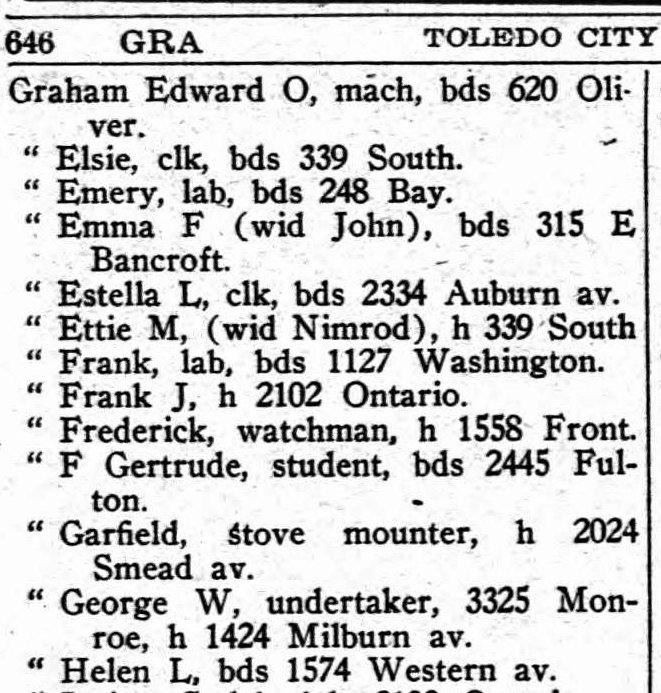
Elizabeth's son Garfield Graham was living in Toledo, Ohio in 1907. They must have been going to visit him.

Polk's Toledo Directory for the Year Commencing July 1907, page 646. Ancestry.com. U.S. City Directories, 1822-1995 [database on-line]. Provo, UT, USA: Ancestry.com Operations, Inc., 2011.

Tuesday, August 4, 2015

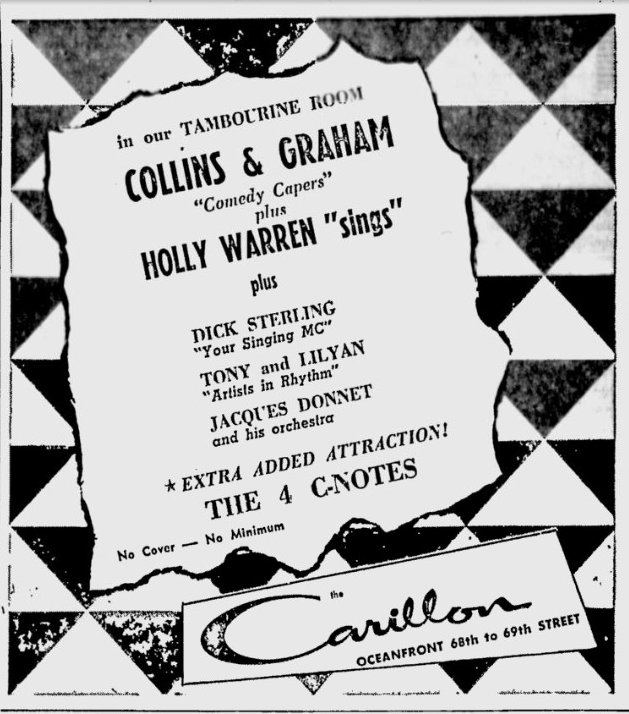
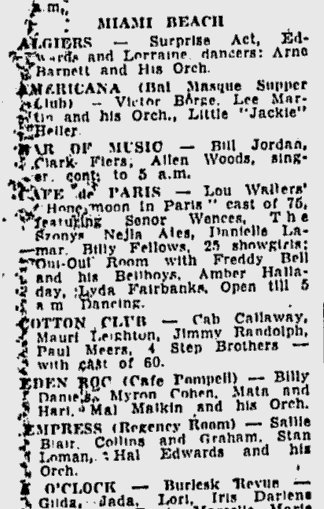
Talented Tuesday: Kenneth Graham, Entertainer

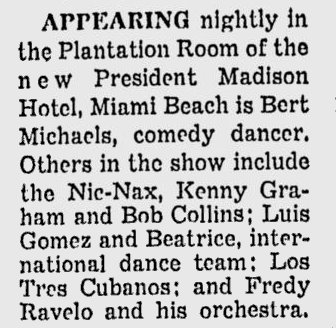
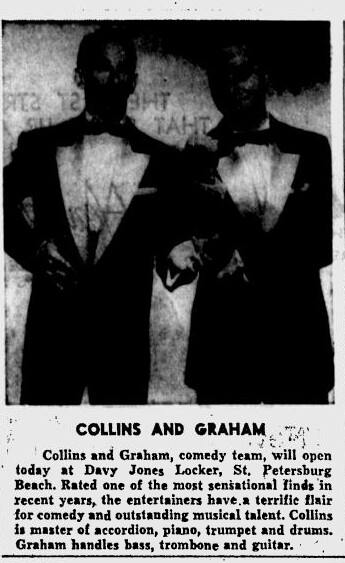
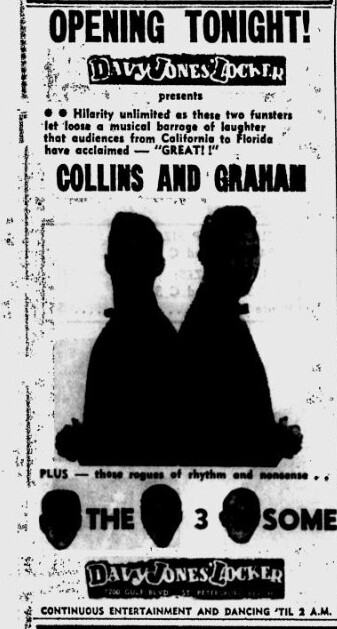
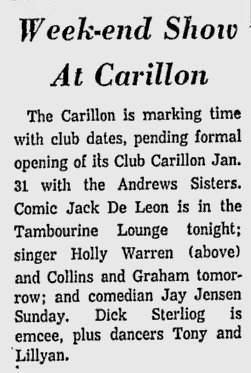
My first cousin twice removed Kenneth Graham was an entertainer who performed in nightclubs in Florida, mostly in the Miami Beach area. He performed with Bob Collins as "Collins and Graham." Their shows included music and comedy. Kenny played guitar, bass, and trombone.

Miami News, 3 January 1957, page 4B

St. Petersburg Times, 27 March 1957, page 12B

 St. Petersburg Times, 27 March 1957, page 12B

Miami News, 10 January 1958, page 5B

Miami News, 11 January 1958, page 8A

 Miami News, 28 December 1957, page 9A

Friday, July 31, 2015

First U.S. Patent Issued - 225th Anniversary

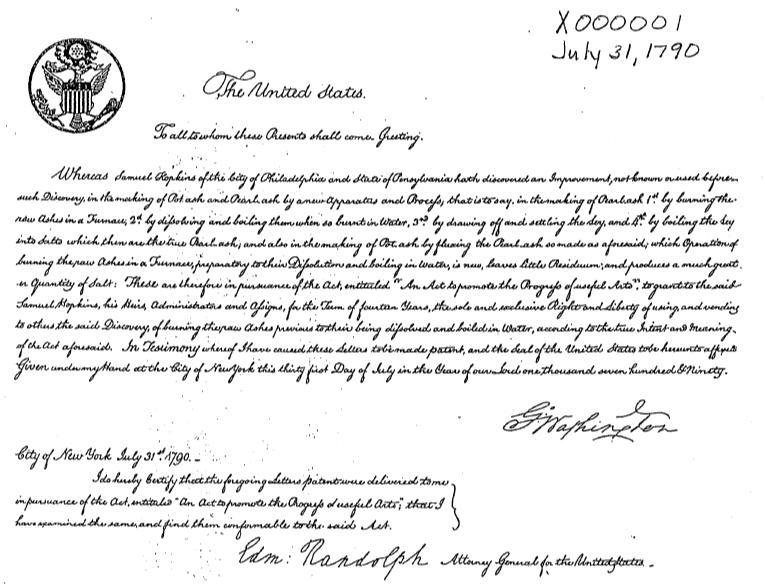
On 10 April 1790, the Patent Act of 1790 was enacted. On 31 July 1790 (225 years ago today), the first patent was issued to Samuel Hopkins for "an Improvement, not known or used before such Discovery, in the making of Pot ash and Pearl ash by a new Apparatus and Process." Potash was used in making fertilizer.

Patent 000001, issued to Samuel Hopkins on 31 July 1790. Public domain. Available from Wikimedia Commons.
 
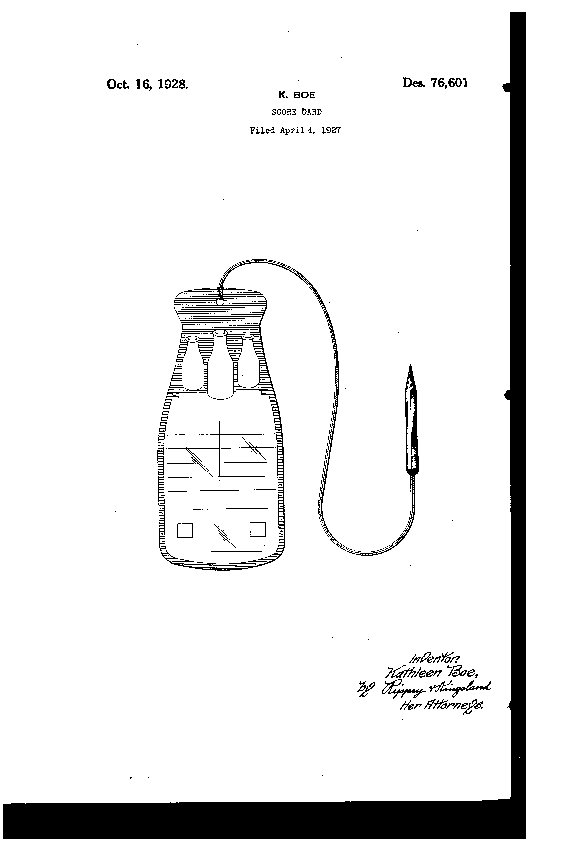
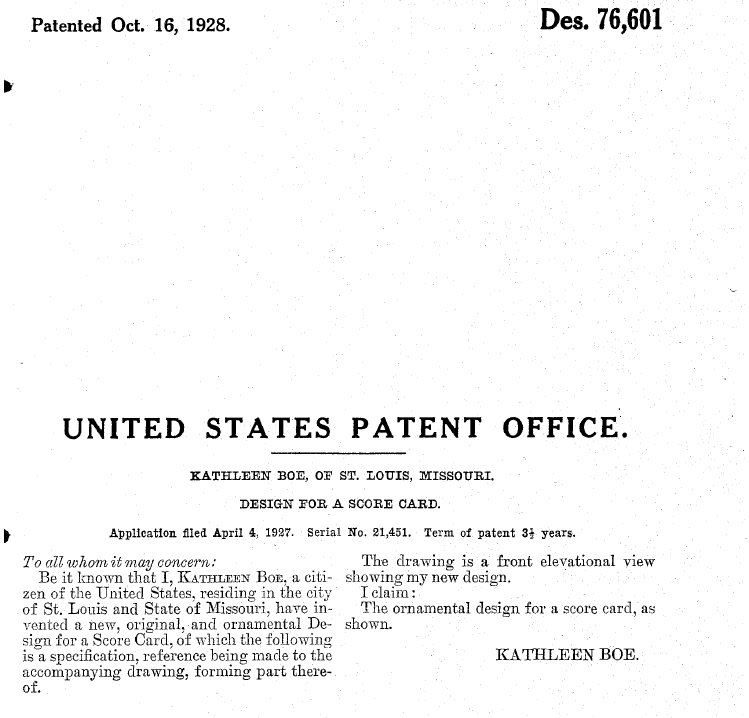
On 16 October 1928, my great-grandmother Kathleen (Graham) Boe was issued a patent for a design for a score card.

Boe, Kathleen. Design for a Score Card.Patent USD76601. Application filed 4 April 1927. Patented 16 October 1928. Available from http://www.google.com/patents/USD76601.

Boe, Kathleen. Design for a Score Card.Patent USD76601. Application filed 4 April 1927. Patented 16 October 1928. Available from http://www.google.com/patents/USD76601

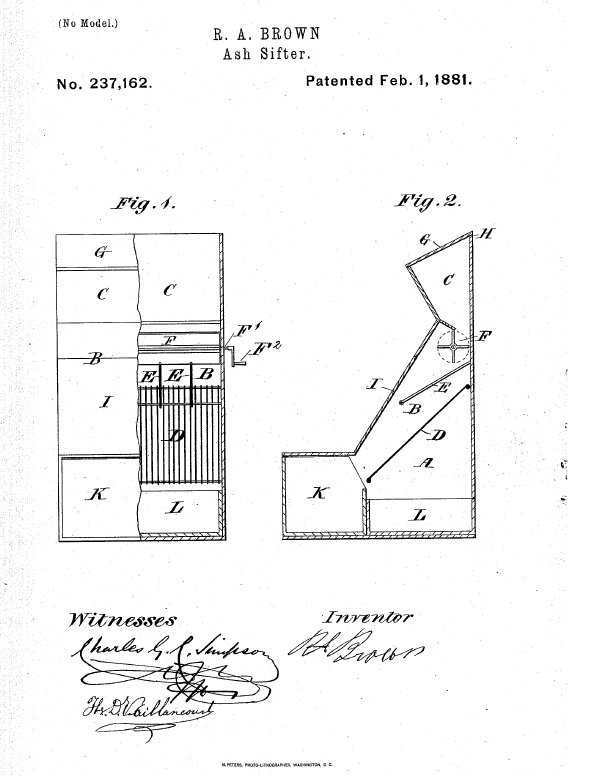
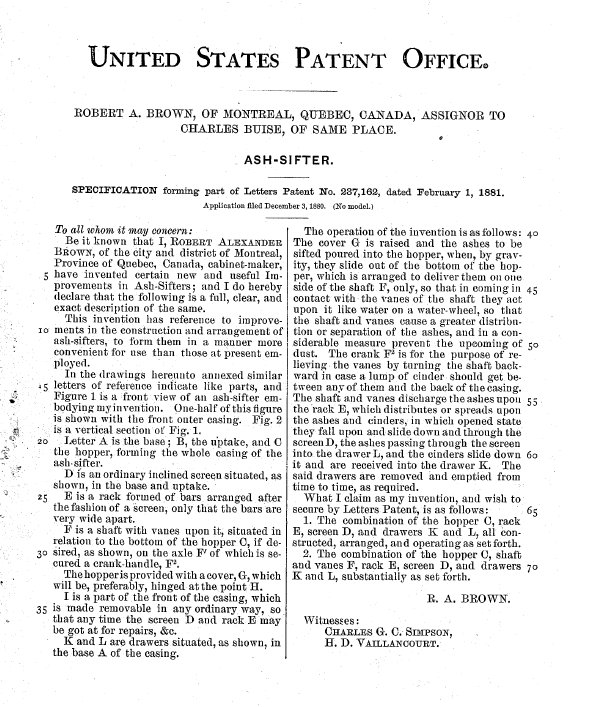
Charles Buise, who was associated with my family and may be a relative, was the assignor of a patent for an ash sifter which was invented by Robert Alexander Brown. The patent was issued on 1 February 1881.

Brown, Robert A., assignor to Charles Buise. Ash-Sifter. Patented 1 February 1881. Available from
https://www.google.com/patents/US237162.

Brown, Robert A., assignor to Charles Buise. Ash-Sifter. Patented 1 February 1881. Available from
https://www.google.com/patents/US237162.

References
First U.S. Patent Issued Today in 1790
Patent Act of 1790
Samuel Hopkins (inventor)

Thursday, July 16, 2015

Those Places Thursday: 519 E. 9th St., Alton, Illinois


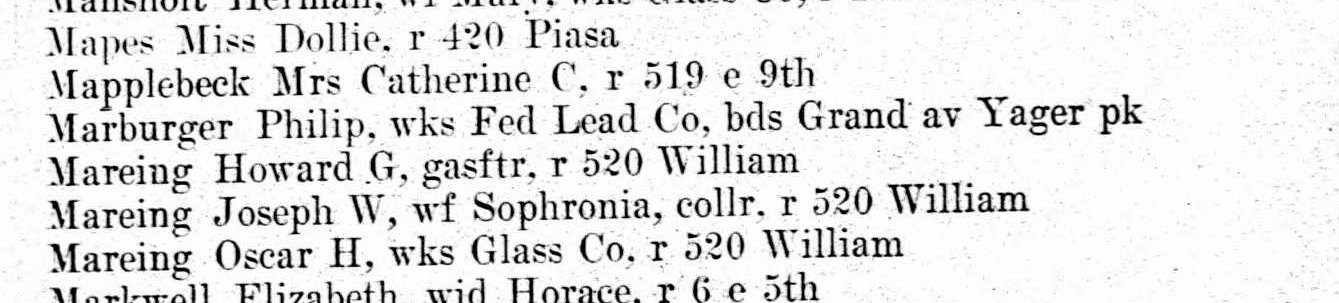
My great-great-grandmother Catherine Elizabeth (Winters) Mapplebeck lived at 519 E. 9th St., Alton, Madison County, Illinois from 1902-1905. She moved to St. Louis, Missouri in 1906. Her two children, Kathleen (my great-grandmother) and Garfield Graham (also known as Kathleen and Garfield Mapplebeck) also lived at 519 E. 9th St. when the family first moved from their previous residence at 637 E. 3rd St., Alton. Garfield moved to Peoria, Illinois in 1904. Kathleen had moved to St. Louis by 1904.

W. H. McCoy's Alton City Directory, Including the Towns of Upper Alton, North Alton, and East Alton. 1902-1903. Keokuk, Iowa: W. H. McCoy. Available from Ancestry.com. U.S. City Directories, 1821-1989 [database on-line]. Provo, UT, USA: Ancestry.com Operations, Inc., 2011.
W. H. McCoy's Alton City Directory, Including the Towns of Upper Alton, North Alton, and East Alton. 1905-1906. Keokuk, Iowa: W. H. McCoy. Available from Ancestry.com. U.S. City Directories, 1821-1989 [database on-line]. Provo, UT, USA: Ancestry.com Operations, Inc., 2011.

Tuesday, January 20, 2015

Tombstone Tuesday: Jeanne D. (Graham) Kowelman


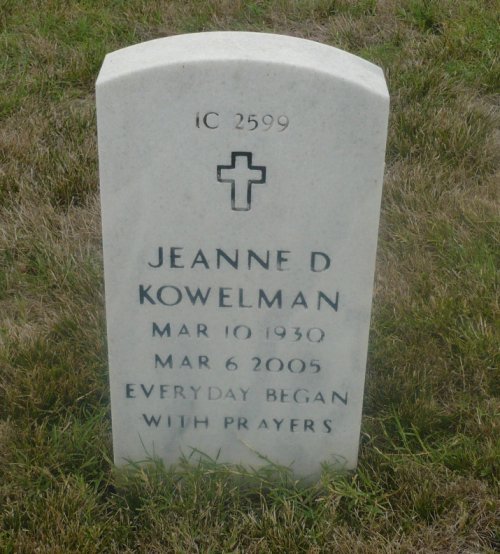
Jeanne D. Graham was born in Missouri on 10 March 1930. She was the daughter of Donald Graham and Virginia Carman. Donald was the son of my great-grandmother's brother Garfield Graham. Jeanne married Norman Kowelman. She died on 6 March 2005 and is buried in Jefferson Barracks National Cemetery in St. Louis County, Missouri.

Saturday, November 22, 2014

National Adoption Day

The Saturday before Thanksgiving is National Adoption Day. The day is intended to raise awareness of the large number of children in foster care waiting for adoption, and to celebrate adoptive families.

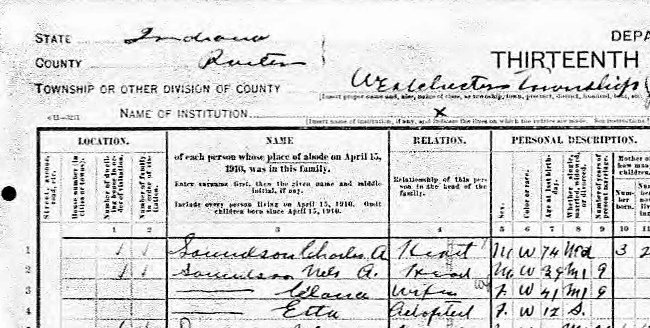
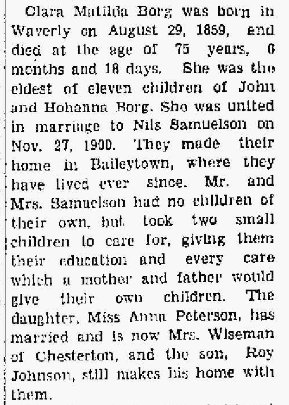
My great-great-grandmother's sister Clara Matilda Borg and her husband Nils A. Samuelson never had biological children, but they raised a girl, Etta Maria Carter, and a boy, Leroy G. "Roy" Johnson.

1910 United States Census, Westchester Township, Porter, Indiana, population schedule, enumeration district 152, page 9A. Available from  Ancestry.com. 1910 United States Federal Census [database on-line]. Provo, UT, USA: Ancestry.com Operations Inc, 2006.

1920 United States Census, Westchester Township, Porter, Indiana, population schedule, enumeration district 157, page 4A. Available from Ancestry.com. 1920 United States Federal Census [database on-line]. Provo, UT, USA: Ancestry.com Operations Inc, 2010. Images reproduced by FamilySearch.

The Vidette-Messenger, 20 March 1934, page 2. (The name of the daughter is listed incorrectly.)

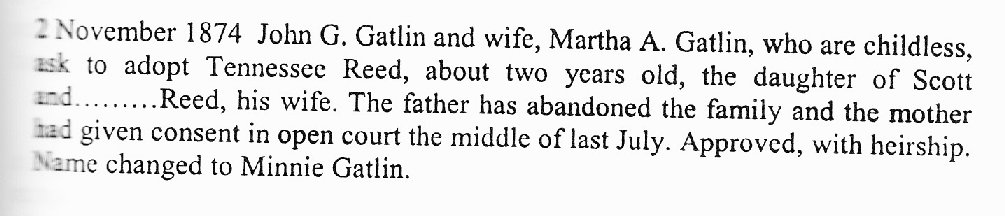
My 3rd-great-grandfather's brother John G. Gatlin and his wife Martha Ann Gower legally adopted a little girl, Tennessee Reed (Minnie Gatlin after the adoption), in 1874.

Miller, Alan N. Nineteenth Century Tennessee Adoptions, Legitimations, and Name Changes. Baltimore, MD: Clearfield, 2009. Page 51.

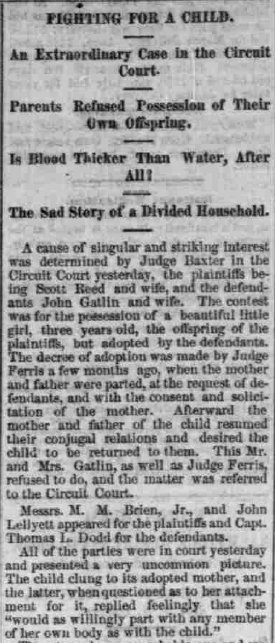
The girl's biological parents reconciled after the adoption had approved, and wanted her back. The Davidson County, Tennessee Circuit Court ruled that it was in the best interests of the child for her to remain with her adoptive parents. The below excerpt from an article in the Nashville Union and American, 3 December 1874, shows that the adoptive mother and daughter had formed a close bond.

Nashville Union and American, 3 December 1874. Available from Chronicling America.

My great-grandmother Kathleen (Graham) Mapplebeck Boe was the biological daughter of James Graham, but when her mother Catherine Elizabeth Winters married James Mapplebeck, she took his name and he became her father. The adoption may have been informal rather than legal, but Kathleen's application for a Social Security account shows that James Mapplebeck was the man that she considered to be her father.

Kathleen Graham Mapplebeck Boe, SS no. 494-07-1459, 11 December 1936, Application for Account Number (Form SS-5), Social Security Administration, Baltimore, Maryland.

Friday, November 14, 2014

52 Ancestors: #46 Kathleen Graham

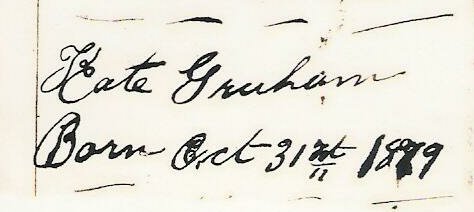
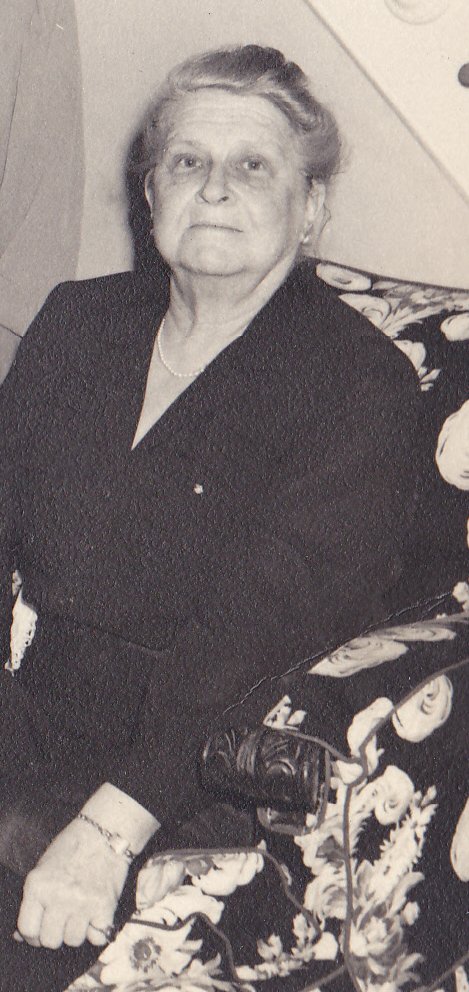
My great-grandmother Kathleen Graham was born on 31 October 1879. She was the daughter of James Graham and Catherine Elizabeth Winters. Her birth name may have been Catherine; earlier records list her by that name. She was either born in Montreal, Quebec, Canada, or was born in Chicago, Illinois and came to Montreal as a baby. I think that Montreal is the more likely birthplace; her mother's father John Bennet Winters was living in Montreal at the time of her birth.

After 1883, Kathleen's father James Graham either died or left his family. Kathleen's mother Elizabeth claimed to be a widow, but the family story is that James Graham had been a Catholic priest and had returned to the priesthood. I have not yet confirmed the family story, but because of it, I think that James may have left his family, even if he did not leave for the priesthood.

On 20 November 1885, Kathleen's mother Elizabeth married James Mapplebeck. Kathleen and her younger brother Garfield took his surname. They may not have been legally adopted by him, but Kathleen thought of James Mapplebeck as her father. He was the man that raised her.

Between 1891 and 1892, sometime after the 1891 Census of Canada, the Mapplebeck family moved to Alton, Madison County, Illinois. James Mapplebeck was a glassblower, and the Illinois Glass Company was located in Alton. James Mapplebeck had left the family by 1898; he went to California. Kathleen had lost another father.

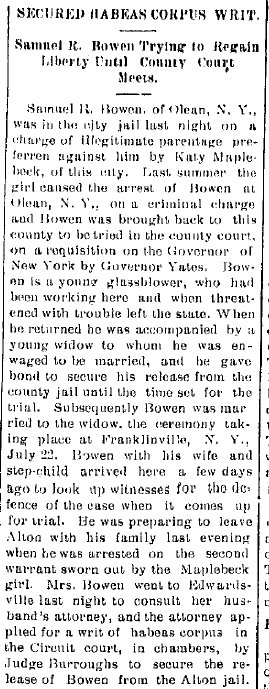
On 9 August 1901, Kathleen gave birth to a daughter, Vivian. Vivian's father was Samuel R. Bowen Samuel had worked at the glass company, and then had gone to Olean, Cattaraugus County, New York for the summer, while Kathleen was pregnant. Kathleen had him arrested, and he was brought back to Alton, Illinois. A young widow, Lulu (Fox) Masterson, came back with him. Although she had only known him for two months, she paid his bail. They returned to New York while Samuel was out on bail, and he married her on 22 July 1901. In October 1901, he returned to Alton, accompanied by his wife and stepson. Kathleen had him jailed for illegitimate parentage, but he was released on a writ of habeas corpus. He was to be tried on another charge, but I have not yet found any additional information on him. Kathleen showed remarkable strength, especially for her time. Many women would not have had the courage to stand up for themselves the way that she did.

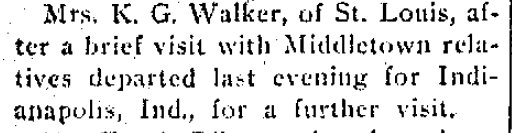
Kathleen was known as Mrs. K. G. Walker, and her daughter was Vivian Walker. I suspect that she adopted this name to pass as a widow because of the stigma of illegitimacy. Walker was her mother's mother's maiden name.

Kathleen moved to St. Louis. At the 1904 St. Louis World's Fair (where, according to my mother's first cousin Marie, she got paid for talking), she met John Boe. He was already married, but by the time their son John (my maternal grandfather) was born on 28 April 1908, he and his wife had separated and he and Kathleen had married. They moved to Williston, Williams County, North Dakota, and their daughter Florence was born there on 22 November 1909. In the 1910 United States census, the family was enumerated in Kathleen's mother's household in St. Louis. They were in Williston, North Dakota in 1901. Their son James Jorgen was born on 27 September 1911, and their daughter Theodora Catherine was born on 9 February 1914. The family moved back to St. Louis in March 1915, and their daughter Geraldine Edith was born in St. Louis on 29 July 1916.

Kathleen's husband John was president of the St. Louis Motor Car Company. The company failed in the late 1920s, and the family moved to Sarasota, Florida for a year. They then returned to St. Louis. In 1929, John left Kathleen; he had a daughter with a much younger woman, who he later married.

Kathleen worked for Pevely Dairy. According to her 1930 United States census enumeration, she was educational director. She filed a patent for a design for a scorecard on 4 April 1927, and the patent was granted on 16 October 1928. The design included milk bottles; she probably created it while working for Pevely Dairy. According to my mother, Kathleen was responsible for the introduction of milk into the St. Louis public schools. Free milk programs were established in the St. Louis Public Schools; these are probably the programs she was involved with. By 1936, she was working for the U.S. Census Bureau.

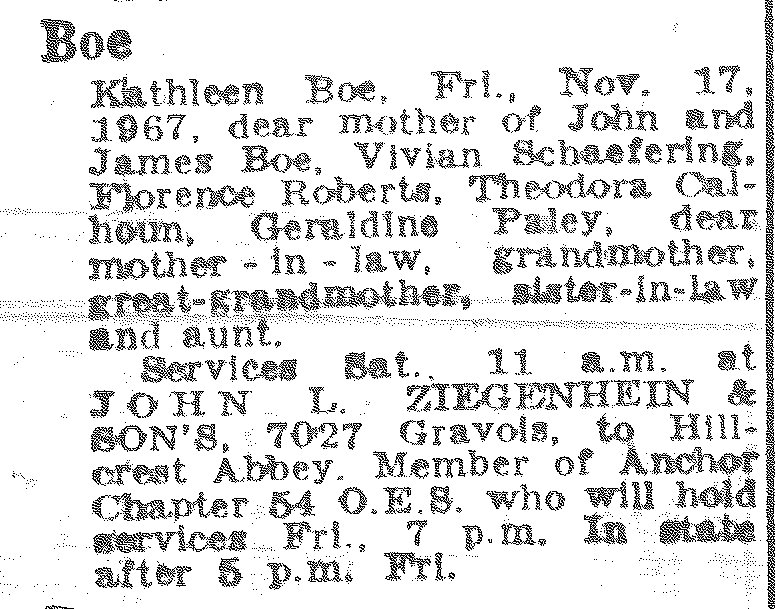
Kathleen was a member of Eastern Star. She attended the Presbyterian Church.

When she was older, Kathleen lived with her children. According to the "Flag of the Day" article in the 30 August 1966 issue of the Chicago Tribune, a flag was flown every day at the home of her son-in-law William A. Paley (husband of her daughter Geraldine) in Wilmette, Illinois, and Kathleen took the flag down at sunset.

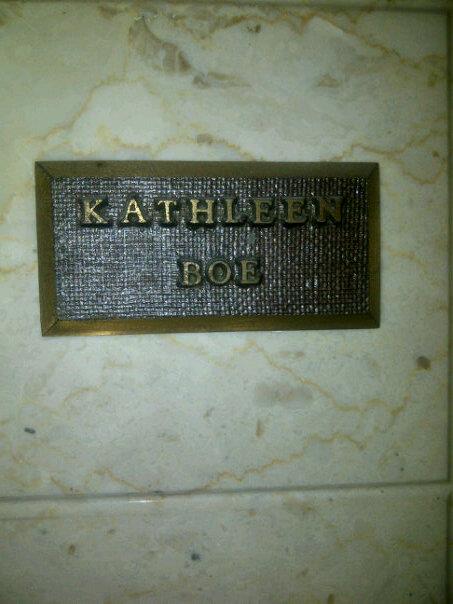
Kathleen died in Brentwood, Missouri on 17 November 1967. She was cremated, and her ashes are interred at Hillcrest Abbey Crematory and Mausoleum.

Winters family Bible

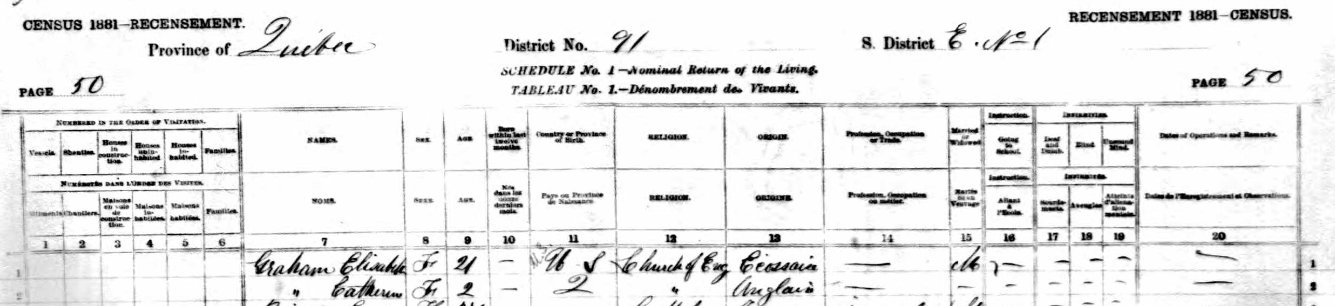
1881 Census of Canada. Hochelaga Village, Hochelaga, Quebec. Ancestry.com; reproduced by courtesy of Library and Archives Canada, Ottawa, Canada. (James Graham is enumerated on the previous page.)

W. H. McCoy's Alton City Directory, Including the Towns of Upper Alton, North Alton and East Alton. 1901-1902. Ancestry.com. U.S. City Directories, 1821-1989 [database on-line]. Provo, UT, USA: Ancestry.com Operations, Inc., 2011.

  Alton Telegraph, 24 October 1901

Alton Evening Telegraph, 18 May 1905


Boe, Kathleen. Design for a Score Card.Patent USD76601. Application filed 4 April 1927. Patented 16 October 1928. Available from http://www.google.com/patents/USD76601


 St. Louis Post-Dispatch, 17 November 1967

Monday, November 3, 2014

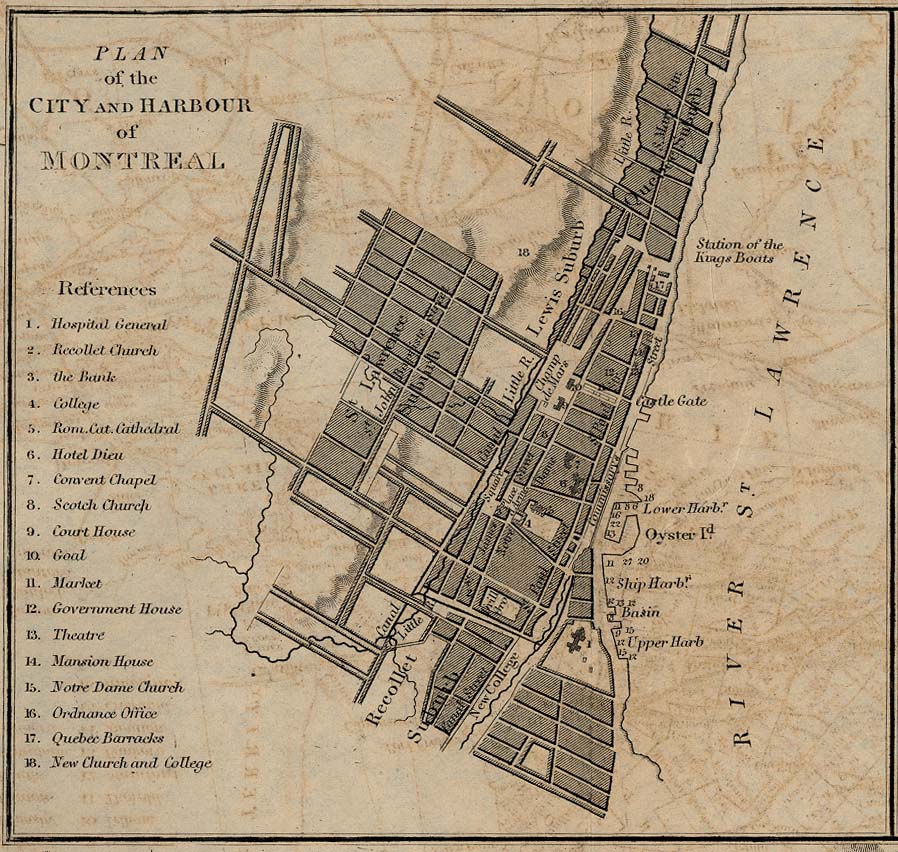
Mappy Monday: Plan of the City and Harbour of Montreal

Plan of the City and Harbour of Montreal. From A Dictionary, Practical, Theoretical, and Historical of Commerce and Commercial Navigation, by J. R. (John Ramsay) McCulloch, 1882. Available from Perry-Castañeda Library Map Collection, University of Texas Libraries: http://www.lib.utexas.edu/maps/historical/montreal_plan_1882.jpg

This map shows the city and harbor of Montreal, Quebec, Canada. It shows the locations of some of the buildings in Montreal, including Montreal General Hospital, where my 3rd-great-grandfather John Bennet Winters died.

My great-great-grandparents James Graham and Catherine Elizabeth Winters and their daughter, my great-grandmother Kathleen Graham, were living in Montreal in 1882. Elizabeth Winters' second husband James Mappleback was also living in Montreal at that time.

Wednesday, October 8, 2014

Great Chicago Fire

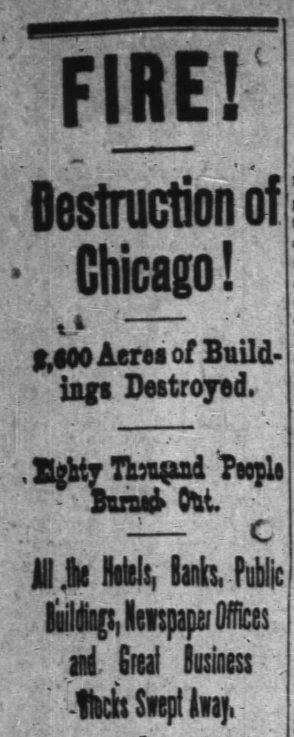
Chicago Tribune, 11 October 1871

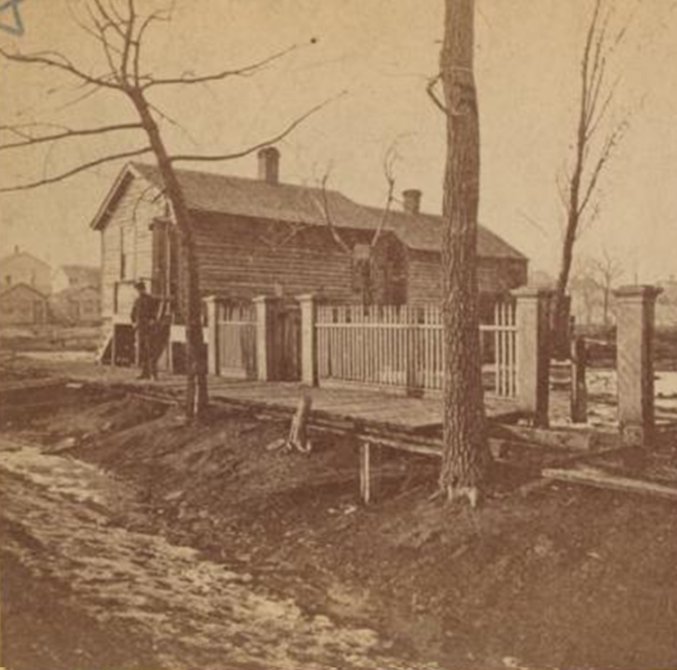
At about 9:00 PM on 8 October 1871, a fire broke out in Patrick and Catherine O'Leary's barn behind 137 DeKoven Street, at the corner of Jefferson Street. Mrs. O'Leary's cow was blamed for starting the fire; it had allegedly kicked over a lantern. Mrs. O'Leary denied this claim; she stated that she had been in bed at the time the fire started. The true cause of the fire is unknown, but it did start in the O'Learys' barn. The legend of Mrs. O'Leary's cow has persisted in popular culture. The Web of Memory section of The Great Chicago Fire & the Web of Memory includes images from popular culture, advertisements based on the legend, and a satirical poem published by the Insurance Monitor in 1872.

An image of Catherine O'Leary's cottage on DeKoven Street in Chicago, 1871. By A.H. Abbott, Photographer (Stereoptican card) [Public domain]. Available from Wikimedia Commons.

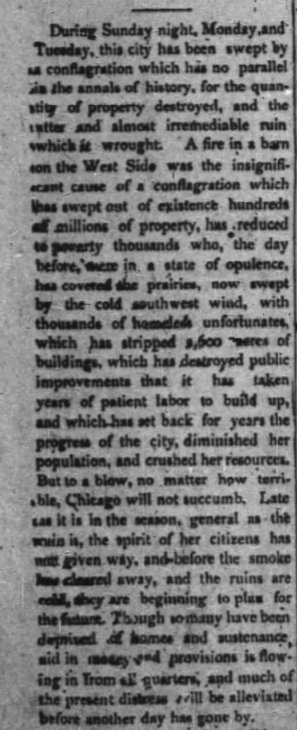
Chicago had experienced a hot, dry, summer. There had been little rainfall since July 4, and there was only 0.11 inch of rain between September 17 and October 8. Homes and buildings were made of wood. Strong winds from the southwest rapidly spread the fire through the poor Irish neighborhood Conley's Patch, and then through the Chicago business district. 

The Great Chicago Fire, an artists rendering, Chicago in Flames -- The Rush for Lives Over Randolph Street Bridge. By John R. Chapin, died 1907 (Originally from Harper's Weekly, 1871.) [Public domain]. Available from Wikimedia Commons.

Chicago Tribune, 11 October 1871

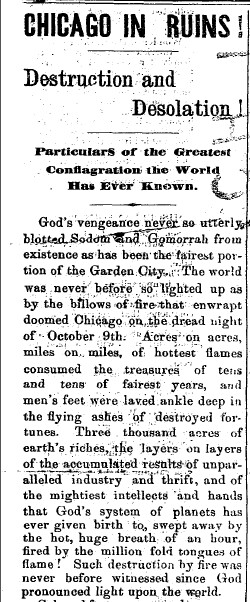
Prairie Farmer, 14 October 1871. Available from Illinois Digital Newspaper Collections.

By the evening of October 9, it began to rain and the fire had started to burn itself out. The burned area of the city was four miles long and one mile wide. 17,500 buildings were destroyed. 90,000 people were left homeless.

My 3rd-great-grandparents John Bennet Winters and Anna "Ann" (Walker) Winters and their daughter, my 2nd-great-grandmother Catherine Elizabeth Winters, had lived at 247 S. Jefferson before the fire, but were not found at that address after the fire. They lived at the edge of the burnt district. They were probably affected by the fire and had to move.

My Graham ancestors may have been affected as well. I still do not have enough evidence to be sure that I have found the right family, but if I have, my 2nd-great-grandfather James Graham's father was William M. Graham, and the family was living at 97 W. Harrison in 1870.

To the Homeless of the Chicago Fire.Chicago History Museum. [Public domain.] Available from Wikimedia Commons.

Prairie Farmer, 16 December 1871. Available from Illinois Digital Newspaper Collections.

References
Bales, Richard F. The Great Chicago Fire and the Myth of Mrs. O'Leary's Cow. Jefferson, NC: McFarland, 2002.
Sawislak, Karen. Smoldering City: Chicagoans and the Great Fire, 1871-1874. Chicago: University of Chicago Press, 1995.