In 1912, my 2nd-great-grandfather Andrew T. Anderson (born Andreas Troedsson) traveled to Sweden to visit his family. He arrived in Sweden in late May 1912. He stayed with his sister Carolina and her husband Nils Andersson on Ollof farm in Grevie, Skåne. He wrote a letter to his wife and children on 7 June 1912. He said that they had had Sunday School there the previous Sunday, and that he was not able to attend church because he only had his old clothes. His trunk of clothing did not arrive until the day before he wrote the letter. Later that Sunday, he, Carolina, and Carolina's son Elof and his family drove to visit Pat Johnson. He planned to buy dress material for his wife the next day.
He was asked to lead Sunday school in the American fashion on the following Sunday. He also planned to visit his brother Johannes that day.
Carolina made a cheese for him to take home to his family, and made another one for him to bring home to to their sister Johanna.
Andrew/Andreas said that he and his brother-in-law Nils went to the forest one evening and heard a nightingale singing in the treetops at 11:00.
Common Nightingale Luscinia megarhynchos, near Gordevio, Ticino, Switzerland. 12 May 2010. Photo by Noel Reynolds [CC BY 2.0 (http://creativecommons.org/licenses/by/2.0)]. Available from Flickr and Wikimedia Commons.
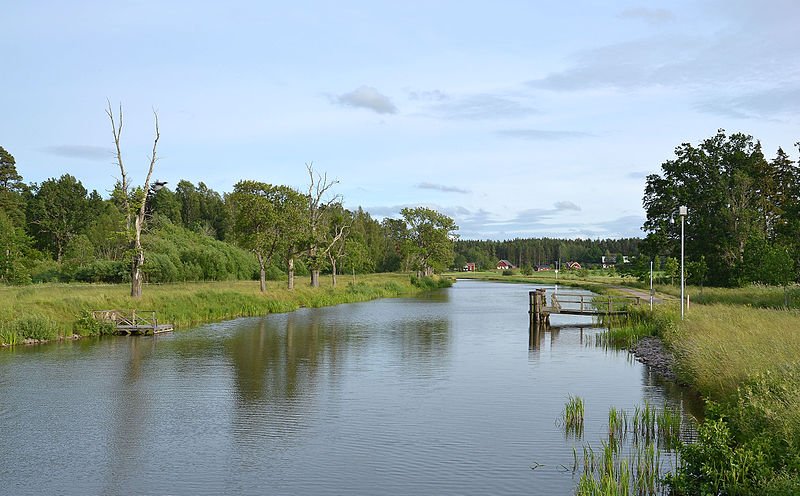
He thought that he might go to Helsingborg and Copenhagen the following week. On 28 June 1912, he planned travel on the Göta Canal and go to Stockholm and see museums and art.
Göta kanal (Göta canal) near road E20, Sweden. 7 July 2015. Photo by Pudelek (Own work) [CC BY-SA 4.0 (http://creativecommons.org/licenses/by-sa/4.0)]. Available from Wikimedia Commons.
On 20 July 1912, he sailed from Liverpool, England to New York, New York on the Caronia.
RMS Caronia. Cunard Line, 1905-1933. Ancestry.com. Passenger Ships and Images [database on-line]. Provo, UT, USA: Ancestry.com Operations Inc, 2007.
He arrived at Ellis Island on 28 July 1912.
Passenger manifest, Caronia. 28 July 1912. Microfilm serial T715, 1897-195, microfilm roll 1904, line 6, page number 24. Ancestry.com. New York, Passenger Lists, 1820-1957 [database on-line]. Provo, UT, USA: Ancestry.com Operations, Inc., 2010.
Passenger Lists of Vessels Arriving at New York, New York, 1820-1897. Microfilm Publication M237, 675 rolls. NAI: 6256867. Records of the U.S. Customs Service, Record Group 36. National Archives at Washington, D.C.
Passenger manifest, Caronia. 28 July 1912. Microfilm serial T715, 1897-195, microfilm roll 1904, line 6, page number 24. Ancestry.com. New York, Passenger Lists, 1820-1957 [database on-line]. Provo, UT, USA: Ancestry.com Operations, Inc., 2010.
Passenger Lists of Vessels Arriving at New York, New York, 1820-1897. Microfilm Publication M237, 675 rolls. NAI: 6256867. Records of the U.S. Customs Service, Record Group 36. National Archives at Washington, D.C.
This was probably the last time that he saw his family in Sweden. He died on 24 January 1916.
Covering genealogy, family history, historical events and places, and anything else related!
Showing posts with label Troedsson. Show all posts
Tuesday, August 23, 2016
Saturday, July 9, 2016
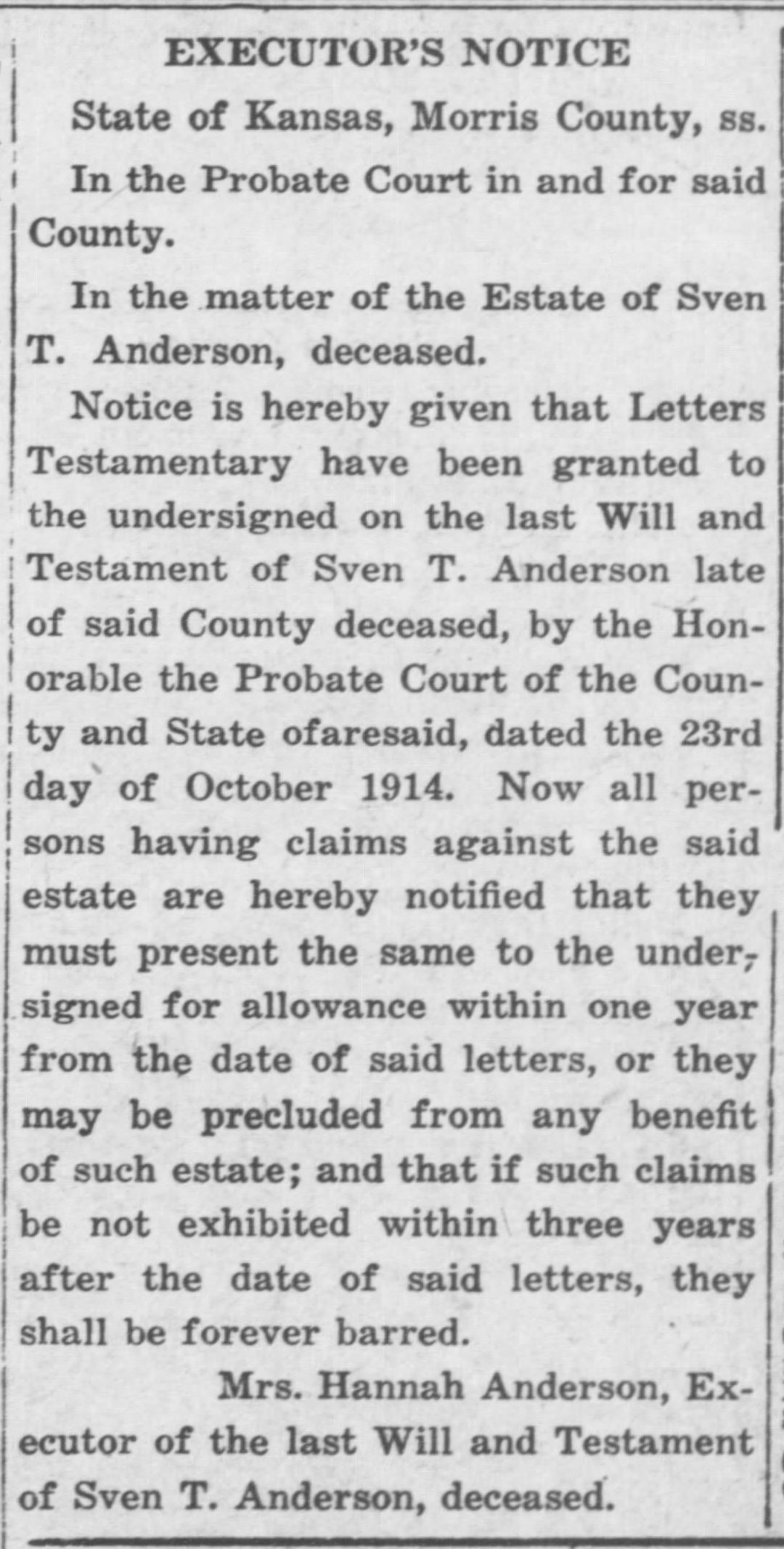
Sympathy Saturday: Executor's Notice, Estate of Sven T. Anderson
My 2nd-great-grandfather's brother Sven T. Anderson (born Sven Troedsson) died on 6 October 1914 in Burdick, Morris County, Kansas. His widow, Hannah (Abramson) Anderson, was the executor of his will. The following notice was published in the Council Grove Republican (Council Grove, Kansas), on 13 November, 20 November, 27 November, and 4 December 1914.
Council Grove Republican, 20 November 1914, page 10
Monday, May 23, 2016
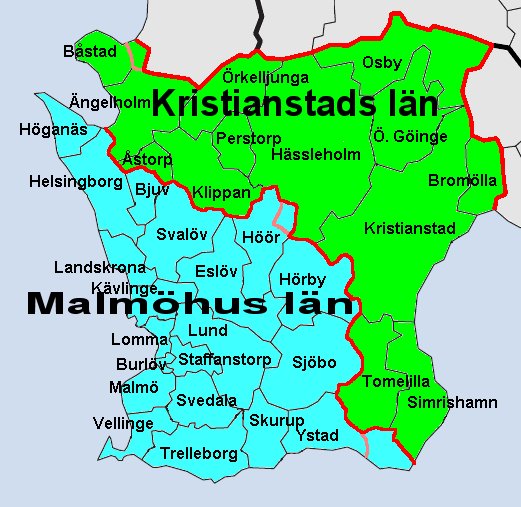
Mappy Monday: Skåne Län Before 1997
Old provinces of Skåne. By Lunnen2009 (Own work) [GFDL (http://www.gnu.org/copyleft/fdl.html) or CC BY-SA 3.0 (http://creativecommons.org/licenses/by-sa/3.0)]. Available from Wikimedia Commons.
Skåne län [county], the southernmost county in Sweden, was created in 1997. Two counties, Kristianstad and Malmöhus, were merged.
My 2nd-great-grandfather Andreas Troedsson/Andrew T. Anderson and his ancestors were from Grevie, which is part of the municipality of Båstad. It was located in Kristianstads län and is now in Skåne län.
Skåne län [county], the southernmost county in Sweden, was created in 1997. Two counties, Kristianstad and Malmöhus, were merged.
My 2nd-great-grandfather Andreas Troedsson/Andrew T. Anderson and his ancestors were from Grevie, which is part of the municipality of Båstad. It was located in Kristianstads län and is now in Skåne län.
Monday, March 21, 2016
World Down Syndrome Day
March 21 is World Down Syndrome Day. Since 2005, events have been held on this day to raise awareness of Down Syndrome and to show how people with Down Syndrome can play active roles in their communities.
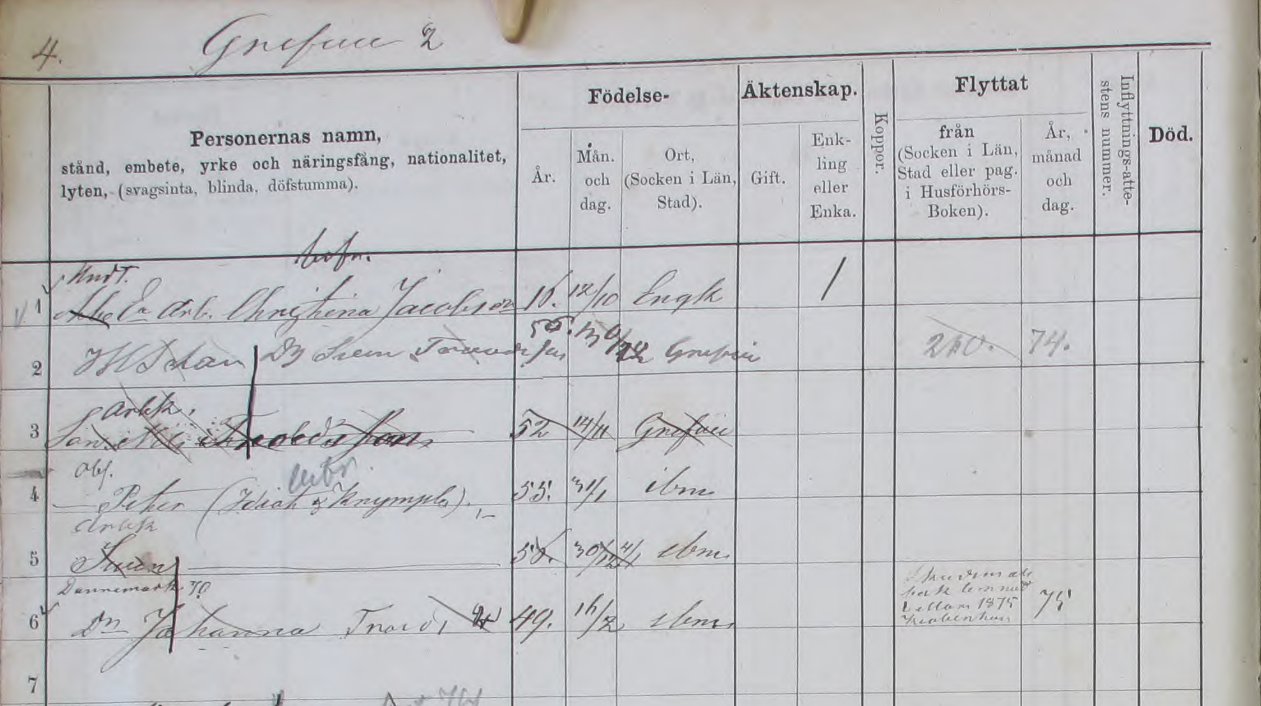
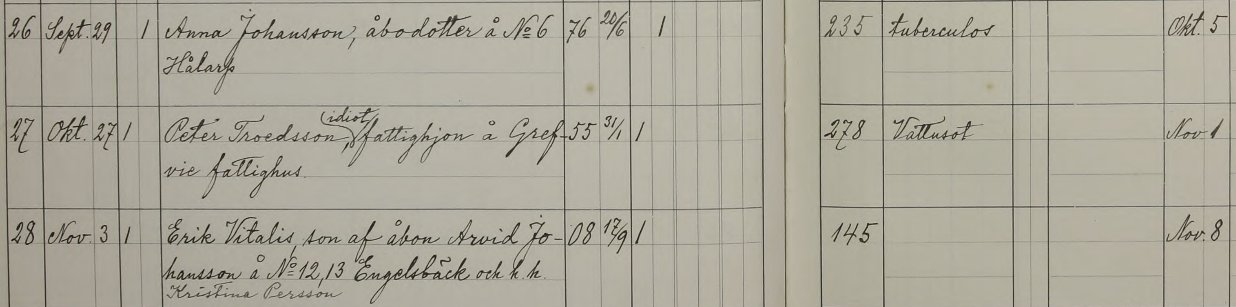
My 2nd-great-grandfather's brother Petter Troedsson was listed as idiot krympling [idiot cripple] in Swedish household examination records. Their mother Christina Jacobsdotter was 38 years old when Petter was born on 31 January 1855 in Grevie, Skåne, Sweden. I suspect that Petter may have had Down Syndrome.
Petter died on 27 October 1908 in Grevie, Skåne, Sweden. He was 53 years old and a pauper in the Grevie workhouse. The cause of death was dropsy.
Peter Troedsson death record, 27 October 1908. Grevie FI:3 (1895-1943) Image 580 / page 53 (AID: v516961.b580.s53, NAD: SE/LLA/13113).
My 2nd-great-grandfather's brother Petter Troedsson was listed as idiot krympling [idiot cripple] in Swedish household examination records. Their mother Christina Jacobsdotter was 38 years old when Petter was born on 31 January 1855 in Grevie, Skåne, Sweden. I suspect that Petter may have had Down Syndrome.
Grevie AI:14 (1870-1876) Image 80 / page 4 (AID: v99265a.b80.s4, NAD: SE/LLA/13113).
Petter died on 27 October 1908 in Grevie, Skåne, Sweden. He was 53 years old and a pauper in the Grevie workhouse. The cause of death was dropsy.
Peter Troedsson death record, 27 October 1908. Grevie FI:3 (1895-1943) Image 580 / page 53 (AID: v516961.b580.s53, NAD: SE/LLA/13113).
Friday, January 29, 2016
Kansas Day
On 29 January 1861, Kansas was admitted to the Union. Kansas Day, which commemorates this anniversary, has been celebrated since 1877. Students in L. G. A. Copley's class in Paola, Kansas gathered as much information as they could about Kansas and on 29 January 1877, they drew the state seal and maps on the blackboard, gave speeches, and asked and answered questions about Kansas history. The following year, his class again studied Kansas history on January 29. Copley became superintendent of schools in Wichita in 1879, and for the next three years, Kansas Day was observed in the Wichita schools. In 1881, Copley published an article in The Educationist and suggested that other schools try Kansas Day exercises.
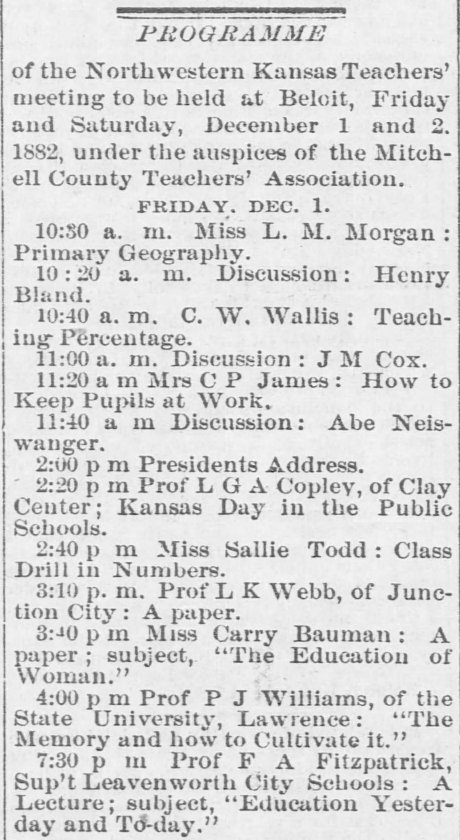
In 1882, the Northwestern Kansas Teachers met in Beloit. Copley spoke about Kansas Day, and a Kansas Day booklet was printed. Since then, Kansas Day has been observed in Kansas schools.
The Governor of Kansas and the Kansas Legislature issue special Kansas Day proclamations. The Kansas state song "Home on the Range" is performed. A Kansas Day cake is presented at the Kansas State Capitol.
My 2nd-great-grandfather's brother Sven T. Anderson (Sven Troedsson) was living in Kansas by 1885. His children probably participated in Kansas Day exercises at school.
References
Copley, L. G. A. Kansas Day, Brochure of Information and Exercises for Use in Every Kansas School, Containing Kansas History. Clay Center, Kansas: Dispatch Printing House, 1882. Available from archive.org.
Kansas Day at the Capitol
Kansas Historical Society. Kansas Day.
In 1882, the Northwestern Kansas Teachers met in Beloit. Copley spoke about Kansas Day, and a Kansas Day booklet was printed. Since then, Kansas Day has been observed in Kansas schools.
Phillipsburg Herald (Phillipsburg, KS), 30 November 1882, page 3
The Governor of Kansas and the Kansas Legislature issue special Kansas Day proclamations. The Kansas state song "Home on the Range" is performed. A Kansas Day cake is presented at the Kansas State Capitol.
My 2nd-great-grandfather's brother Sven T. Anderson (Sven Troedsson) was living in Kansas by 1885. His children probably participated in Kansas Day exercises at school.
References
Copley, L. G. A. Kansas Day, Brochure of Information and Exercises for Use in Every Kansas School, Containing Kansas History. Clay Center, Kansas: Dispatch Printing House, 1882. Available from archive.org.
Kansas Day at the Capitol
Kansas Historical Society. Kansas Day.
Friday, January 1, 2016
Ellis Island Opens
First Ellis Island Immigration Station in New York Harbor. Public domain. Available from Wikimedia Commons.
On 1 January 1892, Ellis Island opened. On that day, 700 immigrants arrived on three ships. The first immigrant processed was Annie Moore, an Irish teenager who arrived with her brothers Anthony and Philip. The original immigration station was destroyed by a fire on 15 June 1897. The second immigration station opened on 17 December 1900. Before it was completed, the passengers were processed at the Barge Office.
Ellis Island closed on 12 November 1954. More than twelve hundred immigrants had arrived at the port, which is shared by New York and New Jersey.
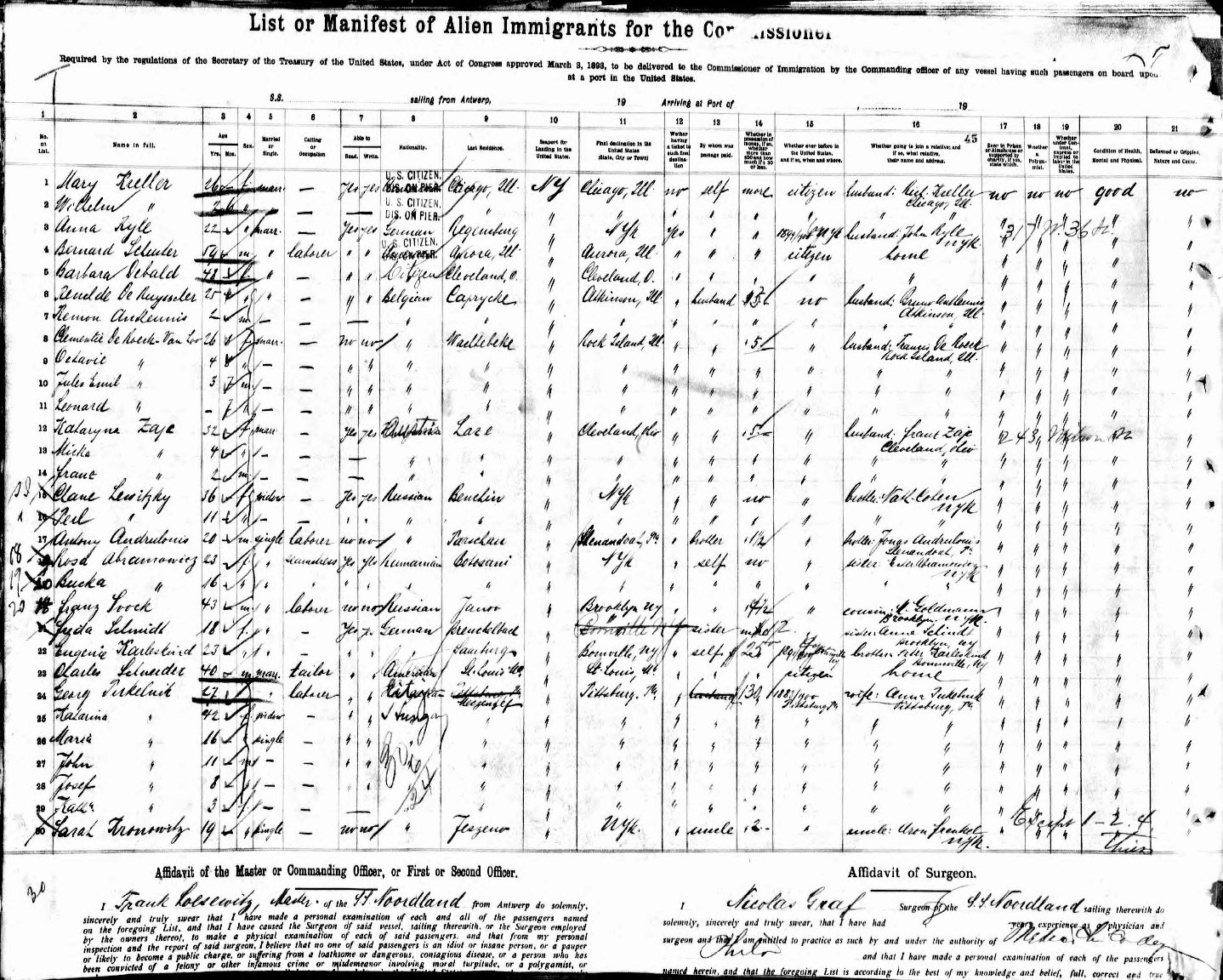
My Schneider ancestors immigrated in 1892, but I do not know if they came through Ellis Island. However, my 2nd-great-grandfather Carl Joseph Schneider arrived at the port when he returned from a visit to Germany. He sailed on the Noordland and arrived on 16 August 1900. By then, he had become an American citizen. He was listed on the manifest as Charles Schneider.
Manifest SS Noordland, arrival in New York, NY, 16 August 1900. Ancestry.com. New York, Passenger Lists, 1820-1957 [database on-line]. Provo, UT, USA: Ancestry.com Operations, Inc., 2010. Original data: Passenger and Crew Lists of Vessels Arriving at New York, New York, 1897-1957. Microfilm Publication T715. Records of the Immigration and Naturalization Service; National Archives at Washington, D.C.
My 2nd-great-grandfather Andrew T. Anderson (formerly Andreas Troedsson) also arrived at Ellis Island after a visit to his homeland. He traveled to Sweden in 1912, and returned on the Caronia on 28 July 1912.
Manifest SS Caronia, arrival in New York, NY, 28 July 1912. Ancestry.com. New York, Passenger Lists, 1820-1957 [database on-line]. Provo, UT, USA: Ancestry.com Operations, Inc., 2010. Original data: Passenger and Crew Lists of Vessels Arriving at New York, New York, 1897-1957. Microfilm Publication T715. Records of the Immigration and Naturalization Service; National Archives at Washington, D.C.
References
Ellis Island
Ellis Island History
9 Things You May Not Know About Ellis Island
On 1 January 1892, Ellis Island opened. On that day, 700 immigrants arrived on three ships. The first immigrant processed was Annie Moore, an Irish teenager who arrived with her brothers Anthony and Philip. The original immigration station was destroyed by a fire on 15 June 1897. The second immigration station opened on 17 December 1900. Before it was completed, the passengers were processed at the Barge Office.
Ellis Island closed on 12 November 1954. More than twelve hundred immigrants had arrived at the port, which is shared by New York and New Jersey.
My Schneider ancestors immigrated in 1892, but I do not know if they came through Ellis Island. However, my 2nd-great-grandfather Carl Joseph Schneider arrived at the port when he returned from a visit to Germany. He sailed on the Noordland and arrived on 16 August 1900. By then, he had become an American citizen. He was listed on the manifest as Charles Schneider.
Manifest SS Noordland, arrival in New York, NY, 16 August 1900. Ancestry.com. New York, Passenger Lists, 1820-1957 [database on-line]. Provo, UT, USA: Ancestry.com Operations, Inc., 2010. Original data: Passenger and Crew Lists of Vessels Arriving at New York, New York, 1897-1957. Microfilm Publication T715. Records of the Immigration and Naturalization Service; National Archives at Washington, D.C.
My 2nd-great-grandfather Andrew T. Anderson (formerly Andreas Troedsson) also arrived at Ellis Island after a visit to his homeland. He traveled to Sweden in 1912, and returned on the Caronia on 28 July 1912.
Manifest SS Caronia, arrival in New York, NY, 28 July 1912. Ancestry.com. New York, Passenger Lists, 1820-1957 [database on-line]. Provo, UT, USA: Ancestry.com Operations, Inc., 2010. Original data: Passenger and Crew Lists of Vessels Arriving at New York, New York, 1897-1957. Microfilm Publication T715. Records of the Immigration and Naturalization Service; National Archives at Washington, D.C.
References
Ellis Island
Ellis Island History
9 Things You May Not Know About Ellis Island
Labels:
Anderson,
New Jersey,
New York,
Schneider,
Troedsson
Thursday, December 3, 2015
International Day of Persons with Disabilities
United Nations International Day of Persons with Disabilities poster, 2015. Available from http://www.un.org/disabilities/documents/idpd_poster_2015.jpg
December 3 is International Day of Persons with Disabilities. The day has been observed by the United Nations since 1992. The theme for 2015 is "Inclusion matters."
People with disabilities are part of our family history, and we should be sure to include them. My 2nd-great-grandfather's brother Petter Troedsson (31 January 1855 - 27 October 1908) was listed as idiot krympling in Swedish household examination records. His mother was 38 years old when he was born; he may have had Down syndrome. According to the 1850 and 1860 United States Censuses, my 5th-great-grandmother Obedience (Lucas) Gatlin was blind. She was in her 60s and 70s at the time of the censuses; I am not sure when her blindness began. My 4th-great-grandfather Hugh Winters was listed as blind in the 1880 United States Census and was also enumerated in the Defective, Dependent and Delinquent schedule. William A. Paley, the husband of my maternal grandfather's sister Geraldine Boe, lost the use of his legs as a result of a circulation ailment. The "Flag of the Day" news item in the 30 August 1966 issue of the Chicago Tribune noted that for the last ten years, he had seen that the flag was displayed at his home every morning, and that he worked as an assistant to the music director at Columbia Broadcasting System. He seems to have focused on his abilities, not his disabilities.
References
International Day of Persons with Disabilities
UN Enable - International Day of Persons with Disabilities, 3 December 2015
December 3 is International Day of Persons with Disabilities. The day has been observed by the United Nations since 1992. The theme for 2015 is "Inclusion matters."
People with disabilities are part of our family history, and we should be sure to include them. My 2nd-great-grandfather's brother Petter Troedsson (31 January 1855 - 27 October 1908) was listed as idiot krympling in Swedish household examination records. His mother was 38 years old when he was born; he may have had Down syndrome. According to the 1850 and 1860 United States Censuses, my 5th-great-grandmother Obedience (Lucas) Gatlin was blind. She was in her 60s and 70s at the time of the censuses; I am not sure when her blindness began. My 4th-great-grandfather Hugh Winters was listed as blind in the 1880 United States Census and was also enumerated in the Defective, Dependent and Delinquent schedule. William A. Paley, the husband of my maternal grandfather's sister Geraldine Boe, lost the use of his legs as a result of a circulation ailment. The "Flag of the Day" news item in the 30 August 1966 issue of the Chicago Tribune noted that for the last ten years, he had seen that the flag was displayed at his home every morning, and that he worked as an assistant to the music director at Columbia Broadcasting System. He seems to have focused on his abilities, not his disabilities.
References
International Day of Persons with Disabilities
UN Enable - International Day of Persons with Disabilities, 3 December 2015
Saturday, June 13, 2015
52 Ancestors: Week 24 "Heirloom": Andrew T. Anderson's Chairs
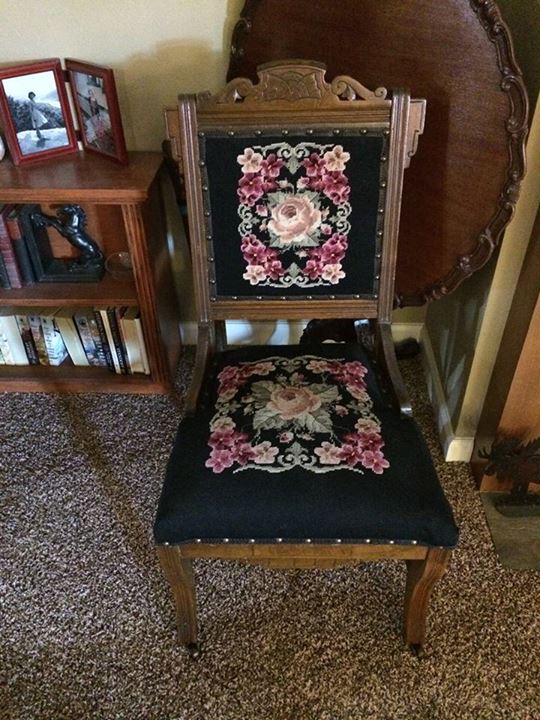
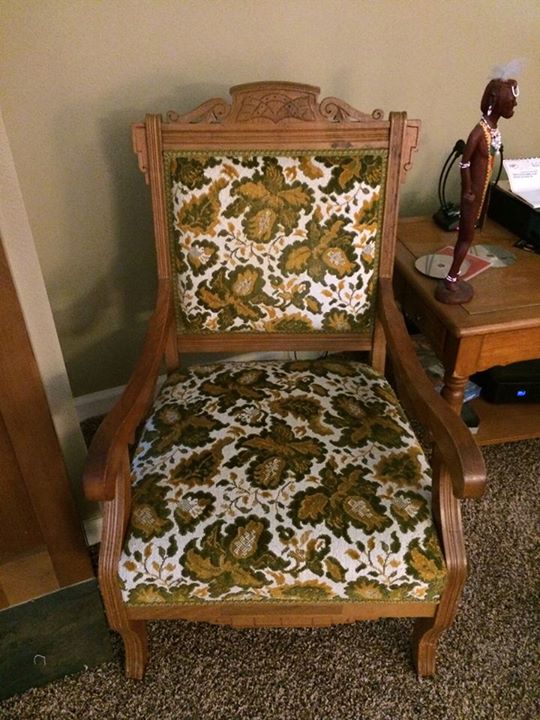
My 2nd-great-grandfather Andrew T. Anderson (born Andreas Troedsson) was a wood turner. He made a set of six chairs, one for each of his children: Anna Matilda Anderson, Edward Theodore Anderson, Albert Bernard Anderson, Esther Elizabeth (Anderson) Kellman, Reuben Alexander Anderson, and Ruth Elvira (Anderson) Matson.
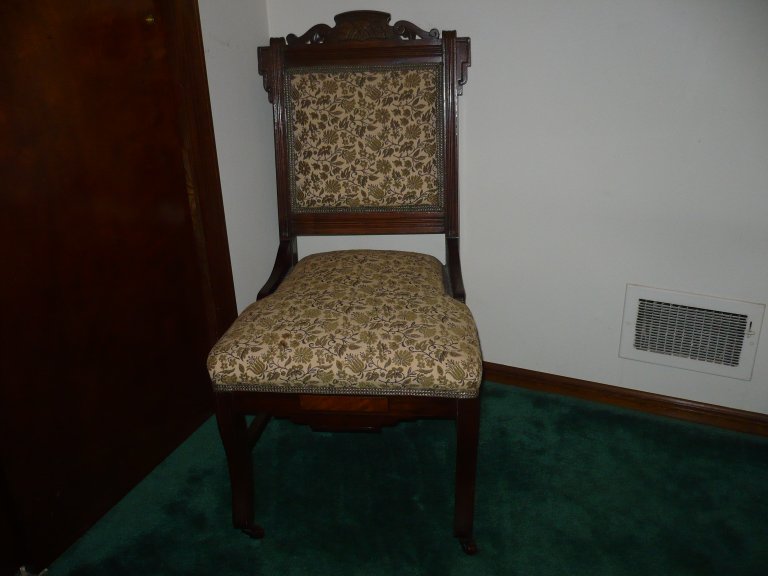
My parents have the chair that was made for his son Edward (my great-grandfather, and my father's grandfather).
My cousin Carla has two of the chairs. One of them was made for her grandmother, Esther. Esther did the needlepoint on the chair.
The other chair was made for Anna, the oldest daughter.
Carla and I would love to know where the other three chairs are. Hopefully they are still with family.
My parents have the chair that was made for his son Edward (my great-grandfather, and my father's grandfather).
My cousin Carla has two of the chairs. One of them was made for her grandmother, Esther. Esther did the needlepoint on the chair.
Photo by Carla Harcum
The other chair was made for Anna, the oldest daughter.
Photo by Carla Harcum
Carla and I would love to know where the other three chairs are. Hopefully they are still with family.
Wednesday, September 3, 2014
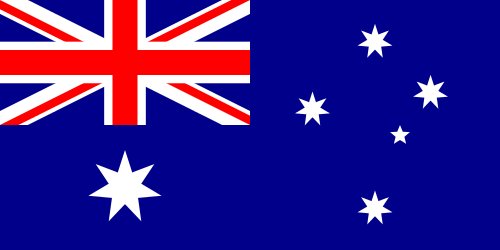
Flag Day (Australia)
Flag of Australia. By
Ian Fieggen (Own work) [Public domain]. 16 April 2007. Available from Wikimedia Commons.
In Australia, Flag Day commemorates the day that the Australian Flag was first flown. A public national flag competition was held in 1901. Edmund Barton, the first Prime Minister of Australia, announced the winning designs (one design was for official use, and the other was for merchant service) in Melbourne on 3 September 1901. The flag was flown over the dome of the Exhibition Building in Melbourne.
Flag Day was officially established in Australia on 28 August 1996, when Sir William Deane, the 22nd Governor-General of Australia, issued a proclamation establishing September 3 as Flag Day. It has been celebrated since 3 September 1996.
My great-great-grandfather Andreas Troedsson's brother Ola Peter Troedson immigrated to Australia from Sweden, and descendants of his still live there. Descendants of their sister Johanna (Troedsdotter) Sandquist also live in Australia.
References
Australian National Flag 1901-1903
Australian National Flag Day Fact Sheet
Flag Day (Australia)
In Australia, Flag Day commemorates the day that the Australian Flag was first flown. A public national flag competition was held in 1901. Edmund Barton, the first Prime Minister of Australia, announced the winning designs (one design was for official use, and the other was for merchant service) in Melbourne on 3 September 1901. The flag was flown over the dome of the Exhibition Building in Melbourne.
Flag Day was officially established in Australia on 28 August 1996, when Sir William Deane, the 22nd Governor-General of Australia, issued a proclamation establishing September 3 as Flag Day. It has been celebrated since 3 September 1996.
My great-great-grandfather Andreas Troedsson's brother Ola Peter Troedson immigrated to Australia from Sweden, and descendants of his still live there. Descendants of their sister Johanna (Troedsdotter) Sandquist also live in Australia.
References
Australian National Flag 1901-1903
Australian National Flag Day Fact Sheet
Flag Day (Australia)
Sunday, July 20, 2014
52 Ancestors: #29 Ola Peter Troedson
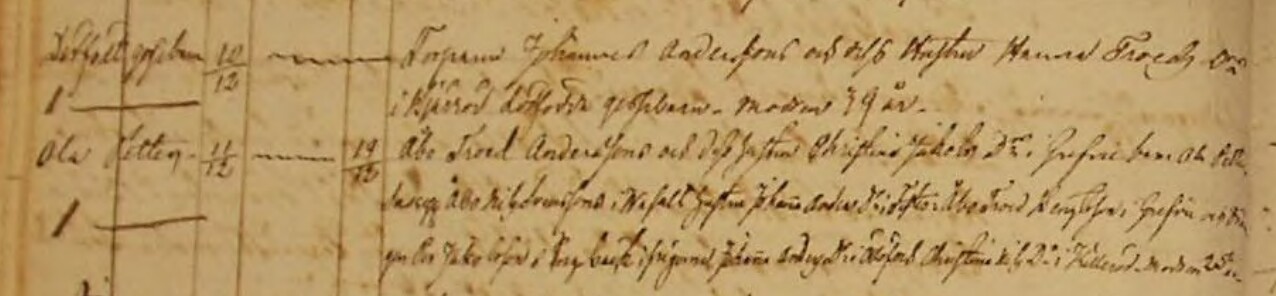
Ola Petter Troedsson, the brother of my great-great-grandfather Andreas Troedsson, was born on 11 December 1841 in Grevie, Skåne, Sweden, and was baptized on 14 December 1841. He was the first child of Troed Andersson and Christina Jacobsdotter. Household examination records list him as Sjöman (seaman) Ola Petter Troedsson.
On 12 April 1871, Ola Petter boarded the ship Friedeburg in Hamburg, Germany, headed for Australia. The passenger list showed that his previous residence was Copenhagen, Denmark (which is near Skåne, Sweden). He arrived at Moreton Bay, Queensland, Australia on 12 August 1871. The 15 August 1871 issue of the Brisbane Courier contains an account of the voyage. The text is faded and difficult to read, but additional information about the voyage can be found on a Web page about Jørgen Berthelsen's voyage to Australia. He traveled at the same time as Ola Petter.
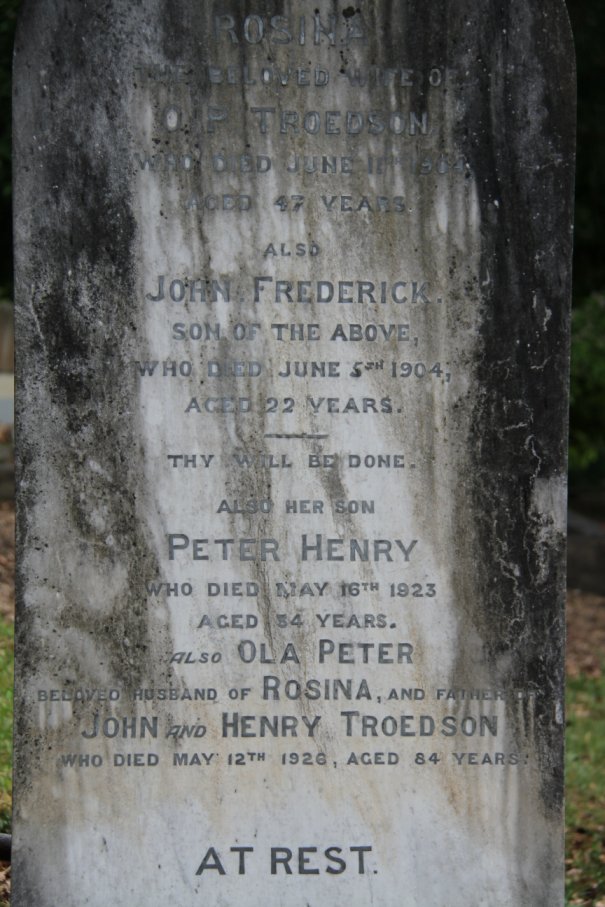
After immigrating to Australia, he modified his name slightly and was known as Ola Peter Troedson. He married Rosina Catharine Louise Walter on 20 August 1878. Rosina was an immigrant from Pfedelbach, Württemberg, Germany. She had come to Australia with her family in 1865, when she was eight years old. The couple lived in Brisbane and had nine children: Theodore Christopher (born 17 October 1879), John Frederick (born 17 July 1881), Annie Christina (born 25 January 1883), Alfred William (born 3 August 1884), Ellen Louisa (born 26 July 1886), Peter Henry (born 4 August 1888), George Arthur (born 12 April 1890), Matilda (born 1 August 1891), and Otto Edward, later known as Edward Otto (born 20 January 1893).
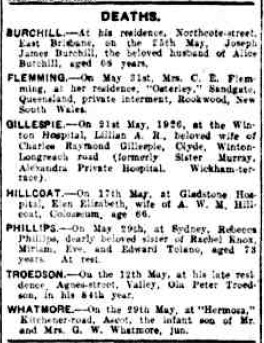
Ola Peter took an oath of allegiance on 18 July 1901. Three years later, he lost two members of his family almost at the same time: his son John Henry died on 5 June 1904, and his wife Rosina died on 11 June 1904. Two of his other children also predeceased him: his daughter Annie Christina (Troedson) McDonald died on 20 January 1916, and his son Peter Henry died on 16 May 1923.
Ola Peter died at his home in Fortitude Valley, Brisbane, Queensland, Australia on 12 May 1926. He was buried in Toowong Cemetery.
On 12 April 1871, Ola Petter boarded the ship Friedeburg in Hamburg, Germany, headed for Australia. The passenger list showed that his previous residence was Copenhagen, Denmark (which is near Skåne, Sweden). He arrived at Moreton Bay, Queensland, Australia on 12 August 1871. The 15 August 1871 issue of the Brisbane Courier contains an account of the voyage. The text is faded and difficult to read, but additional information about the voyage can be found on a Web page about Jørgen Berthelsen's voyage to Australia. He traveled at the same time as Ola Petter.
After immigrating to Australia, he modified his name slightly and was known as Ola Peter Troedson. He married Rosina Catharine Louise Walter on 20 August 1878. Rosina was an immigrant from Pfedelbach, Württemberg, Germany. She had come to Australia with her family in 1865, when she was eight years old. The couple lived in Brisbane and had nine children: Theodore Christopher (born 17 October 1879), John Frederick (born 17 July 1881), Annie Christina (born 25 January 1883), Alfred William (born 3 August 1884), Ellen Louisa (born 26 July 1886), Peter Henry (born 4 August 1888), George Arthur (born 12 April 1890), Matilda (born 1 August 1891), and Otto Edward, later known as Edward Otto (born 20 January 1893).
Ola Peter took an oath of allegiance on 18 July 1901. Three years later, he lost two members of his family almost at the same time: his son John Henry died on 5 June 1904, and his wife Rosina died on 11 June 1904. Two of his other children also predeceased him: his daughter Annie Christina (Troedson) McDonald died on 20 January 1916, and his son Peter Henry died on 16 May 1923.
Ola Peter died at his home in Fortitude Valley, Brisbane, Queensland, Australia on 12 May 1926. He was buried in Toowong Cemetery.
Birth/christening record for Ola Petter, 1841. Grevie CI-5 (1837-1861), image 27.
Birth/christening record for Ola Petter, 1841. Grevie births, 1829-1874. Page 47.
Household examination. Grevie AI-13 (1864-1869), image 80.
Household examination. Grevie AI-14 (1870-1876), image 80.
Brisbane Courier, 5 June 1926
Photo by Terry McMahon
Labels:
52 Ancestors,
Australia,
Brisbane,
Denmark,
Germany,
Grevie,
Queensland,
Skåne,
Sweden,
Troedson,
Troedsson
Monday, July 7, 2014
Mappy Monday: Grevie, Skåne, Sweden
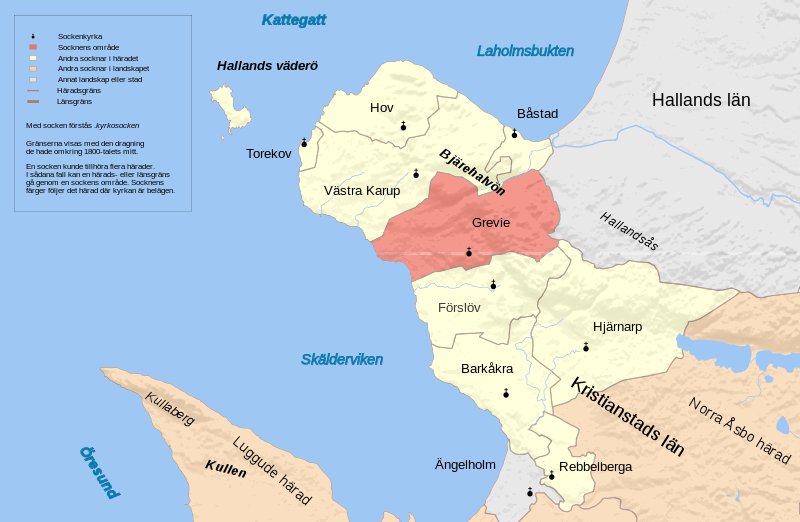
Map showing the parish Grevie in the hundred of Bjäre, Skåne, Sweden. Based on Generalstabskartan, relief from a digital elevation model of the Shuttle Radar Topography Mission. Edaen (Own work) [CC-BY-SA-3.0 (http://creativecommons.org/licenses/by-sa/3.0)]. Available from Wikimedia Commons.
This map shows the location of Grevie in the Bjäre district of Skåne lan (county), Sweden. Skåne was created in 1997, when the counties of Kristianstad and Malmöhus were merged. Skåne was formerly in Kristianstad lan. The map also shows the locations of parish churches.
My great-great-grandfather Andreas Troedsson, also known as Andrew T. Anderson, and his ancestors were from Grevie. Grevie is now part of Båstad.
This map shows the location of Grevie in the Bjäre district of Skåne lan (county), Sweden. Skåne was created in 1997, when the counties of Kristianstad and Malmöhus were merged. Skåne was formerly in Kristianstad lan. The map also shows the locations of parish churches.
My great-great-grandfather Andreas Troedsson, also known as Andrew T. Anderson, and his ancestors were from Grevie. Grevie is now part of Båstad.
Friday, June 13, 2014
52 Ancestors: #24 Andreas Troedsson/Andrew T. Anderson
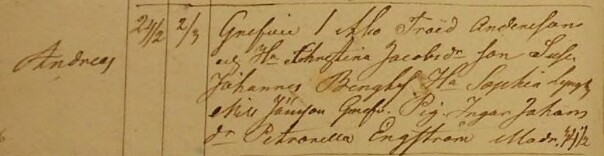
My great-great-grandfather Andreas Troedsson was born on 24 February 1851 in Grevie, Skåne, Sweden, and was baptized on 2 March 1851. He was the son of Troed Andersson and Christina Jacobsdotter. The EmiHamn database records his date of emigration as 11 March 1872; he left from Copenhagen, Denmark, and his destination was Chicago, Illinois. He was the first of his siblings to come to America; two brothers and two sisters followed him. After he arrived in America, he changed his name to Andrew T. Anderson. His middle initial was from his original patronymic, Troedsson, and his new surname was probably chosen because it was a modified version of his father's patronymic. His brothers also adopted the surname Anderson and used the middle initial T.
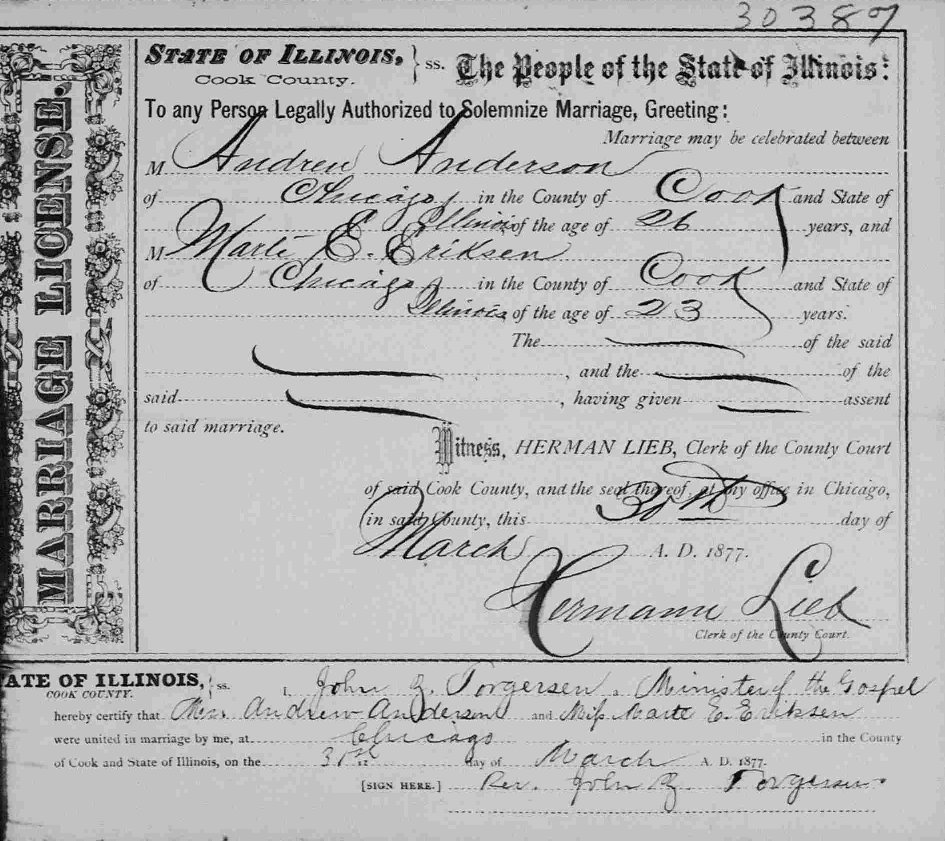
He married Marthe Elisabeth Erickson, an immigrant from Avaldsnes, Rogaland, Norway, in Chicago on 31 March 1877. They had seven children: Anna Matilda (born 13 April 1878), Emma Christina (born 2 June 1880, died 9 June 1881), my great-grandfather Edward Theodore (born 10 August 1882), Albert Bernard (born 28 March 1885), Esther Elizabeth (born 1 September 1889), Reuben Alexander (born 19 December 1892), and Ruth Elvira (born 18 June 1896).
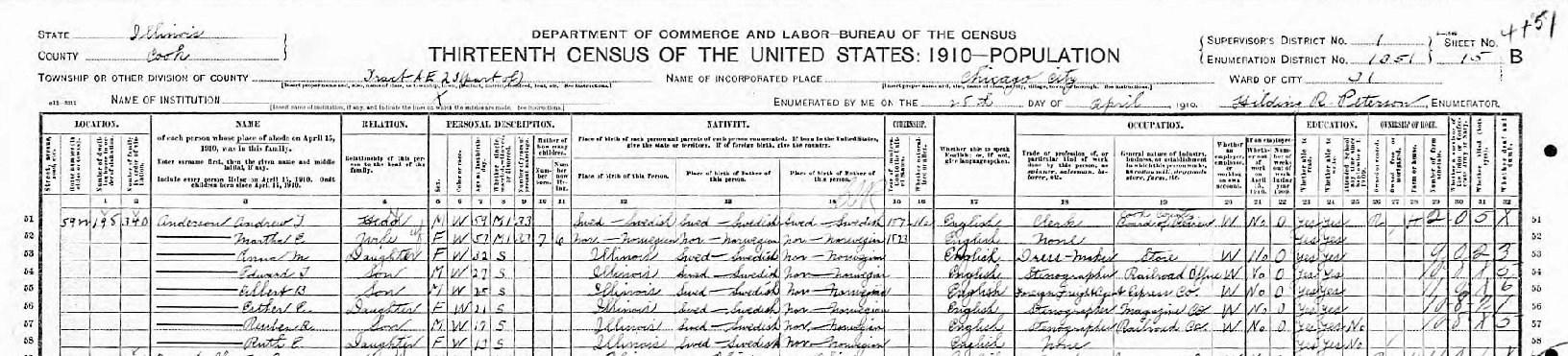
He was a wood turner. He made a set of chairs and gave one to each of his children (except baby Emma). My father has the chair that belonged to Edward Theodore. By 1910, he was a clerk for the Cook County Board of Review.
In 1912, he returned to Sweden to visit his sister Carolina. He also saw his brother Johannes while he was there. He returned to the United States on 28 July 1912. He arrived at Ellis Island on the Caronia, which had sailed from Liverpool, England.
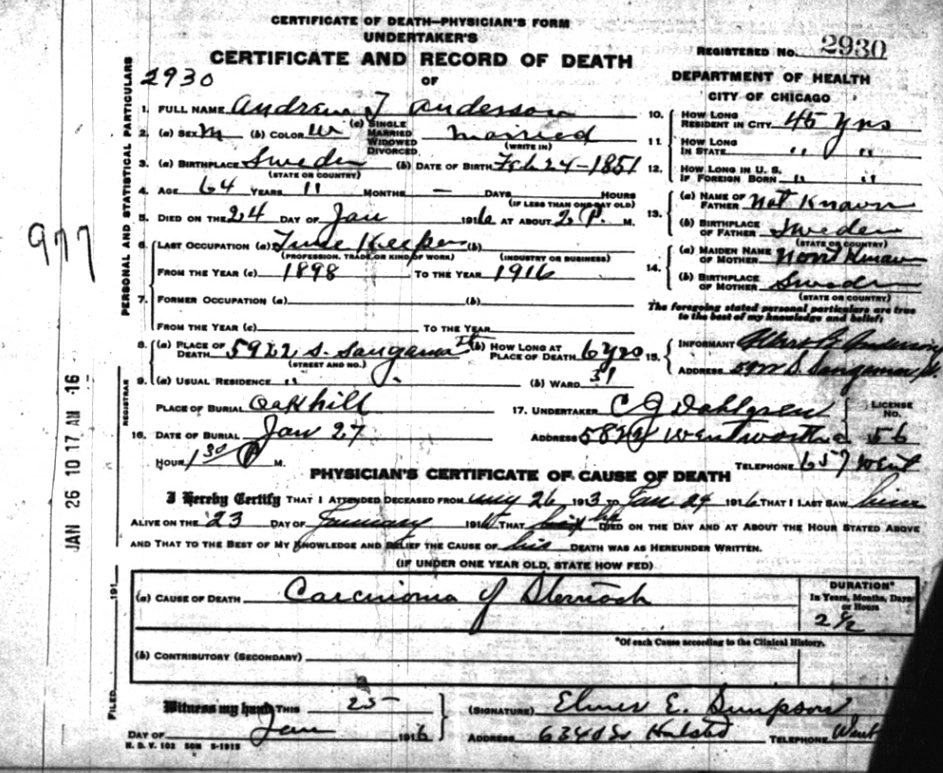
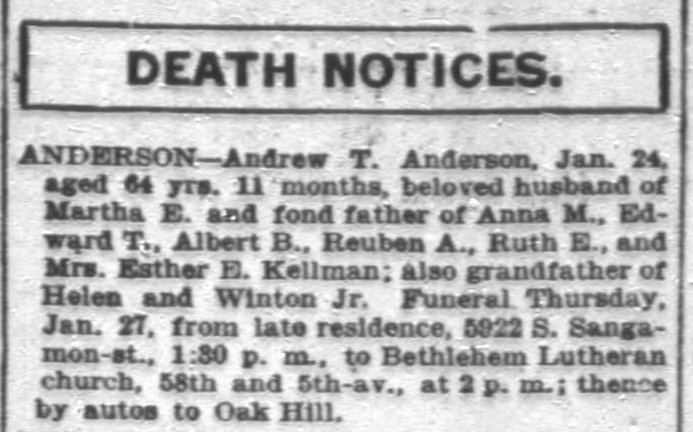
He died in Chicago on 24 January 1916 and was buried in Oak Hill Cemetery on 27 January 1916.
He married Marthe Elisabeth Erickson, an immigrant from Avaldsnes, Rogaland, Norway, in Chicago on 31 March 1877. They had seven children: Anna Matilda (born 13 April 1878), Emma Christina (born 2 June 1880, died 9 June 1881), my great-grandfather Edward Theodore (born 10 August 1882), Albert Bernard (born 28 March 1885), Esther Elizabeth (born 1 September 1889), Reuben Alexander (born 19 December 1892), and Ruth Elvira (born 18 June 1896).
He was a wood turner. He made a set of chairs and gave one to each of his children (except baby Emma). My father has the chair that belonged to Edward Theodore. By 1910, he was a clerk for the Cook County Board of Review.
In 1912, he returned to Sweden to visit his sister Carolina. He also saw his brother Johannes while he was there. He returned to the United States on 28 July 1912. He arrived at Ellis Island on the Caronia, which had sailed from Liverpool, England.
He died in Chicago on 24 January 1916 and was buried in Oak Hill Cemetery on 27 January 1916.
Birth/christening record for Andreas, 1851. Grevie CI (1837-1861), image 79. (AID: v99277.b79, NAD: SE/LLA/13113)
Cook County, Illinois Marriage license and return, Andrew Anderson and Marte E. Eriksen, 1877.
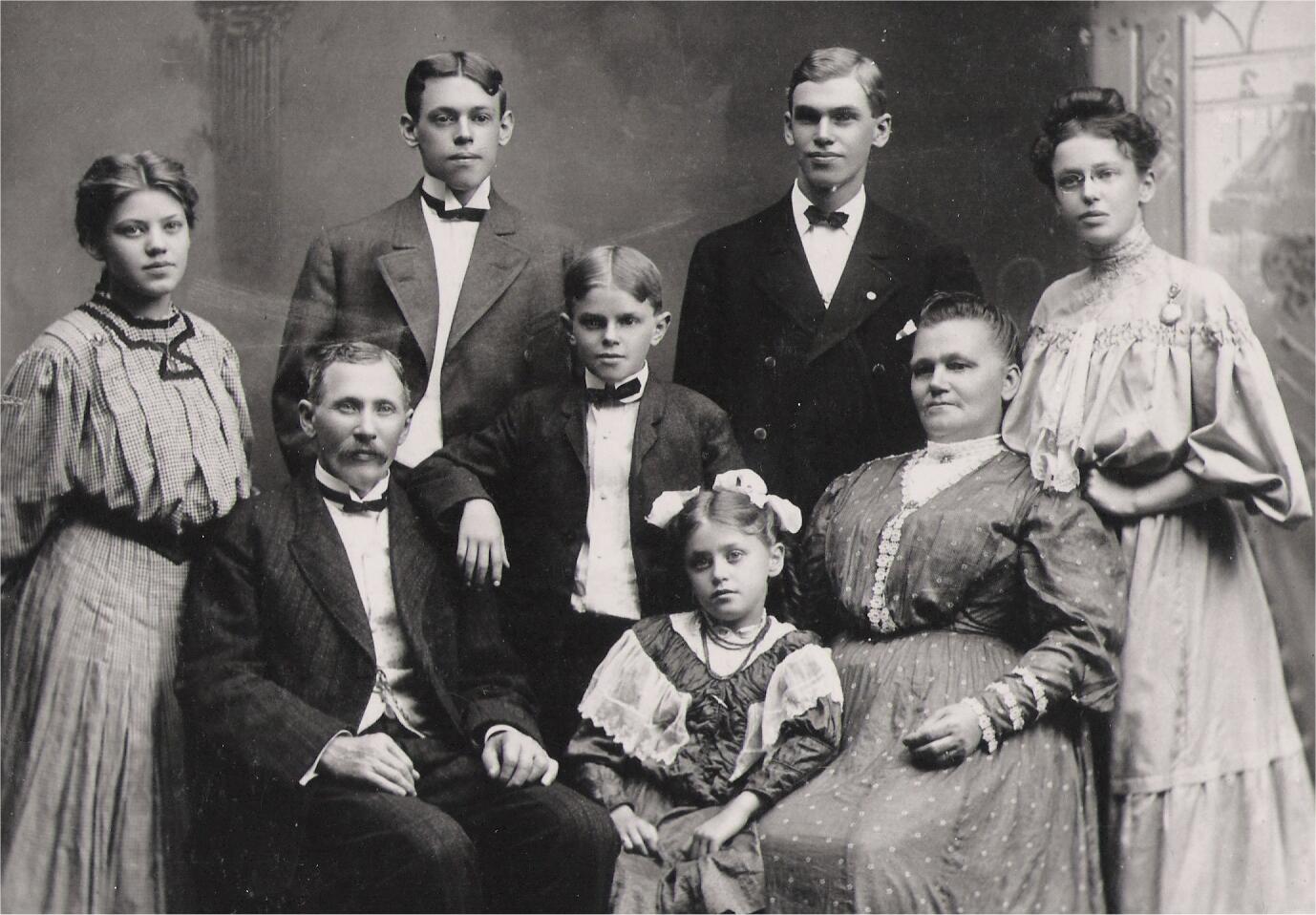
Anderson family ca. 1906: Esther, Andrew, Albert, Reuben, Ruth, Edward, Marthe, Anna.
1910 United States census, Chicago, Cook, Illinois, Ward 31, population schedule, enumeration district 1351, page 15B.
City of Chicago, Department of Health. Certificate of death no. 2930, Andrew T. Anderson, 24 January 1916.
Chicago Daily Tribune, 26 January 1916
Saturday, March 29, 2014
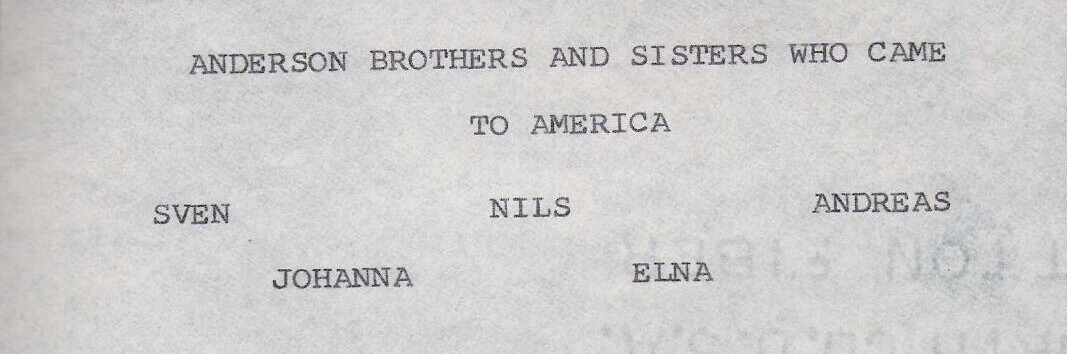
Sibling Saturday: The Five Anderson Siblings Who Came to America
Five of the children of Troed Andersson and Christina Jacobsdotter left Sweden and came to the United States.
Andreas Troedsson, my great-great-grandfather (born 24 February 1851 in Grevie, Skåne, Sweden), was the first come to the United States. He immigrated in 1872 and changed his name to Andrew T. Anderson; the middle initial T was from his original patronymic, Troedsson. He settled in Chicago, Illinois, where he married Marthe Elisabeth Erickson on 31 March 1877. They had seven children. He died in Chicago on 24 Jaunary 1916 and was buried in Oak Hill Cemetery.
Johanna (born 16 February 1849 in Grevie, Skåne, Sweden) came to the United States in the mid-1870s and settled in Chicago. She married Frans Ludvig Oscar Sandquist, a widower, on 19 December 1885. They had four children. Johanna died in Chicago on 4 February 1934 and was buried in Oak Woods Cemetery.
Sven (born 30 December 1856 in Grevie, Skåne, Sweden) came to the United States in the mid-1870s. He changed his name from Sven Troedsson to Sven T. Anderson. In 1880 he lived in Suez Township, Mercer County, Illinois. By 1885 he had moved to Morris County, Kansas. He married Hannah Louise Abramson on 18 October 1887. They had thirteen children. Sven died on 6 October 1914 and was buried in Hebron Lutheran Church Cemetery in Morris County, Kansas.
Nils (born 14 November 1852 in Grevie, Skåne, Sweden) came to the United States in the early 1880s. He changed his name from Nils Troedsson to Nils T. Anderson. He settled in Chicago, where he married Ida C. Anderson on 27 November 1886. They had three children. Nils died in Chicago on 6 July 1928 and was buried in Rosehill Cemetery.
Elna (born in 23 August 1845 in Grevie, Skåne, Sweden) married Nils Jonsson in Grevie on 15 April 1864. Their children came to the United States. In 1903, Elna and her son Sven Peter Nilsson came to the United States. Elna changed her name to Elna Nelson, because her children used the surname Nelson. Elna died in Chicago on 27 September 1925 and was buried in Graceland Cemetery.
Labels:
Anderson,
Chicago,
Grevie,
Illinois,
Kansas,
Nelson,
Sandquist,
Sibling Saturday,
Skåne,
Sweden,
Troedsdotter,
Troedsson
Thursday, March 20, 2014
Treasure Chest Thursday: Andrew T. Anderson's Chair
My parents have a chair that was made by my father's great-grandfather (and my great-great-grandfather) Andrew T. Anderson, who was born Andreas Troedsson on 24 Feb 1851 in Grevie, Skåne, Sweden. He was a wood turner. He immigrated to the United States and settled in Chicago, Illinois, which must have been where this chair was made.
Tuesday, December 11, 2012
So many discoveries!
In the last week I have found so much information about my family. I learned more about several of the siblings of my great-great-grandfather Andrew T. Anderson (born Andreas Troedsson in Grevie, Skåne, Sweden). I found the passenger list which documents the arrival of his sister Elna and her son Sven Peter Nilsson/Nelson. They arrived in Boston, Massachusetts on 2 September 1903, and then went to Chicago, Illinois. I found their brother Sven T. Anderson on Find A Grave, and there is a photo of his tombstone. According to the family history compiled by my grandmother's cousin, their oldest brother Ola Petter Troedsson went to Australia. A few days ago I confirmed that he did settle there; he emigrated from Sweden to Brisbane, Queensland.
I also learned more about the family of my 3rd-great-grandfather John Bennet Winters. He was born in Scotland, and was with his parents and siblings in Leith, Midlothian, Scotland in 1841. By 1859 he was in Tonawanda, Erie, New York, where he married Anna Walker. I did not know if he emigrated alone or with family. I could not find his family in Scotland in 1851. I looked for them in England too, but did not find them. According to the 1841 census, his parents, Hugh Winters and Mary Bennet, were born in Ireland. Last night I found out that they emigrated to the United States and lived in Brooklyn, New York; they were there by 1851, when another child of theirs was baptized.
Subscribe to:
Posts (Atom)