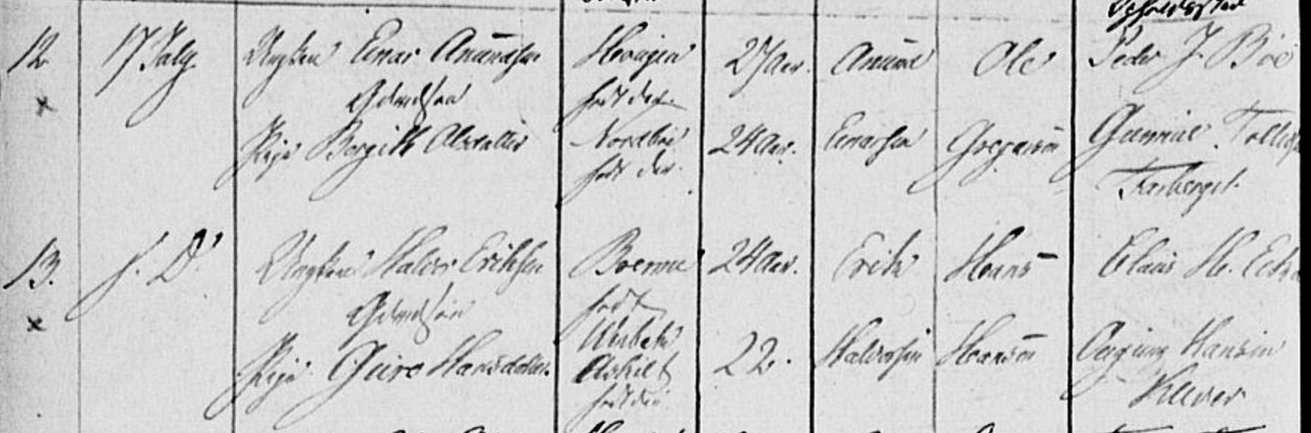
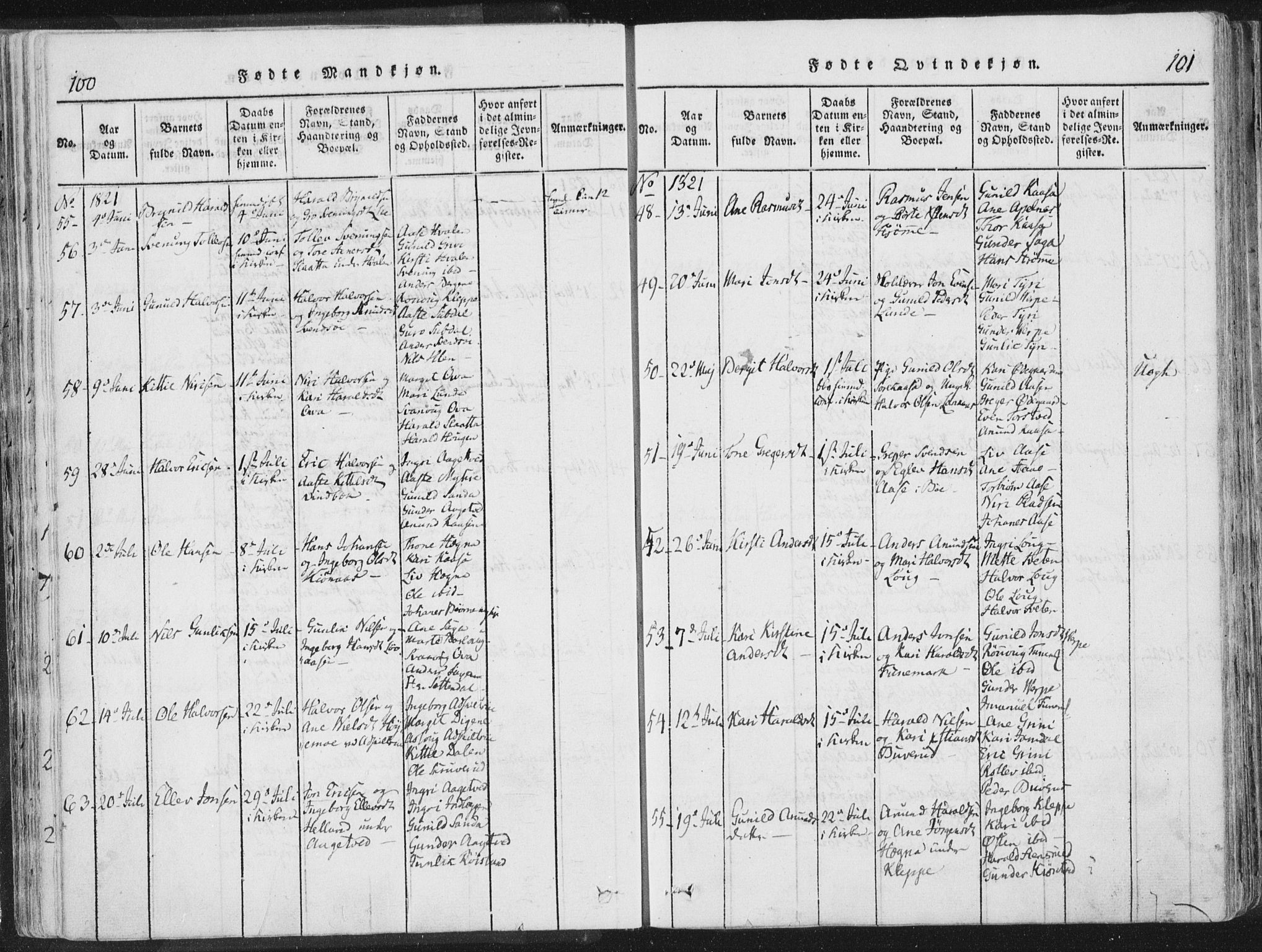
My 3rd-great-grandfather Halvor Eriksen Otterholt was born on 28 June 1821 in Bø, Telemark, Norway, and was baptized on 1 July 1821. He was the son of Erik Halvorsen Sønstebø (also known as Erik Halvorsen Brenne) and Aaste Kittilsdatter. Erik was the sister of Kari Halvorsdatter Sønstebø; both are my 4th-great-grandparents through different lines of descent.
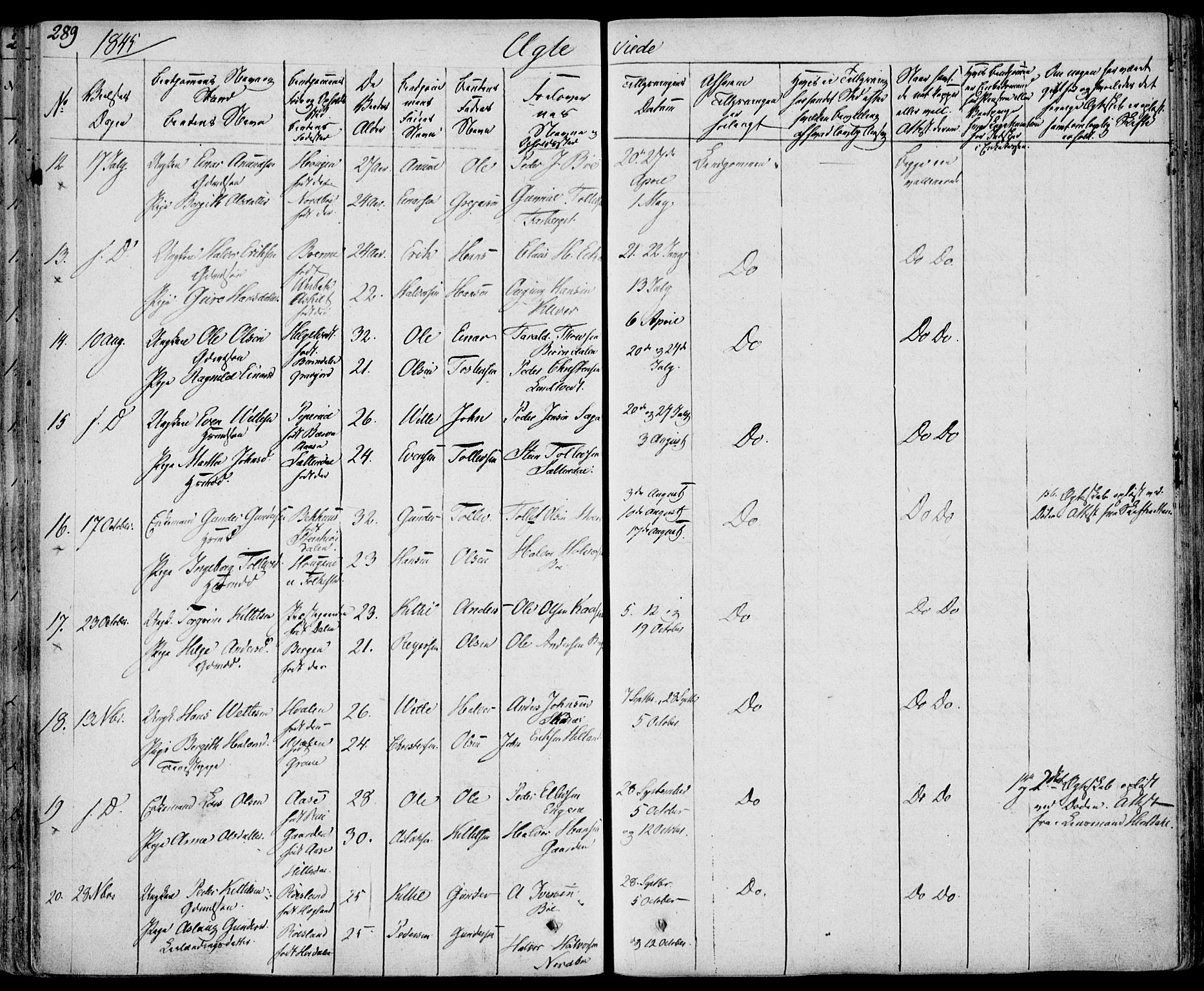
On 17 July 1845 in Bø. Halvor married Guro Hansdatter Askilt. They had seven children in Norway: Erik, born
25 April 1846; Hans, born 5 August 1847; Kittel or Kjetil (later known as Charles), born 11 September 1850; Torkel, born 6 September 1852; my 2nd-great-grandmother Aaste, born 3 February 1854; Anne, born 25 February 1858; and Kari, born 7 September 1861.
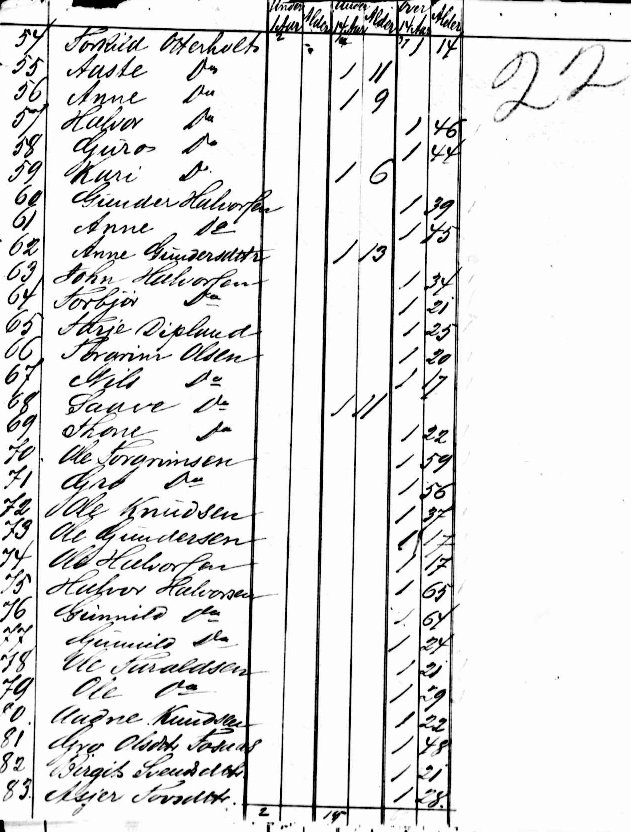
In 1865, Halvor and his family lived on the Otterholdt (or Otterholt) farm in Bø. He was listed as a Gaardbrgr og Selveier (farmer or owner, freeholder).
In 1867, Halvor and his family immigrated to the United States. In Boe (Bø) and Halvorson-Otterholt: Shared Roots in Telemark (compiled by Melvin and Alpha M. (Boe) Brodshaug, 1984; published by
Arlene (Boe) Christensen and Marjorie (Boe) Bergee; printed by Anundsen
Publishing Co., Decorah, Iowa), there is a quote from a letter written to Leland Otterholt by Aaste Lie: "The Otterholts were a prosperous people. Halvor loved the horses and bet on them but lost. Being proud, he decided to emigrate to America with his family." Although there may have been other reasons for the family's emigration, I suspect that there is at least a grain of truth to that statement. The family left Norway from Skien, Telemark on the Rjukan, and they arrived in Quebec, Canada on 30 May 1867.
Halvor and his family settled in Canisteo, Dodge County, Minnesota. About 1868, Halvor and Guro's last child, Johanna, was born. The family was enumerated in Canisteo in the 1870 United States census. Halvor was a farmer. His real estate had a value of $800, and his personal estate had a value of $340. In the United States, he was usually known as Halvor Erickson. Some of his children used the surname Halvorson, and some used the surname Otterholt.
By 1875, the family had moved to Swenoda, Swift County, Minnesota. In 1880, they lived in West Bank, Swift County, Minnesota. Halvor became a citizen of the United States on 18 May 1880.
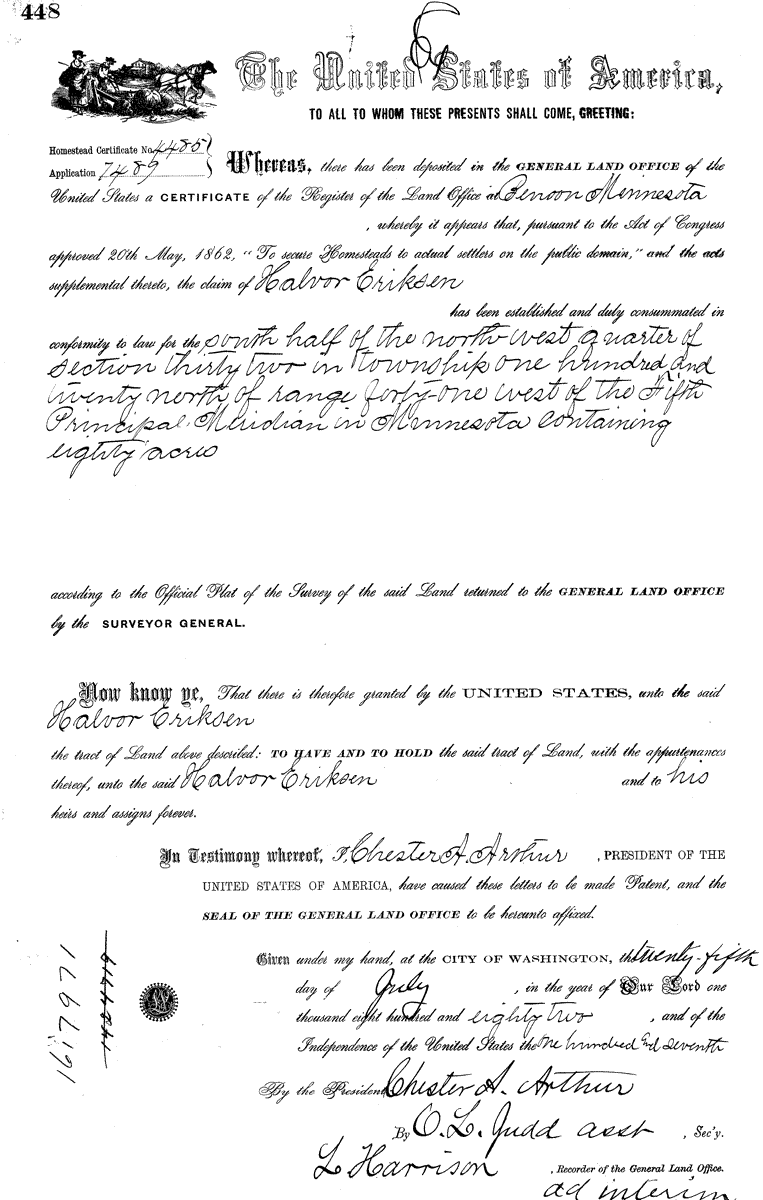
Halvor applied for a land patent through the Homestead Act of 1862, for 80 acres of land located in the south half, northwest quarter, section 32 of Township 120 North of Range No. 41 west of the Principal Meridian, Swift County, Minnesota. He had settled on the land in June 1873 and built a house and a stable, and dug a well. His patent was issued on 25 July 1882. His son-in-law Jorgen Jorgensen Boe (my 2nd-great-grandfather) received his certificate the same day, for nearby land. Halvor later applied for an additional land patent, for 80 acres of land located in the east half, northeast quarter, section 31 of Township 120 North of Range No. 41 west of the Principal Meridian, Swift County, Minnesota. His patent was issued on 1 April 1892.
Halvor died on 14 January 1898. He was buried in Big Bend Lutheran Church Cemetery in Milan, Chippewa County, Minnesota.
Telemark county, Bø, Parish register (official) nr. 6 (1815-1831), Birth and baptism records 1821, page 100-101. http://www.arkivverket.no/URN:NBN:no-a1450-kb20051011061114.jpg
Telemark county, Bø, Parish register (official) nr. 7 (1831-1848), Marriage records 1845, page 289. http://www.arkivverket.no/URN:NBN:no-a1450-kb20051011050327.jpg
Telemark county, Bø, Parish register (official) nr. 9 (1862-1879), Migration records 1868, page 382. http://www.arkivverket.no/URN:NBN:no-a1450-kb20051011051208.jpg
Passenger list, Rjukan, 1867. Passenger Lists, 1865–1935. Microfilm Publications T-479 to T-520, T-4689 to T-4874, T-14700 to T-14939, C-4511 to C-4542. Library and Archives Canada, n.d. RG 76-C. Department of Employment and Immigration fonds. Library and Archives Canada Ottawa, Ontario, Canada. Available from Ancestry.com. Canadian Passenger Lists, 1865-1935 [database on-line]. Provo, UT, USA: Ancestry.com Operations Inc, 2010.
Halvor Erikson naturalization, 18 May 1880. Swift County District Court, State of Minnesota. From Halvor Eriksen land entry case file no. 4485, 1882.
Halvor Eriksen, Swift County, Minnesota. Certificate no. 4485. United States Bureau of Land Management, 25 July 1882.
Covering genealogy, family history, historical events and places, and anything else related!
Sunday, December 14, 2014
Saturday, December 13, 2014
Saint Lucia Day
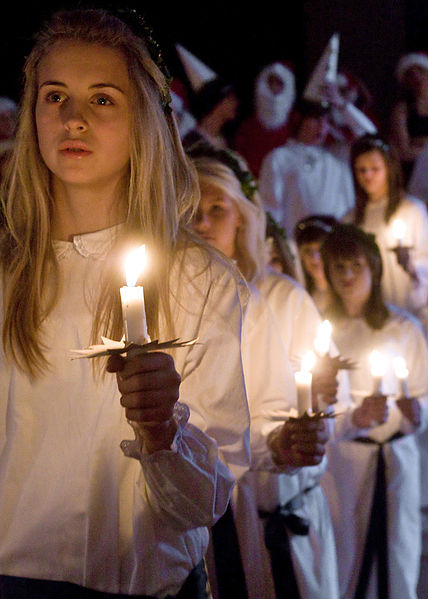
Saint Lucia Day procession, Sweden, 13 December 2007. Photo by Fredrik Magnusson (Lucia) [CC-BY-2.0 http://creativecommons.org/licenses/by/2.0)]. Available from Wikimedia Commons.
Lussebullar. Photo by Per Ola Wiberg [CC-BY-2.0 (http://creativecommons.org/licenses/by/2.0)]. Available from Wikimedia Commons.
December 13 is Saint Lucia Day. It is a major feast day in the Scandinavian countries. The day has been observed in the Nordic countries since the Middle Ages, and continued after the Protestant Reformation. The modern Saint Lucia Day celebration began about 200 years ago. Until the eighteenth century, the night of Lucia Day was believed to be the longest night of the year, the winter solstice. It would have been the longest night of the year under the Julian calendar in the 14th century. Now that the Gregorian calendar is in use, it is no longer the longest night of the year.
In Sweden, there is a candlelit procession. In 1927, a newspaper in Stockholm elected an official Lucia for Stockholm, and the tradition of public processions began. An official Lucia is appointed in cities. Schools elect a Lucia, and a national Lucia is elected on television. The girl portraying Lucia wears a white gown with a red sash. She also wears a crown of candles on her head, because Lucia traditionally wears light in her hair. Lucia is accompanied by her maids. Boys also participate in the procession. They may be "star boys" (stjärngossar) dressed in white robes and a cone-shaped hat decorated with golden stars, gingerbread men, or tomtenissar with lanterns. When celebrated at home, the oldest daughter dresses as Lucia and serves the family coffee and saffron buns (lussekatter or lussebullar), which are traditionally eaten on this day. Traditional Lucia carols are sung; they are about overcoming the darkness with light. You can hear a Lucia song and read the lyrics in Swedish and English at Mama Lisa's World.
In Finland, Saint Lucia Day has traditionally been observed by Swedish-speaking Finns. Lucias are elected in Swedish-speaking areas. The Finnish-speaking population has begun to participate in the celebrations as well. Schools and day care centers may have processions. The national Lucia of Finland is crowned in Helsinki Cathedral.
In Norway, the night of December 13, Lussinatten, was considered the longest night of the year. No work was to be done on this night, because the enchantress Lussi punished anyone who worked; farms might be vandalized, or people might be abducted. After World War II, Norway adopted the traditional Swedish celebration. It has recently been incorporated into the Advent liturgy of the Church of Norway.
Denmark also adopted the traditional Swedish celebration. Franz Wend, secretary of Föreningen Norden, initiated the adoption of the Lucia celebration. On 13 December 1944, the Day of Lucia was celebrated for the first time in Denmark. The Danish celebration is centered on Christianity.
References
Christmas in Sweden
Lucia and Christmas concerts
Lucia in Sweden
Saint Lucia Day - My Little Norway
St. Lucia Day in Scandinavia
St. Lucia’s Day light conquers winter's darkness
St Lucy's Day
Lussebullar. Photo by Per Ola Wiberg [CC-BY-2.0 (http://creativecommons.org/licenses/by/2.0)]. Available from Wikimedia Commons.
December 13 is Saint Lucia Day. It is a major feast day in the Scandinavian countries. The day has been observed in the Nordic countries since the Middle Ages, and continued after the Protestant Reformation. The modern Saint Lucia Day celebration began about 200 years ago. Until the eighteenth century, the night of Lucia Day was believed to be the longest night of the year, the winter solstice. It would have been the longest night of the year under the Julian calendar in the 14th century. Now that the Gregorian calendar is in use, it is no longer the longest night of the year.
In Sweden, there is a candlelit procession. In 1927, a newspaper in Stockholm elected an official Lucia for Stockholm, and the tradition of public processions began. An official Lucia is appointed in cities. Schools elect a Lucia, and a national Lucia is elected on television. The girl portraying Lucia wears a white gown with a red sash. She also wears a crown of candles on her head, because Lucia traditionally wears light in her hair. Lucia is accompanied by her maids. Boys also participate in the procession. They may be "star boys" (stjärngossar) dressed in white robes and a cone-shaped hat decorated with golden stars, gingerbread men, or tomtenissar with lanterns. When celebrated at home, the oldest daughter dresses as Lucia and serves the family coffee and saffron buns (lussekatter or lussebullar), which are traditionally eaten on this day. Traditional Lucia carols are sung; they are about overcoming the darkness with light. You can hear a Lucia song and read the lyrics in Swedish and English at Mama Lisa's World.
In Finland, Saint Lucia Day has traditionally been observed by Swedish-speaking Finns. Lucias are elected in Swedish-speaking areas. The Finnish-speaking population has begun to participate in the celebrations as well. Schools and day care centers may have processions. The national Lucia of Finland is crowned in Helsinki Cathedral.
In Norway, the night of December 13, Lussinatten, was considered the longest night of the year. No work was to be done on this night, because the enchantress Lussi punished anyone who worked; farms might be vandalized, or people might be abducted. After World War II, Norway adopted the traditional Swedish celebration. It has recently been incorporated into the Advent liturgy of the Church of Norway.
Denmark also adopted the traditional Swedish celebration. Franz Wend, secretary of Föreningen Norden, initiated the adoption of the Lucia celebration. On 13 December 1944, the Day of Lucia was celebrated for the first time in Denmark. The Danish celebration is centered on Christianity.
References
Christmas in Sweden
Lucia and Christmas concerts
Lucia in Sweden
Saint Lucia Day - My Little Norway
St. Lucia Day in Scandinavia
St. Lucia’s Day light conquers winter's darkness
St Lucy's Day
Friday, December 12, 2014
Follow Friday: Hoosier Daddy?
In his blog Hoosier Daddy?, Michael Lacopo writes about his search for his mother's father. His mother was adopted as a baby. He eventually found his mother's biological mother and her family, and he thought he knew the identity of his mother's biological father. However, DNA testing revealed that her mother's father was neither his grandmother's first husband nor her second husband. Through DNA testing, Michael narrows down the list of possible candidates for his grandfather. Along the way, there are some surprises. I eagerly await additional posts, and I also want to know the identity of his grandfather!
Thursday, December 11, 2014
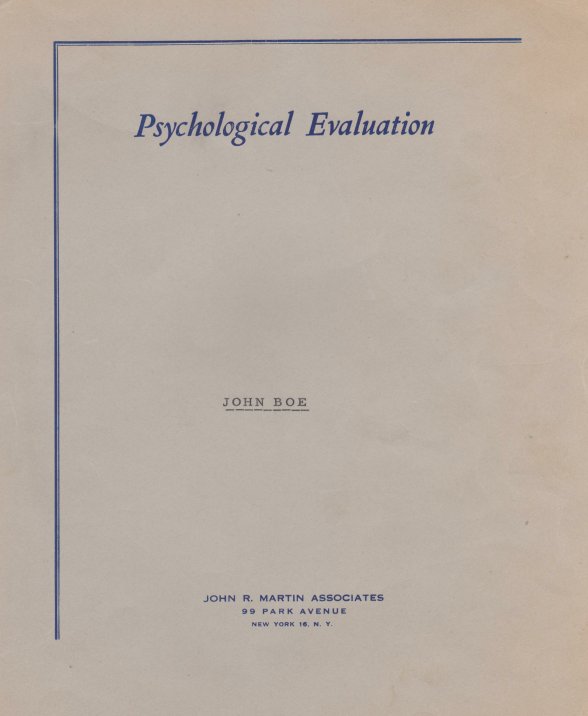
Treasure Chest Thursday: Psychological Evaluation of John Boe
I have a psychological evaluation of my maternal grandfather John Boe, which was done on 12 June 1959 by Charles Roth, consulting psychologist for John R. Martin Associates, a firm of psychological consultants to management. My grandfather was Executive Vice President, P. F. Collier & Son, Crowell-Collier Publishing Co. The three-page evaluation consists of five sections and a summary, and is very positive. It is very interesting to read a psychologist's assessment of my grandfather. I saw some of myself in portions of the evaluation, which made me wonder if I inherited certain traits from my grandfather. In the summary, Dr. Roth stated "When psychological qualifications alone are considered, Mr. John Boe is functioning with very superior effectiveness in his present position." His employer apparently agreed; my grandfather eventually became Chairman of the Board and President of P. F. Collier.
Wednesday, December 10, 2014
Workday Wednesday: Wonder Lake Syndicate
The 1930 United States census shows that Fritz Arthur Gilbert, the husband of my great-grandmother's sister Juliet Dahlquist, was the treasurer for a company that made artificial lakes.
1930 United States census, Chicago, Illinois, Ward 17, population schedule, enumeration district 16-647, sheet no. 4B. Available from Ancestry.com. 1930 United States Federal Census [database on-line]. Provo, UT, USA: Ancestry.com Operations Inc, 2002.
The 1940 United States census shows that he was the treasurer for a real estate supply company.
1940 United States Census. Chicago, Illinois, Ward 17, population schedule, enumeration district 103-1148, sheet no. 2A. Available from Ancestry.com. 1940 United States Federal Census [database on-line]. Provo, UT, USA: Ancestry.com Operations, Inc., 2012.
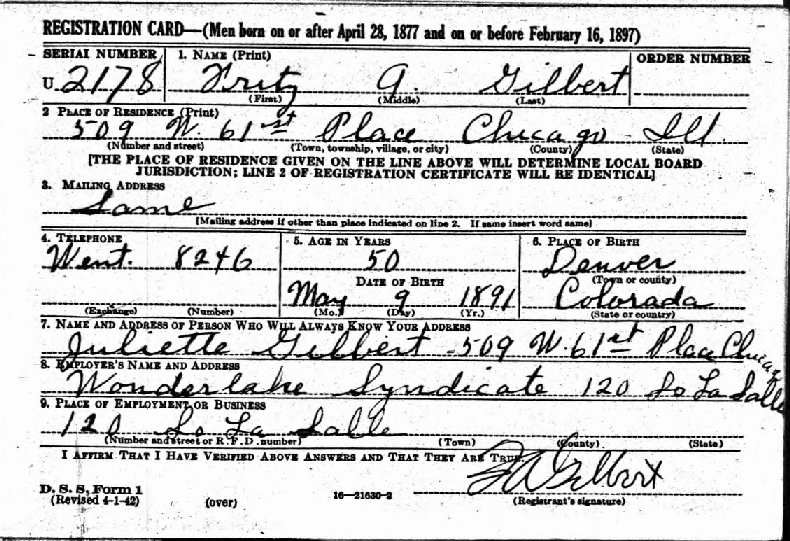
Fritz Arthur Gilbert's World War II draft registration card shows that the company he worked for was Wonder Lake Syndicate.
Draft registration card, Fritz A. Gilbert. United States, Selective Service System. Selective Service Registration Cards, World War II: Fourth Registration. Records of the Selective Service System, Record Group Number 147. National Archives and Records Administration. Available from Ancestry.com. U.S., World War II Draft Registration Cards, 1942 [database on-line]. Provo, UT, USA: Ancestry.com Operations, Inc., 2010.
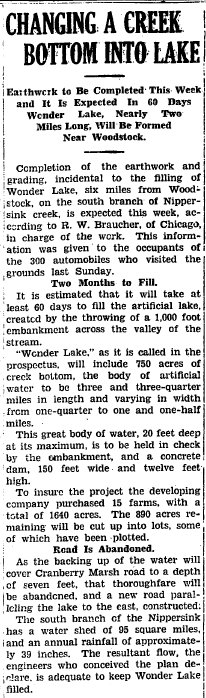
The Wonder Lake Realty Trust, or Wonder Lake Syndicate, purchased farmland in McHenry County, Illinois. In 1929, a dam was built across Nippersink Creek, and the farmland was flooded to create an artificial lake. The plan was to create a recreational community patterned after Lake Geneva, Wisconsin. Houses were build along the shores of the lake. The first subdivision opened in 1930. In 1934, 46 homes were built at Wonder Lake, and nearly 100 parcels of land were sold. In 1935, 95 homes were built, and 180 home sites were sold. In 1936, 75 houses were built, and 200 home sites were purchased. By 1953, 300,000 to 400,000 lots had been sold.
In 1963, the Wonder Lake Syndicate turned the lake over to the Master Property Owners Association, which represented the subdivisions of the community.
In 1968, Fritz Arthur Gilbert was vice president and treasurer of Wonder Lake Realty Trust. His death certificate (dated 4 March 1978) states that he was president of a real estate company.
United States Census Bureau reference map of Wonder Lake (CDP), Illinois. Available from Wikimedia Commons.
References
Century's Turn Saw Start of Fine Lake Sites. Chicago Tribune, 30 May 1953, part 1, page 10.
Hall of Fame Cites Palatine Resident. Chicago Tribune, 5 May 1968, section 10, page 2.
A Legend Grows in Popularity
Machaj, Sandra Landen. Northeast McHenry County. Charleston, SC: Arcadia Publishing, 2009.
75 Homes Built So Far at Wonder Lake in 1936. Chicago Tribune, 19 July 1936, part 2, page 14.
1930 United States census, Chicago, Illinois, Ward 17, population schedule, enumeration district 16-647, sheet no. 4B. Available from Ancestry.com. 1930 United States Federal Census [database on-line]. Provo, UT, USA: Ancestry.com Operations Inc, 2002.
The 1940 United States census shows that he was the treasurer for a real estate supply company.
1940 United States Census. Chicago, Illinois, Ward 17, population schedule, enumeration district 103-1148, sheet no. 2A. Available from Ancestry.com. 1940 United States Federal Census [database on-line]. Provo, UT, USA: Ancestry.com Operations, Inc., 2012.
Fritz Arthur Gilbert's World War II draft registration card shows that the company he worked for was Wonder Lake Syndicate.
Draft registration card, Fritz A. Gilbert. United States, Selective Service System. Selective Service Registration Cards, World War II: Fourth Registration. Records of the Selective Service System, Record Group Number 147. National Archives and Records Administration. Available from Ancestry.com. U.S., World War II Draft Registration Cards, 1942 [database on-line]. Provo, UT, USA: Ancestry.com Operations, Inc., 2010.
The Wonder Lake Realty Trust, or Wonder Lake Syndicate, purchased farmland in McHenry County, Illinois. In 1929, a dam was built across Nippersink Creek, and the farmland was flooded to create an artificial lake. The plan was to create a recreational community patterned after Lake Geneva, Wisconsin. Houses were build along the shores of the lake. The first subdivision opened in 1930. In 1934, 46 homes were built at Wonder Lake, and nearly 100 parcels of land were sold. In 1935, 95 homes were built, and 180 home sites were sold. In 1936, 75 houses were built, and 200 home sites were purchased. By 1953, 300,000 to 400,000 lots had been sold.
In 1963, the Wonder Lake Syndicate turned the lake over to the Master Property Owners Association, which represented the subdivisions of the community.
In 1968, Fritz Arthur Gilbert was vice president and treasurer of Wonder Lake Realty Trust. His death certificate (dated 4 March 1978) states that he was president of a real estate company.
True Republican, 6 November 1929, page 7. Available from Illinois Digital Newspaper Collections.
View of Wonder Lake, 1930. Photo by Lester Klintworth. Available from Wonder Lake Live.
United States Census Bureau reference map of Wonder Lake (CDP), Illinois. Available from Wikimedia Commons.
References
Century's Turn Saw Start of Fine Lake Sites. Chicago Tribune, 30 May 1953, part 1, page 10.
Hall of Fame Cites Palatine Resident. Chicago Tribune, 5 May 1968, section 10, page 2.
A Legend Grows in Popularity
Machaj, Sandra Landen. Northeast McHenry County. Charleston, SC: Arcadia Publishing, 2009.
75 Homes Built So Far at Wonder Lake in 1936. Chicago Tribune, 19 July 1936, part 2, page 14.
Tuesday, December 9, 2014
Talented Tuesday: Laszlo James Nagy, Violinist
Photo from Boston Symphony Orchestra Musicians List
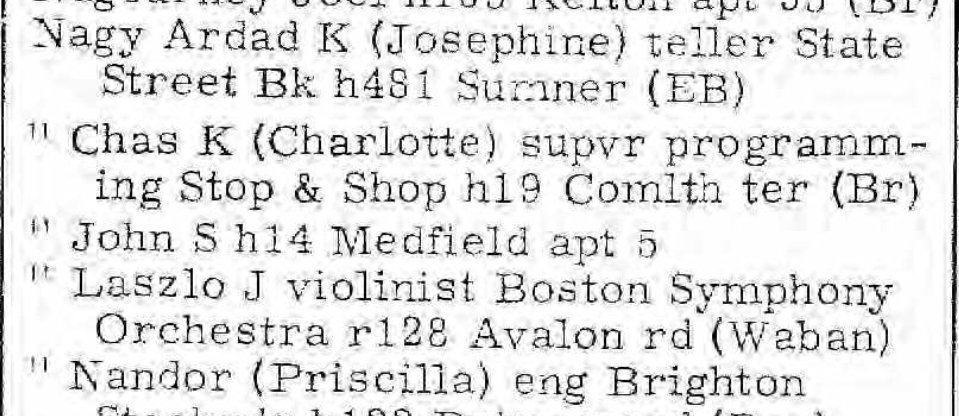
Laszlo James Nagy, the husband of my maternal grandmother's sister Paula Christina Schneider, was a professional violinist. At age 10, he began studying violin and piano with a member of the New York Philharmonic Orchestra. He played with the St. Louis Symphony Orchestra for 10 years. In 1944, he began playing with the Boston Symphony Orchestra; he played with them until he retired in 1985. He was an expert on Hungarian gypsy music.
1940 United States census, St. Louis City, Ward 4, population schedule, enumeration district 96-580, sheet no. 5A. Available from Ancestry.com. 1940 United States Federal Census [database on-line]. Provo, UT, USA: Ancestry.com Operations, Inc., 2012.
Polk's Newton (Middlesex County, Mass.) City Directory. Vol. XL, 1945. Boston, MA: R. L. Polk & Co. Available from Ancestry.com. U.S. City Directories, 1821-1989 [database on-line]. Provo, UT, USA: Ancestry.com Operations, Inc., 2011.
Polk's Boston (Suffolk County, Mass.) City Directory. Vol. CLXI, 1964. Boston, MA: R. L. Polk & Co. Available from Ancestry.com. U.S. City Directories, 1821-1989 [database on-line]. Provo, UT, USA: Ancestry.com Operations, Inc., 2011.
Boston Symphony Orchestra concert programs, Season 79, 1959-1960. Boston, MA: Boston Symphony Orchestra. Available from Internet Archive.
Monday, December 8, 2014
Mystery Monday: Why Did James Mapplebeck Go to California?
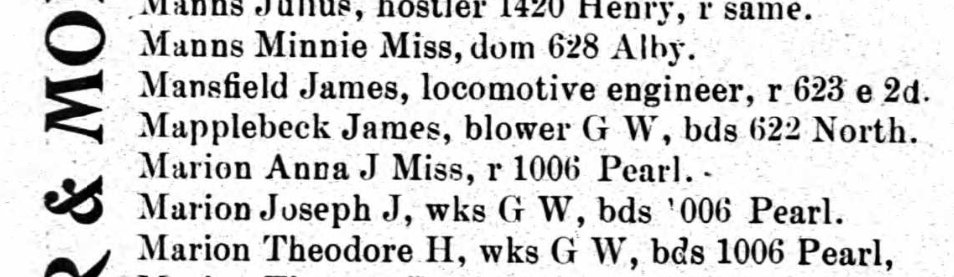
In 1895, James Mapplebeck was living in Alton, Madison County, Illinois. He had left Montreal, Quebec, Canada around 1891-1892, after the 1891 Census of Canada.
J. P. Hodge and Sons' Directory of the City of Alton, North Alton and Upper Alton, 1895-1896. Alton, IL: J. P. Hodge & Sons. Available from Ancestry.com. U.S. City Directories, 1821-1989 [database on-line]. Provo, UT, USA: Ancestry.com Operations, Inc., 2011.
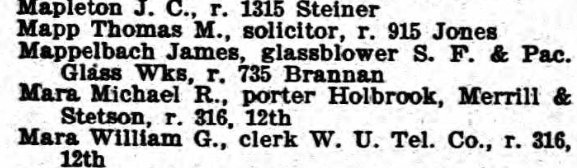
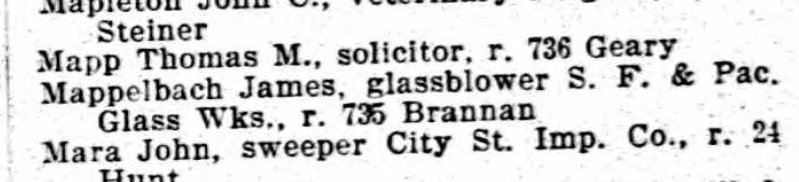
By 1898, he was living in San Francisco, California. He was still at the same address in 1899.
Crocker-Langley San Francisco Directory for Year Commencing May 1898. San Francisco: H. S. Crocker Company, 1898. Available from Ancestry.com. U.S. City Directories, 1821-1989 [database on-line]. Provo, UT, USA: Ancestry.com Operations, Inc., 2011.
Crocker-Langley San Francisco Directory for Year Commencing May 1899. San Francisco: H. S. Crocker Company, 1898. Available from Ancestry.com. U.S. City Directories, 1821-1989 [database on-line]. Provo, UT, USA: Ancestry.com Operations, Inc., 2011.
His wife (my great-great-grandmother Catherine Elizabeth Winters) and her two children, whom he had raised as his own since they were young, did not go with him. They were still living in Alton, Illinois in 1899.
W. H. McCoy's Alton City Directory, Including the Towns of Upper Alton, North Alton, and East Alton, 1899-1900. Keokuk, Iowa: W. H. McCoy. Available from Ancestry.com. U.S. City Directories, 1821-1989 [database on-line]. Provo, UT, USA: Ancestry.com Operations, Inc., 2011.
Why did James Mapplebeck go to California? His mother Jane, brother George, and sister Sarah had also left Montreal; they had gone to New Jersey. His half-brother William Mapplebeck had been living in Hamilton, Ontario, Canada (where James had lived until after the death of their father), but by 1899 he had moved to Detroit, Michigan. His uncle John Mapplebeck was living in Hamilton, Ontario. The only person I know of who had any connection to James Mapplebeck who had spent time living in San Francisco was Charles Buise. He was probably a relative of Elizabeth Buise, the last wife of John Bennet Winters (the father of Catherine Elizabeth Winters). Charles may also have been related to Catherine Elizabeth Winters or her children, because the death notice of his mother Margaret McGillivray was transcribed in the Winters family Bible. However, Charles Buise died in 1893.
A possible explanation for his move is the Klondike Gold Rush. George Carmack and his brother-in-law Snookum Jim Mason discovered gold at Bonanza Creek (then called Rabbit Creek) on 16 August 1896. On 15 July 1897 in San Francisco and 17 July 1897 in Seattle, prospectors returned from the Klondike with large amounts of gold, and the Klondike stampede began. Approximately 100,000 people attempted to reach the goldfields.
Excelcior (the first steamer to carry passengers to the Klondike after news of the discovery of gold) leaving San Francisco for the Klondike, July 28, 1897. Photo by Sam C. Partridge [Public domain]. Available from University Libraries, University of Washington and Wikimedia Commons.
To reach the Klondike, prospectors traveled from Seattle or San Francisco to Alaska, and then to the Yukon.
Map showing routes from San Francisco to Alaska and the Klondike. George Davidson. San Francisco: Alaska Exploration Company, 1898. Available from David Rumsey Map Collection.
Prospectors came from all over the United States and from other countries. The Alton Evening Telegraph included information on traveling to the Klondike.
Perhaps James Mapplebeck traveled to the Klondike, returned to San Francisco, and chose to stay in California. (He never returned to his family.) Or maybe he went to San Francisco with the intention of traveling to the Klondike, but ended up staying there. I hope to find additional information that may confirm this theory.
J. P. Hodge and Sons' Directory of the City of Alton, North Alton and Upper Alton, 1895-1896. Alton, IL: J. P. Hodge & Sons. Available from Ancestry.com. U.S. City Directories, 1821-1989 [database on-line]. Provo, UT, USA: Ancestry.com Operations, Inc., 2011.
By 1898, he was living in San Francisco, California. He was still at the same address in 1899.
Crocker-Langley San Francisco Directory for Year Commencing May 1898. San Francisco: H. S. Crocker Company, 1898. Available from Ancestry.com. U.S. City Directories, 1821-1989 [database on-line]. Provo, UT, USA: Ancestry.com Operations, Inc., 2011.
Crocker-Langley San Francisco Directory for Year Commencing May 1899. San Francisco: H. S. Crocker Company, 1898. Available from Ancestry.com. U.S. City Directories, 1821-1989 [database on-line]. Provo, UT, USA: Ancestry.com Operations, Inc., 2011.
His wife (my great-great-grandmother Catherine Elizabeth Winters) and her two children, whom he had raised as his own since they were young, did not go with him. They were still living in Alton, Illinois in 1899.
W. H. McCoy's Alton City Directory, Including the Towns of Upper Alton, North Alton, and East Alton, 1899-1900. Keokuk, Iowa: W. H. McCoy. Available from Ancestry.com. U.S. City Directories, 1821-1989 [database on-line]. Provo, UT, USA: Ancestry.com Operations, Inc., 2011.
Why did James Mapplebeck go to California? His mother Jane, brother George, and sister Sarah had also left Montreal; they had gone to New Jersey. His half-brother William Mapplebeck had been living in Hamilton, Ontario, Canada (where James had lived until after the death of their father), but by 1899 he had moved to Detroit, Michigan. His uncle John Mapplebeck was living in Hamilton, Ontario. The only person I know of who had any connection to James Mapplebeck who had spent time living in San Francisco was Charles Buise. He was probably a relative of Elizabeth Buise, the last wife of John Bennet Winters (the father of Catherine Elizabeth Winters). Charles may also have been related to Catherine Elizabeth Winters or her children, because the death notice of his mother Margaret McGillivray was transcribed in the Winters family Bible. However, Charles Buise died in 1893.
A possible explanation for his move is the Klondike Gold Rush. George Carmack and his brother-in-law Snookum Jim Mason discovered gold at Bonanza Creek (then called Rabbit Creek) on 16 August 1896. On 15 July 1897 in San Francisco and 17 July 1897 in Seattle, prospectors returned from the Klondike with large amounts of gold, and the Klondike stampede began. Approximately 100,000 people attempted to reach the goldfields.
Excelcior (the first steamer to carry passengers to the Klondike after news of the discovery of gold) leaving San Francisco for the Klondike, July 28, 1897. Photo by Sam C. Partridge [Public domain]. Available from University Libraries, University of Washington and Wikimedia Commons.
To reach the Klondike, prospectors traveled from Seattle or San Francisco to Alaska, and then to the Yukon.
Map showing routes from San Francisco to Alaska and the Klondike. George Davidson. San Francisco: Alaska Exploration Company, 1898. Available from David Rumsey Map Collection.
Prospectors came from all over the United States and from other countries. The Alton Evening Telegraph included information on traveling to the Klondike.
Alton Evening Telegraph, 15 March 1898
Alton Evening Telegraph, 22 March 1898
Perhaps James Mapplebeck traveled to the Klondike, returned to San Francisco, and chose to stay in California. (He never returned to his family.) Or maybe he went to San Francisco with the intention of traveling to the Klondike, but ended up staying there. I hope to find additional information that may confirm this theory.
Subscribe to:
Posts (Atom)