Covering genealogy, family history, historical events and places, and anything else related!

Monday, September 7, 2015

52 Ancestors: Week 36 "Working for a Living": John Boe

When my great-grandfather John Boe was 19 years old, he worked as a farmer on his parents' farm.

1895 Minnesota state census, Swift County, population schedule, West Bank township, page 1. Ancestry.com. Minnesota, Territorial and State Censuses, 1849-1905 [database on-line]. Provo, UT, USA: Ancestry.com Operations Inc, 2007.Original data: Minnesota Historical Society. Minnesota State Population Census Schedules, 1865-1905. St. Paul, MN, USA: Minnesota Historical Society, 1977. Microfilm. Reels 1-47 and 107-164.

By 1900, John was working as a salesman. He may have changed occupations at the time of his first marriage (to Signe Olson, on 21 March 1897). He remained in Swift County, Minnesota until at least 1901, but by 1904, he was living in Mason City, Cerro Gordo, Iowa, where he worked as a traveling agent.
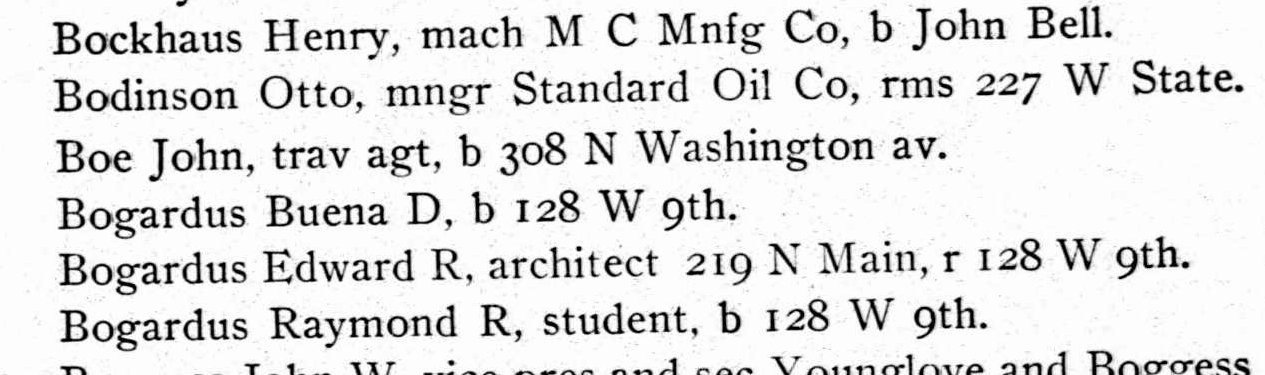
R. L. Polk & Co.'s Mason City Directory 1904. Mason City, Iowa: R. L. Polk & Co. Page 51. Ancestry.com. U.S. City Directories, 1822-1989 [database on-line]. Provo, UT, USA: Ancestry.com Operations, Inc., 2011. 

By 1908, John's first marriage had ended and he had married my great-grandmother Kathleen Graham. They lived in St. Louis, Missouri, where he worked for Weber Implement Company.

Gould's St. Louis City Directory 1908. Page 220. Ancestry.com. U.S. City Directories, 1822-1989 [database on-line]. Provo, UT, USA: Ancestry.com Operations, Inc., 2011.

In 1910, John and his brothers Hans Adolph and Theodore formed the Boe Brothers farm machinery company. John was president of the company.
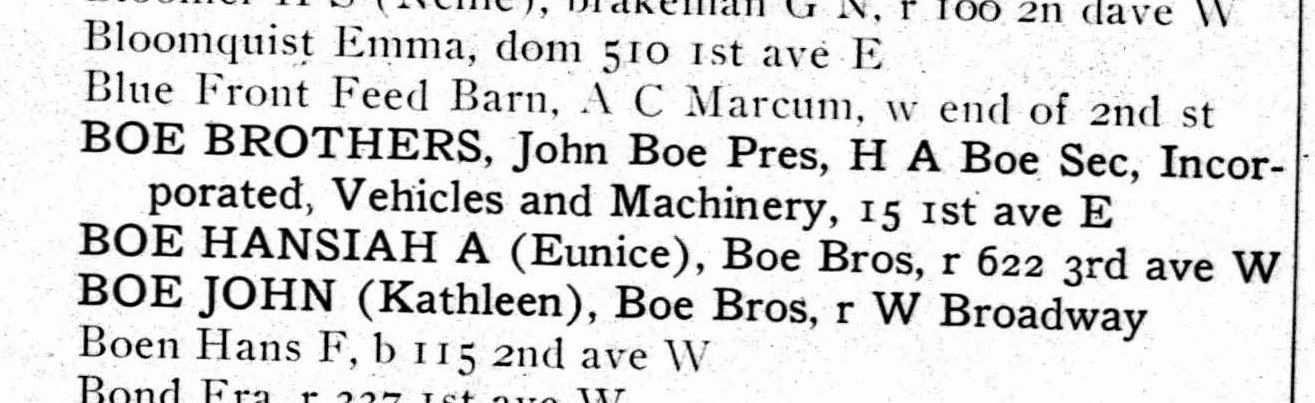
Williston City Directory 1911-1912. Williston, ND: North Dakota Directory Co., 1911. Page 31. Ancestry.com. U.S. City Directories, 1822-1989 [database on-line]. Provo, UT, USA: Ancestry.com Operations, Inc., 2011. 

Williston Graphic, 30 June 1910, page 10

Williston Graphic, 26 January 1911, page 3

In 1913, Hans Adolph Boe relocated to Alexander, McKenzie County, North Dakota, where he worked in the implement business. That same year, Theodore Boe relocated to Arnegard, McKenzie County, North Dakota and opened a farm machinery business there. John remained in Williston, and changed the company name to the John Boe Machinery Co.
Williston Graphic, 13 March 1913, page 6

Williston Graphic, 5 June 1913, page 4

In March 1915, John and his family moved back to St. Louis, Missouri, and John rejoined Weber Implement Co. By October 1915, he was working for Mitchell-Lewis Motor Co. In February 1918, John became president of the Mitchell Automobile Corporation of Missouri, which changed its name to the St. Louis Motor Car Company in late 1918.
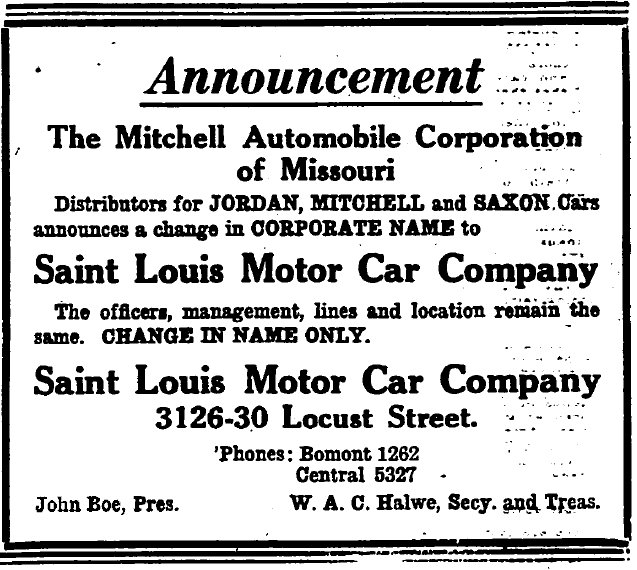
 St. Louis Post-Dispatch, 29 December 1918, page 11
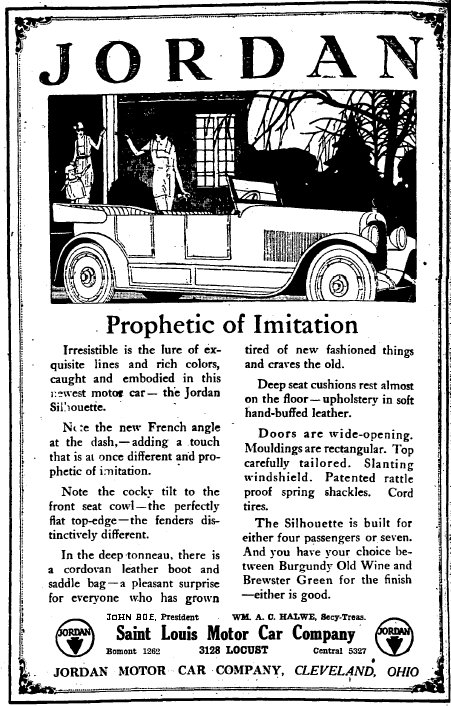
St. Louis Post-Dispatch, 22 June 1919, page 10
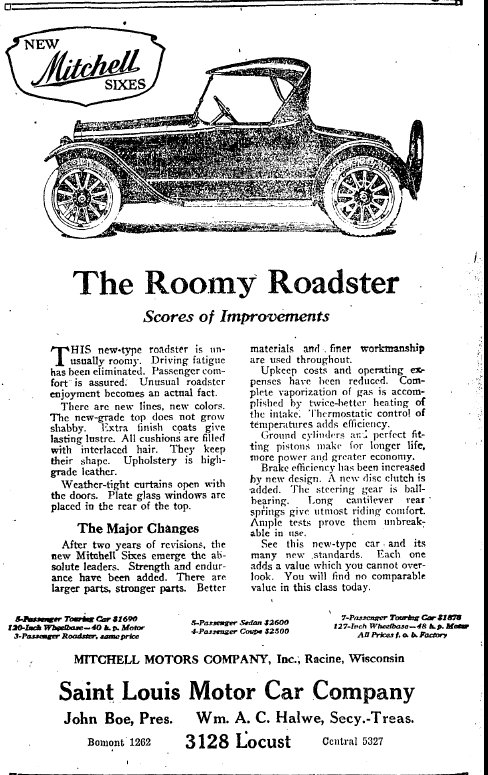
St. Louis Post-Dispatch, 28 December 1919, page 8

In the late 1920s, the company failed, and the Boe family moved to Sarasota, Florida for a year. They then returned to St. Louis. John worked as a factory representative for Marmon Car Co. and for Buick; he was the zone sales manager and covered several northwestern states.

John left his family in 1929, probably because Anna Mae Gamble was pregnant with their daughter Jane (who was born that year in Minneapolis, Minnesota). They were living in Minneapolis in 1930, supposedly married (they actually married on 22 August 1934 in St. Joseph County, Indiana). John worked as a salesman in the farm machinery industry.

1930 United States Census, Minneapolis, Hennepin County, Minnesota, Ward 7, population schedule, enumeration district 27-129, sheet no. 54A.  Ancestry.com. 1930 United States Federal Census [database on-line]. Provo, UT, USA: Ancestry.com Operations Inc, 2002.

By 1938, John and his third family had moved to Algona, Kossuth County, Iowa. John managed the Buick dealership there.

Algona Upper Des Moines, 10 May 1938, page 5

By 1940, John's third wife and their daughter were living in Beverly Hills, California. John was in Minnesota. He had been unable to find a job in the automobile business. On 1 April 1940, he started a new job selling living protection. He worked on commission.

 Letter from John Boe to his daughter-in-law Margaret Boe, 29 April 1940

John had left Minnesota and gone to California by 27 June 1940, when he died in Norwalk State Hospital in Norwalk, Los Angeles County, California.

Sunday, September 6, 2015

Sunday's Obituary: Alfred Borg

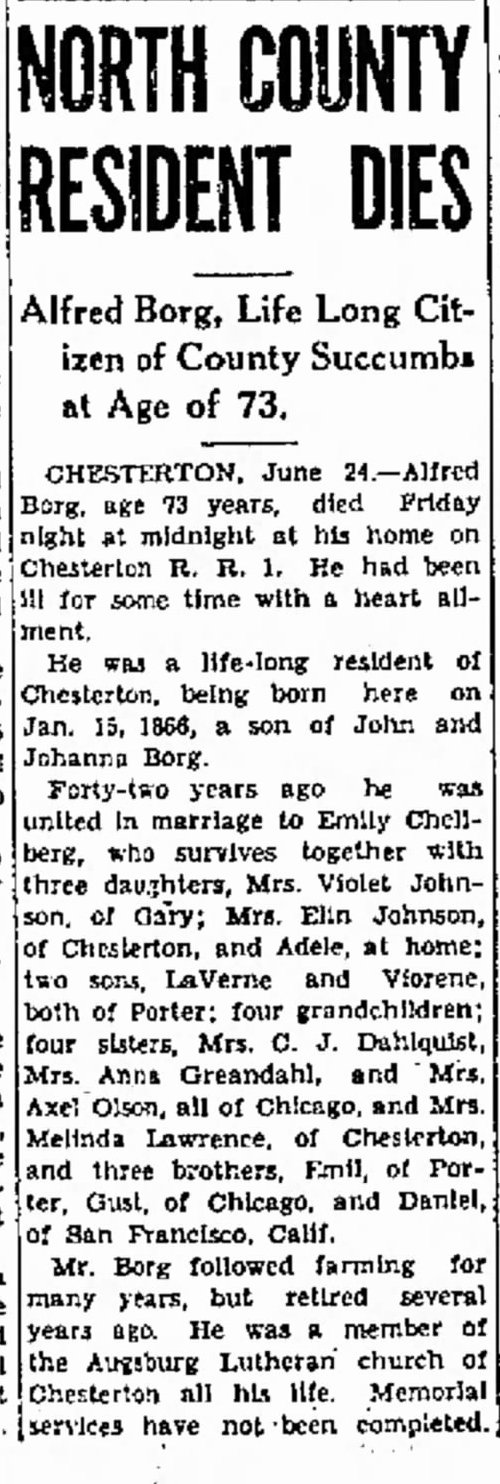
Vidette-Messenger, 24 June 1939, page 1

From the June 24, 1939 issue of the Vidette-Messenger (Valparaiso, Indiana):

                            NORTH COUNTY RESIDENT DIES
                                                        _____

                  Alfred Borg, Life Long Citizen of County Succumbs at Age of 73.
                                                       _____

   CHESTERTON, June 24. – Alfred Borg, age 73 years, died Friday night at midnight in his home on Chesterton R. R. 1. He had been ill for some time with a heart ailment.
   He was a life-long resident of Chesterton, being born here on Jan. 15, 1866, a son of John and Johanna Borg.
   Forty-two years ago he was united in marriage to Emily Chellberg, who survives together with three daughters, Mrs. Violet Johnson, of Gary; Mrs. Elin Johnson, of Chesterton, and Adele at home: two sons, LaVerne and Viorene, both of Porter: four grandchildren; four sisters, Mrs. C. J. Dahlquist, Mrs. Anna Greandahl, and Mrs. Axel Olson, all of Chicago, and Mrs. Melinda Lawrence, of Chesterton, and three brothers, Emil, of Porter, Gust, of Chicago, and Daniel, of San Francisco, Calif.
   Mr. Borg followed farming for many years, but retired several years ago. He was a member of the Augsburg Lutheran Church of Chesterton all his life. Memorial services have not been completed.
                                       ________________________________

Alfred was the brother of my 2nd-great-grandmother Mary/Marie Louise Borg. He married Emily Chellberg (or Kjellberg) on 29 September 1897. He died on 23 June 1939 and was buried in Augsburg Lutheran Church Cemetery in Porter, Indiana.

Saturday, September 5, 2015

Friday, September 4, 2015

Friend of Friends Friday: Slaves of William Gower, Deceased

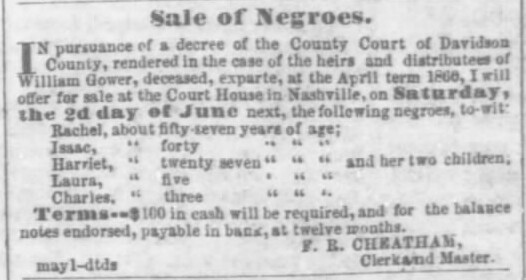
In his will, written on 1 March 1849 and recorded in the Davidson County, Tennessee Probate Court books on 23 April 1852, my 5th-great-grandfather William Gower left his slaves Isaac, Rachael, and Harriet to his wife Charlotte (Garland) Gower. Charlotte died on 16 April 1860. Several weeks later, the following notice appeared in the Nashville Union and American.

Nashville Union and American, 8 May 1860, page 1

                                Sale of Negroes.
In pursuance of a decree of the County County of Davidson County, rendered in the case of the heirs and distributees of William Gower, deceased, exparte, at the April term 1860, I will offer for sale at the Court House in Nashville, on Saturday, the 2d day of June next, the following negroes, to-wit-
        Rachel, about fifty seven years of age;
        Isaac,      "   forty                "  "   "
        Harriet,    "   twenty seven   "  "   "  and her two children,
        Laura,      "   five                 "  "   "
        Charles,   "  three                "  "   "
Terms--$100 in cash will be required, and for the balance notes endorsed, payable in bank, at twelve months.
                                                                   F. R. CHEATHAM,
may1-dtds                                                          Clerk and Master.

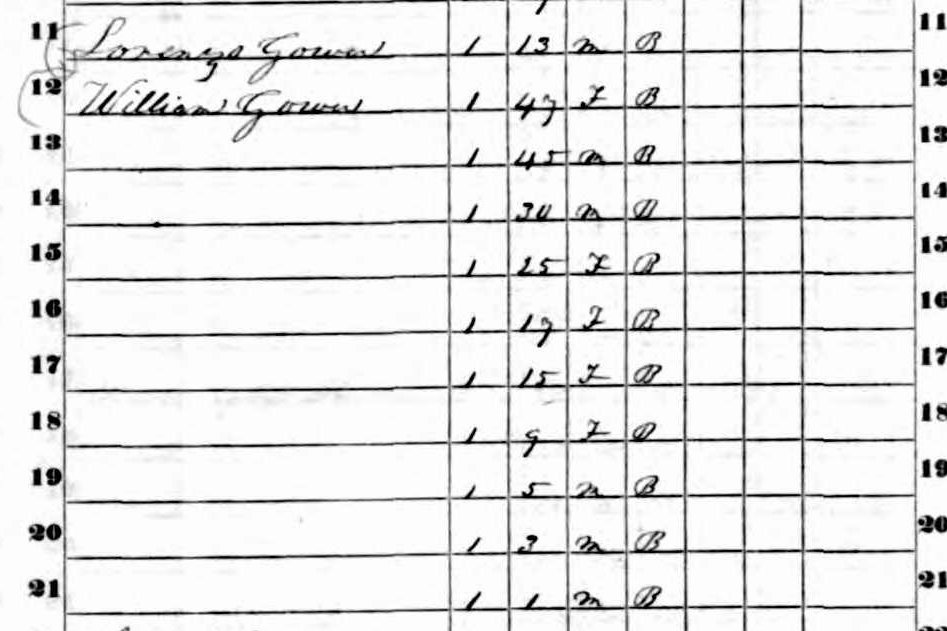
Looking at the list of William Gower's slaves recorded in the 1850 United States Census slave schedule, it appears that Rachel was the 47 year old black female listed on line 12, Isaac was the 30 year old black male listed on line 14, and Harriet was the 17 year old black female listed on line 16.

1850 United States census, Davidson County, Tennessee, slave schedule. Available from Ancestry.com. 1850 U.S. Federal Census - Slave Schedules [database on-line]. Provo, UT, USA: Ancestry.com Operations Inc, 2004.

Thursday, September 3, 2015

Treaty of Paris Signed

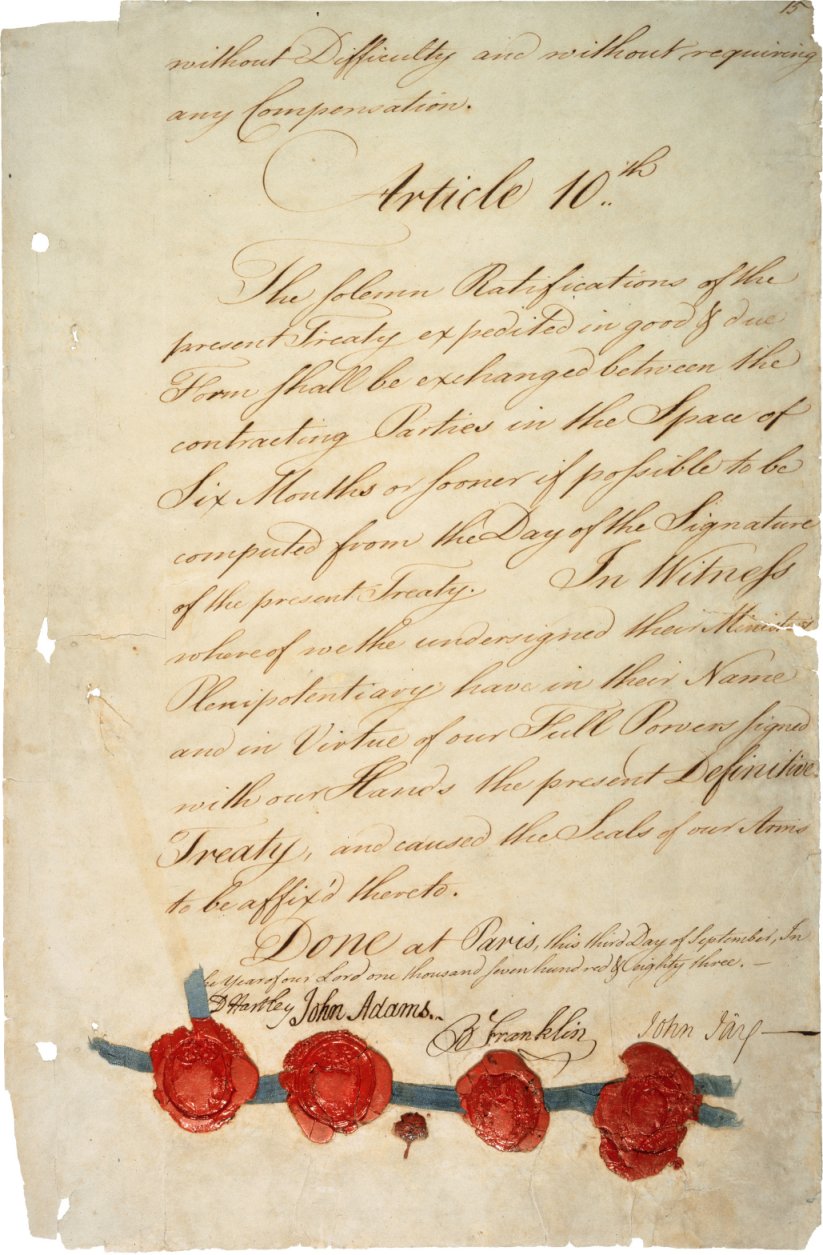
 Last page of the Treaty of Paris, 1783. Our Documents. Also available from Wikimedia Commons.

23 years ago today, the Treaty of Paris was signed, and the Revolutionary War ended.

The Continental Congress appointed a commission to negotiate a peace treaty with Great Britain, and in April 1782, negotiations began in Paris, France. John Adams, Benjamin Franklin, and John Jay represented the United States. David Hartley and Richard Oswald represented Great Britain. Henry Laurens joined Adams, Franklin, and Jay in November 1782.

The treaty was signed at the Hotel d'York in Paris on 3 September 1783 by Hartley, Adams, Franklin, and Jay.  It consisted of ten articles.

Article 1 - acknowledged that the former colonies were free and independent states
Article 2 - established the boundaries between the United States and British North America
Article 3 - granted the people of the United States the right to fish on the Grand Banks and other banks of Newfoundland and in the Gulf of Saint Lawrence
Article 4 - creditors on both sides should be paid
Article 5 - Congress was to recommend that state legislatures provide for the restitution of property belonging to Loyalists
Article 6 - no more property belonging to Loyalists was to be confiscated
Article 7 - prisoners of were on both sides were to be released, and the British army was not to take any property, including slaves
Article 8 - Great Britain and the United States were both to have access to the Mississippi River
Article 9 - any territory conquered by the United States or Great Britain before the arrival of the preliminary articles of peace was to be returned
Article 10 - the treaty was to be ratified within six months

References
Our Documents: Treaty of Paris
Primary Documents in American History: Treaty of Paris
Treaty of Paris - American Revolution
Treaty of Paris (1783)
Treaty of Paris 1783

Wednesday, September 2, 2015

Sedantag (Sedan Day)

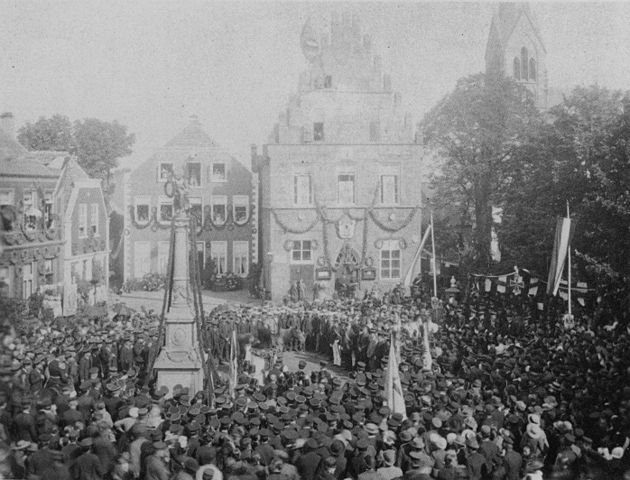
Sedan Day celebration at the Schüttorf market place, 2 September 1895. Public domain. Available from Wikimedia Commons.

Sedantag (Sedan Day) was a semi-official holiday that was observed on September 2 in the German Empire. It commemorated the victory of King Wilhelm of Prussia in the Battle of Sedan, which was fought on 1 September 1870 during the Franco-Prussian War.

Celebration festivities varied, and could include parades, patriotic speeches, musical performances, and pageants. In schools, celebrations were held in classrooms or auditoriums. Not all parts of the German Empire observed Sedantag.

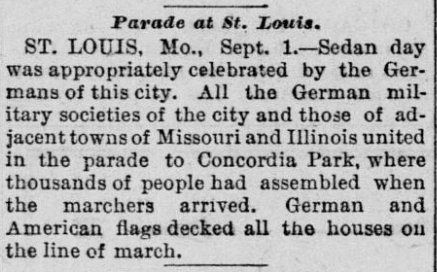
Sedantag was also celebrated by German-Americans.

San Francisco Call, 2 September 1895, page 2

On 27 August 1919, the Innenministerium of the Weimar Republic declared that Sedantag celebrations would no longer be held.

References
Kieler Erinnerungstag 2. September: Der Sedantag
Memories of Sedan Day Festivities in the 1870s (Retrospective Account, 1930)
Sedan Day
Sedantag
Zimmer, Oliver. Remaking the Rhythms of Life: German Communities in the Age of the Nation-State. Oxford, England: Oxford University Press, 2013.

Tuesday, September 1, 2015

Emma M. Nutt Day

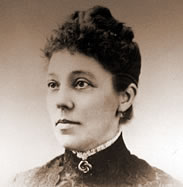
September 1 is Emma M. Nutt Day. On 1 September 1878, Emma Mills Nutt became the first female telephone operator. Alexander Graham Bell hired her to work for the Edwin Holmes Telephone Dispatch Company (also known as the Boston Telephone Dispatch Company.) She had previously been working at a telegraph office. Emma was paid $10 per month and worked 54 hours per week.

Previously, boys had been telephone operators (the first telephone operator, George Willard Croy, was hired in January 1878), but their behavior could be unacceptable (they were impatient, played pranks, and cursed.) Customers responded well to Emma's soothing, cultured voice. Because women were more polite and because they could be paid less, they replaced boys as telephone operators. 

Emma could remember every telephone number in the New England Telephone Company's directory. She worked as a telephone operator for at least thirty-three years.

Emma's sister Stella Nutt was the second female telephone operator. She was hired a few hours after Emma, but only worked as a telephone operator for a few years.

 Emma Nutt circa 1878-1900. Public domain. Available from Wikipedia.

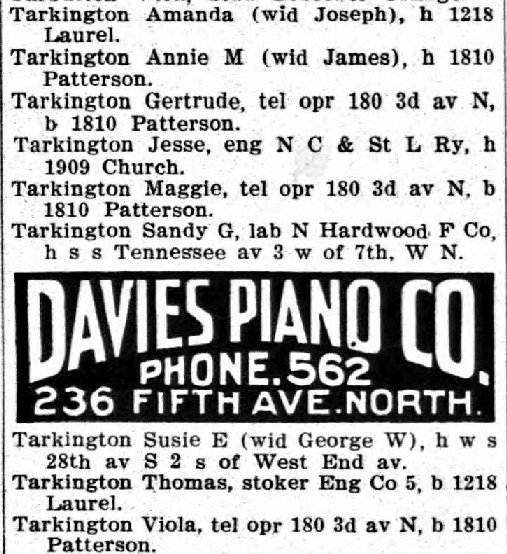
My great-grandmother Anna Gertrude Tarkington and many of her relatives (her sisters Margaret and Viola Maydell Tarkington; her aunts Jennie Julia, and Adeline Sophronia Tarkington; and her cousin Susie Tarkington) worked as telephone operators in Nashville, Tennessee. My 2nd-great-grandmother Sarah Claire "Sadie" Dyer's half-sister Annie Cox also worked as a telephone operator in Nashville.

Nashville City Directory 1905. Nashville, TN: Marshall-Bruce-Polk Co. Page 1095. Available from Ancestry.com. U.S. City Directories, 1822-1989 [database on-line]. Provo, UT, USA: Ancestry.com Operations, Inc., 2011.

References
Emma M. Nutt Day
Emma Nutt 
Emma Nutt, The World's 1st Woman Telephone Operator
The History Behind That Soothing Telephone Operator's Voice
Switchboard operator