Covering genealogy, family history, historical events and places, and anything else related!

Sunday, December 28, 2014

52 Ancestors: #52 Jørgen Gunleksen Juve

I have found many name variants for my 7th and 8th-great-grandfather: given name (Jørgen, Jørund), patronymic (Gunlekson, Gunnleikson, Gundlegson), and farm name (Juve, Gjuve, Djuve, and his father's farm name Nordgarden or Nordgaarden). I will refer to him here by the name Jørgen Gunleksen Juve, the version given in his death record. He is both my 7th- and 8th-great-grandfather because I descend from two of his children.

Jørgen was born about 1688 in Kviteseid, Telemark, Norway. He was the son of Gunnleik Sveinungson Nordgarden and Jorunn Tormodsdatter.

On 8 January 1711 in Seljord, Telemark, Norway, Jørgen married Hilleborg Christiansdatter Roch, the daughter of Christian Christophersen Roch, sorenskriver (magistrate) of Øvre Telemark, Norway.
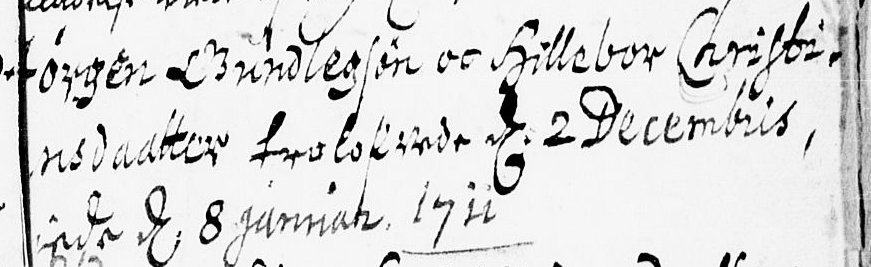
Source information: Telemark county, Seljord, Parish register (official) nr. I 2 (1689-1713), Marriage records 1709-1711, page 392-393. http://www.arkivverket.no/URN:NBN:no-a1450-kb20061212340324.jpg

Jørgen and Hilleborg had six children: Kristian (born about 1712), Kristoffer (born about 1713), my 7th-great-grandmother Maren (born about 1720), my 6th-great-grandfather Per (born about 1723), Gunnleik (born about 1725), and Jorunn (born about 1728).

In 1737, Jørgen became lensmann (sheriff) of Seljord, Telemark, Norway.

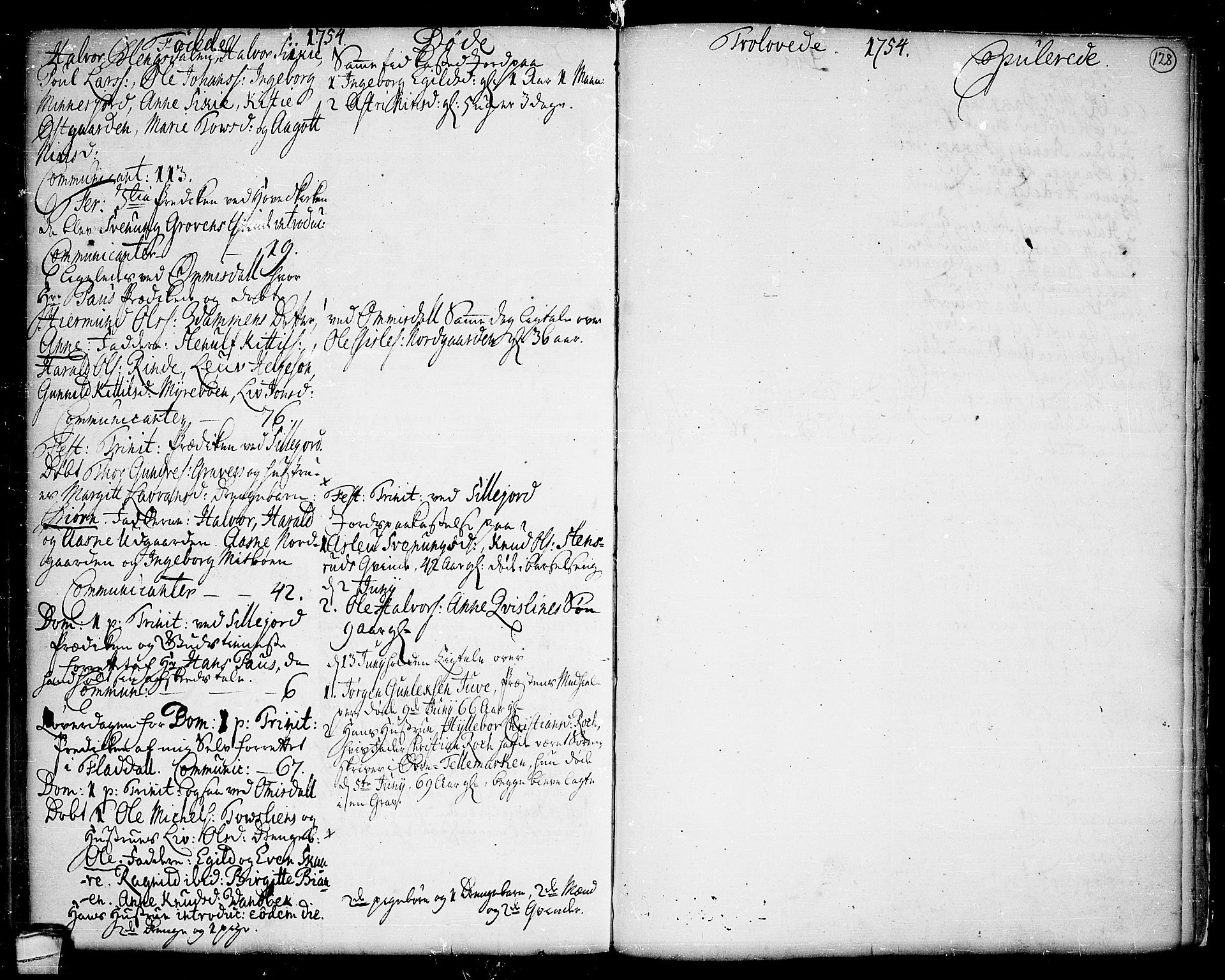
Jørgen died in Seljord on 9 June 1754. His wife Hilleborg had died four days earlier, on 5 June 1754. They were buried on 13 June 1754.
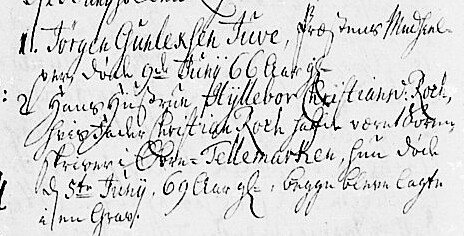
Source information: Telemark county, Seljord, Parish register (official) nr. I 6 (1744-1755), Chronological list 1754, page 128. http://www.arkivverket.no/URN:NBN:no-a1450-kb20061213310006.jpg

References
Boe (Bø) and Halvorson-Otterholt; Shared Roots in Telemark. Compiled by Melvin and Alpha M. (Boe) Brodshaug, 1984. Published by Arlene (Boe) Christensen and Marjorie (Boe) Bergee. Printed by Anundsen Publishing Co., Decorah, Iowa.
Digitized parish registers: Seljord, 1689-1713
Digitized parish registers: Seljord, 1744-1755
Flatin, Kjetil A. and Flatin, Tov. Rokkerova. Skien: Norig, 1917.
Jørund Gunnleiksson Nordgarden
KVITESEID BYGDESOGE: Volume I - Ættesoga: HEGGTVEIT
Rockerova


Saturday, December 27, 2014

Shopping Saturday: Grocery Shopping with Grandma Boe

Photo from OldTimeCandy.com

Over the holidays, we were talking and reminiscing about Grandma Boe (my mother's mother Margaret Ann (Schneider) Boe). Sometimes my brother and I would go shopping with her. My brother said that he had loved grocery shopping with Grandma Boe, because she let us get whatever we wanted. If my brother wanted Scooter Pies, she would buy them.

 Trenton Times, 12 September 1979

Tuesday, December 23, 2014

Scandinavian Christmas Traditions


In the Scandinavian countries, Christmas is called Jul. The main celebration and the exchange of gifts take place on Christmas Eve. When I was growing up, I always spent Christmas Eve with my father's side of the family, and I spent Christmas Day with my mother's side of the family. My paternal grandmother was 3/4 Swedish and 1/4 Norwegian, and she maintained Swedish traditions.

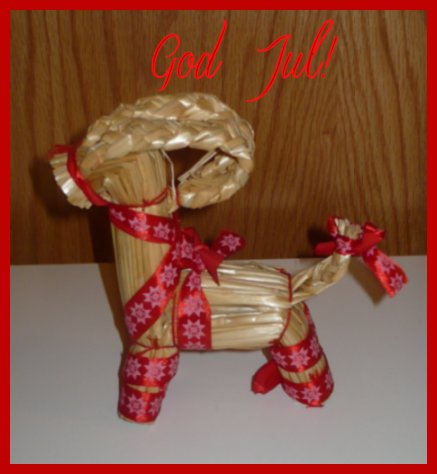
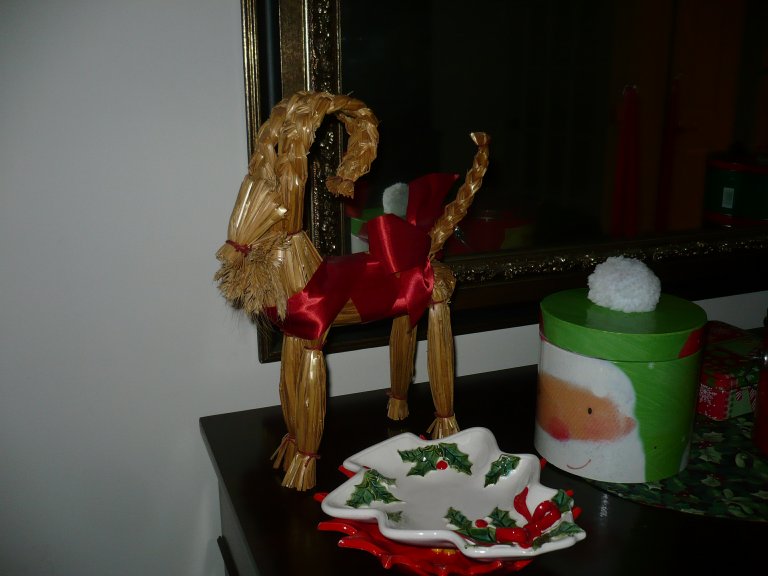
The Yule goat (Julbock), a straw goat, is a traditional Christmas symbol. In the 19th century, it was considered the bearer of Christmas gifts. It is now typically a Christmas decoration. In Gävle, Sweden, a large Julbock (the Gävle Goat) is erected every year, and is often burned by arsonists before Christmas. Straw Christmas ornaments are also traditional.

Small gnomes called tomte in Sweden and nisse in Denmark and Norway are also associated with Christmas. They were thought to reside on farms. They demanded porridge on Christmas Eve; if they did not receive it, they would leave or make mischief. In the 1840s, the Julnisse became the bearer of Christmas presents, and this tradition spread to Norway and Sweden.

Collectible Christmas plates are produced annually in Denmark. The first collectible Christmas plate was produced by Bing & Grøndahl in 1895. Royal Copenhagen began producing Christmas plates in 1908. My paternal grandparents had a collection of Royal Copenhagen Christmas plates. My parents also have Royal Copenhagen Christmas plates.

In Sweden, a julbord (Christmas table) includes bread, butter, cheese, herring, ham, sausages, meatballs, potatoes, and casseroles. It is eaten in three courses. Pork ribs (ribbe) are popular in Norway.  Rice pudding is also a tratidional Christmas food. Lutefisk (codfish preserved in lye) is traditional in Norway and Sweden. More lutefisk is now eaten in the United States (mostly by Scandinavian-Americans) than in Scandinavia.

References
Christmas in Scandinavia
Danish Christmas plates
Jul (Denmark)
Jul (Norway)
Jul (Sweden) 
Legend of the Nisse and Tomte
Lutefisk
Norwegian Christmas traditions
Scandinavian Traditions
Scandinavians’ Strange Holiday Lutefisk Tradition
Smörgåsbord
Tomte
Yule Goat

Monday, December 22, 2014

German Christmas Traditions

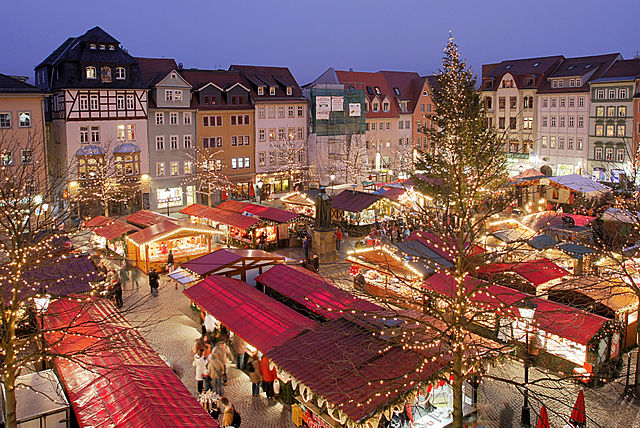
Weihnachtsmarkt (Christmas market) in Jena, Thuringia, Germany. 21 December 2007. Photo by Rene Schwietzke [CC BY-SA 2.0 (http://creativecommons.org/licenses/by-sa/2.0)]. Available at Flickr and Wikimedia Commons.

Christmas Day is known as Weihnachten in Germany and other German-speaking countries such as Austria and Switzerland. Many of our traditional Christmas customs originated in Germany and Austria.

The Christmas tree (Tannenbaum) originated in Germany in the Middle Ages. The first Christmas trees were decorated with fruits and nuts.

After the Protestant Reformation, Martin Luther established the tradition of the Christkind (Christ child) as the bringer of Christmas gifts, to discourage the giving of gifts at St. Nicholas' Day (December 6). Christmas Eve became the day for gift-giving. German children receive gifts from either the Christkind or the Weihnachtsmann (Christmas man, the German Santa Claus), depending on the region in which they live.

Christmas markets originated in Germany and Austria during the Middle Ages. These street markets would be open during the four weeks of Advent. Attractions at the markets include a Nativity scene and nutcrackers. Christmas ornaments, decorations, toys, handmade items, and food are sold.

The Christmas carol "Silent Night" originated in Austria. "Stille Nacht" was written in 1818. Joseph Mohr, a Catholic priest, had written a poem two years earlier, and he wanted it set to music so he could use it as a carol at Midnight Mass. His friend Franz Xaver Gruber wrote the music on 24 December 1818, in just a few hours.

References
Christmas customs and recipes
Christmas market
Christmas Traditions in Germany, Austria, Switzerland
Christkind
German Christmas traditions
The German Christmas Tree
Stille Nacht - Silent Night
A Symbol for Nuremberg: The Origin of the Christkind
Weihnachten