My 6th-great-grandfather Andrew Lucas was born on 5 October 1752 in Shepherdstown, Frederick County, Virginia (now Shepherdstown, Jefferson County, West Virginia). He was the son of Edward Lucas and Elizabeth Corn.
In 1780, he arrived in what is now Nashville, Tennessee on the Donelson flotilla. Nancy Gower was also on the Donelson flotilla; she became Andrew's wife.
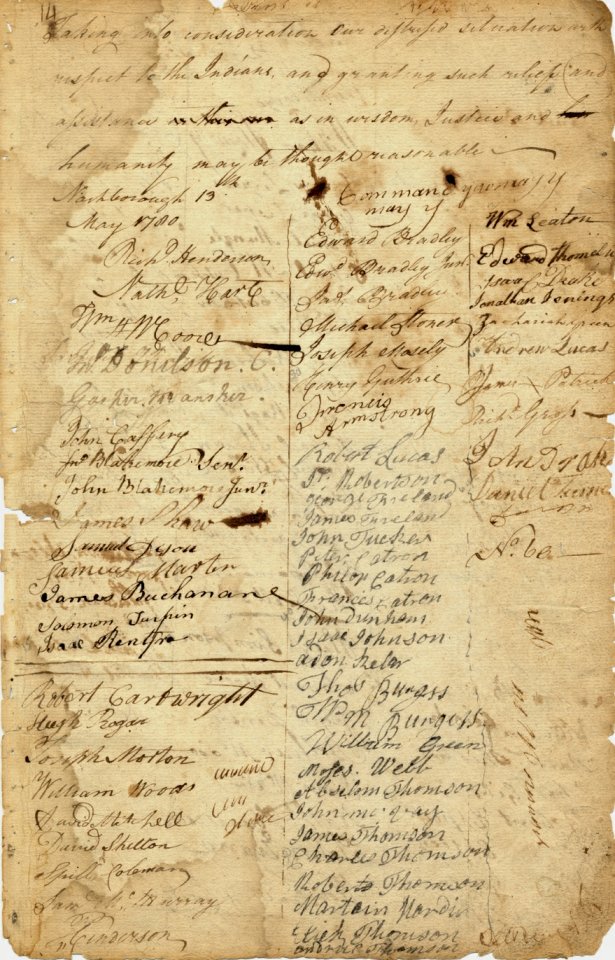
Andrew was one of the signers of the Cumberland Compact, which established a constitutional government for the settlement. It was signed in May 1780.
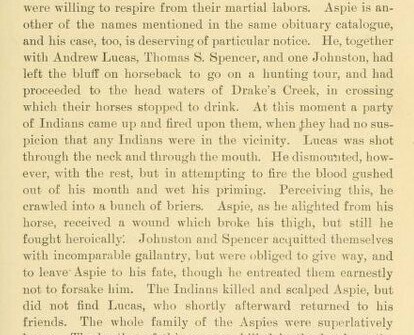
Andrew was shot by Indians while hunting at Drake's Creek. Although he had been shot through the neck and mouth and was bleeding, he managed to crawl into some shrubbery.
On 30 July 1784, the Trustees of the Town of Nashville granted Lot 34 in the Town of Nashville to Andrew Lucas.
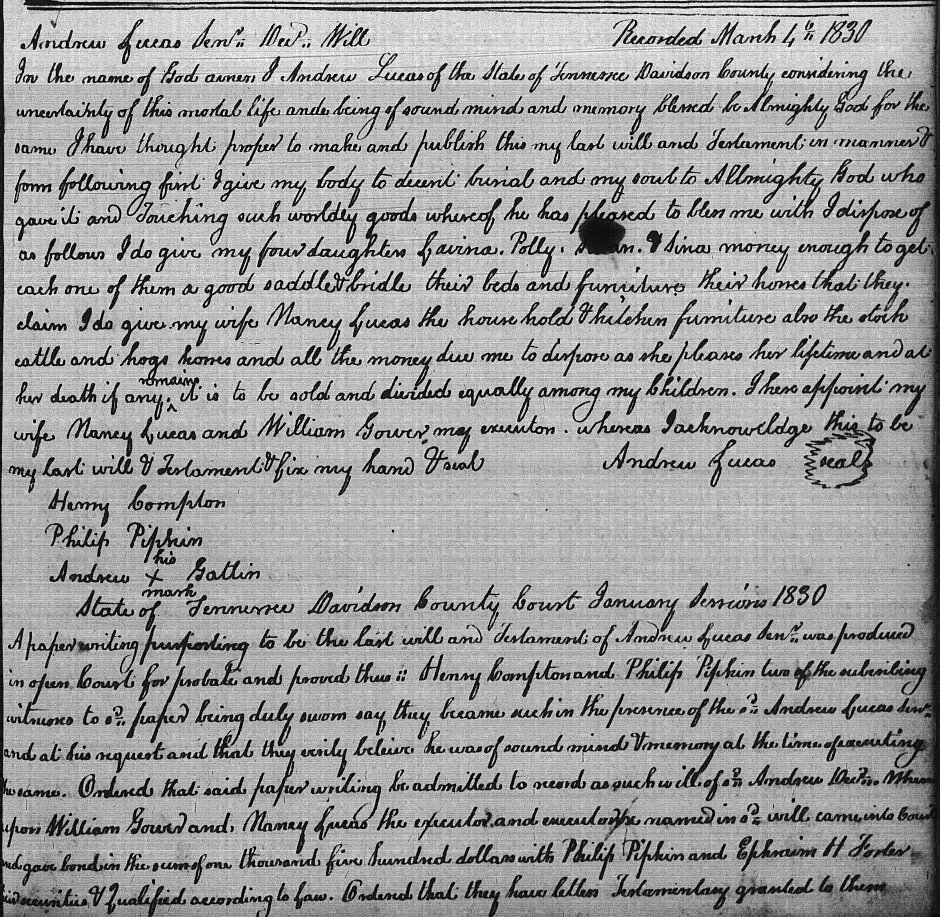
Andrew died in 1830. His will was recorded on 4 March 1830 in Davidson County, Tennessee. He left money to his daughters Lavina, Polly, Susan, and Sina. He left his wife Nancy the household and kitchen furniture, stock cattle, hogs, horses, and all the money that was due to him. After her death, anything remaining was to be sold, and they money was to be divided equally among his children. One of the witnesses to the will was his grandson Andrew Gatlin, the son of my 5th-great-grandparents Nathan Gatlin and Obedience Lucas.
The estate inventory of Andrew's son Andrew Lucas Jr. was recorded one day later.
Cumberland Compact, original signers, page 1. Available from http://www.cumberlandpioneers.com/cc1.html. Andrew Lucas' signature is the sixth one in the third column. One of the other signers was his half-brother Robert Lucas.
Haywood, John. The Civil and Political History of the State of Tennessee from its Earliest Settlement up to the Year 1796, Including the Boundaries of the State. Nashville, TN: Publishing House of the Methodist Episcopal Church, South, 1891. Page 223. Reprint of 1823 edition published by W. H. Haywood. Available from Internet Archive.
Andrew Lucas will, recorded 4 March 1830. Tennessee, Probate Court Books, 1795-1927. Davidson County. Wills, 1826-1832, Vol. 09. Image 211. Available from FamilySearch.
Covering genealogy, family history, historical events and places, and anything else related!
Sunday, December 21, 2014
Saturday, December 20, 2014
Society Saturday: Friends of Wayne Historic Museums
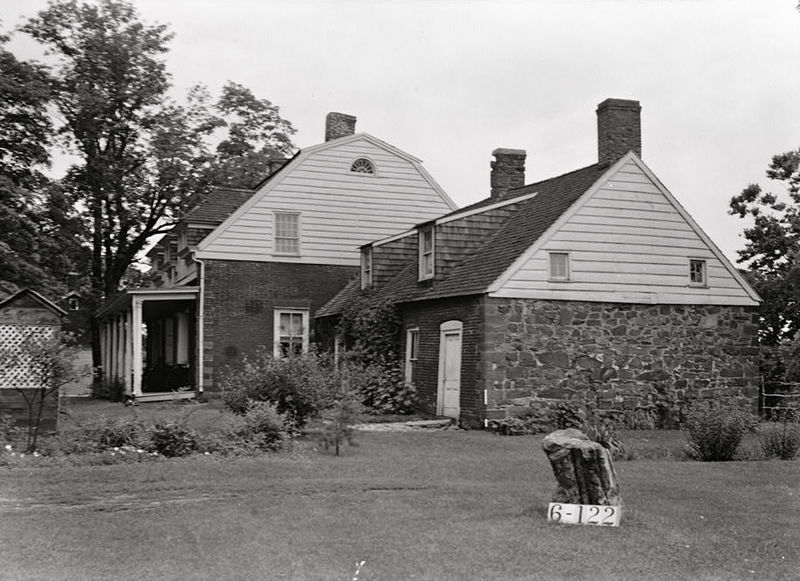
Schuyler-Colfax House. 25 June 1936. Photo by Nathaniel R. Ewan [Public domain]. Available from Library of Congress and Wikimedia Commons.
The Friends of Wayne Historic Museums is a service organization which is dedicated to preserving and creating awareness of the heritage of Wayne, New Jersey.
Three museums are owned and operated by the Wayne Township Parks and Recreation Department: Schuyler-Colfax Historic House Museum, Van Riper-Hopper House, and Van Duyne House. More information is available on the Historic House Museums page of Wayne Township's Web site.
I am a member of the Hester Schuyler Colfax Chapter, NSDAR. The chapter has planted bulbs at the Schuyler-Colfax House, and is working on raising money for the restoration of the house, which is the oldest in Wayne. The house was built by Arent Schuyler in 1695.
Members of the Hester Schuyler Colfax Chapter are pictured on the Volunteer page of Wayne Township's Web site.
A Friends of Wayne Historic Museums membership application is available online.
The Friends of Wayne Historic Museums is a service organization which is dedicated to preserving and creating awareness of the heritage of Wayne, New Jersey.
Three museums are owned and operated by the Wayne Township Parks and Recreation Department: Schuyler-Colfax Historic House Museum, Van Riper-Hopper House, and Van Duyne House. More information is available on the Historic House Museums page of Wayne Township's Web site.
I am a member of the Hester Schuyler Colfax Chapter, NSDAR. The chapter has planted bulbs at the Schuyler-Colfax House, and is working on raising money for the restoration of the house, which is the oldest in Wayne. The house was built by Arent Schuyler in 1695.
Members of the Hester Schuyler Colfax Chapter are pictured on the Volunteer page of Wayne Township's Web site.
A Friends of Wayne Historic Museums membership application is available online.
Friday, December 19, 2014
Continental Army Enters Valley Forge
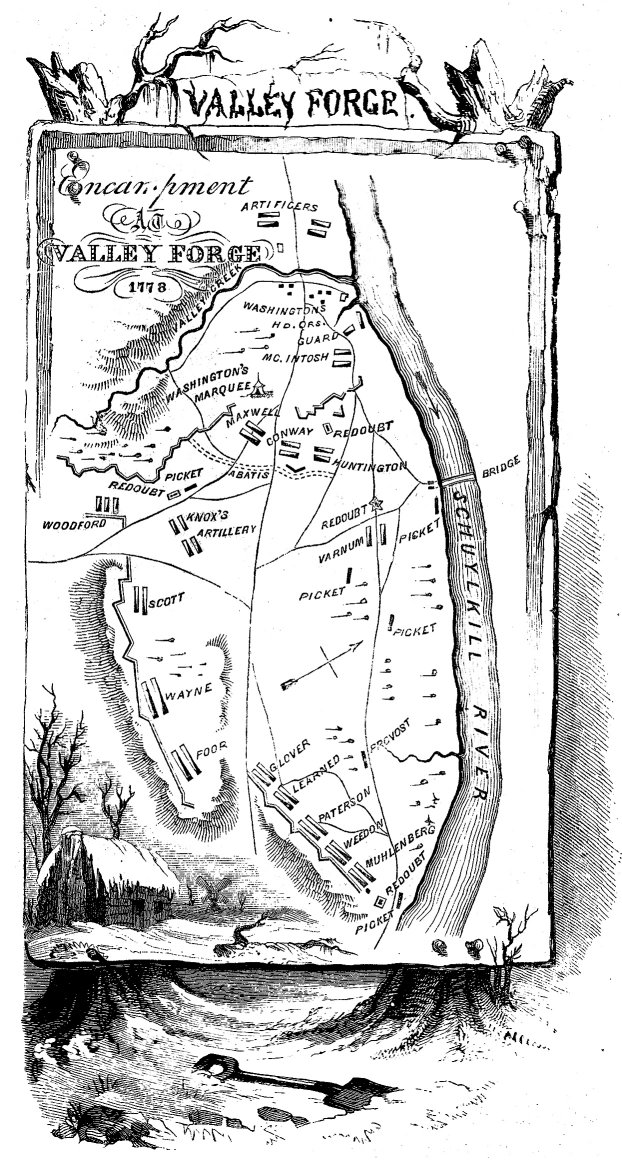
The Encampment at Valley Forge, PA. Lossing, Benson John. Field Book of the Revolution. Vol. 2. New York: Harper Brothers, 1855. Page 128. Available from Wikipedia.
On 19 December 1777, George Washington and his Continental Army entered their winter quarters at Valley Forge, Pennsylvania. 12,000 men marched in from their encampment at White Marsh (now Fort Washington State Park). They began constructing huts; the first one was completed in three days.
By the end of the winter, more than 2,500 soldiers had died from diseases such as dysentery, influenza, pneumonia, typhoid fever, typhus, and smallpox.
My 5th-great-grandfather Stephen Mayo was at Valley Forge. He was in Weedon's Brigade, 14th Virginia Regiment.The muster roll shows that he was sick in the winter. Fortunately, he survived. 163 men from his brigade died at Valley Forge.
Every December 19 at Valley Forge National Historical Park, there is a march in to commemorate the arrival of the Continental Army.
References
Annual March In of the Continental Army Commemoration
Continental Army enters winter camp at Valley Forge
The Encampment
History & Culture - Valley Forge National Historical Park
Valley Forge
Valley Forge Legacy: The Muster Roll Project
Washington leads troops into winter quarters at Valley Forge
On 19 December 1777, George Washington and his Continental Army entered their winter quarters at Valley Forge, Pennsylvania. 12,000 men marched in from their encampment at White Marsh (now Fort Washington State Park). They began constructing huts; the first one was completed in three days.
By the end of the winter, more than 2,500 soldiers had died from diseases such as dysentery, influenza, pneumonia, typhoid fever, typhus, and smallpox.
My 5th-great-grandfather Stephen Mayo was at Valley Forge. He was in Weedon's Brigade, 14th Virginia Regiment.The muster roll shows that he was sick in the winter. Fortunately, he survived. 163 men from his brigade died at Valley Forge.
Every December 19 at Valley Forge National Historical Park, there is a march in to commemorate the arrival of the Continental Army.
References
Annual March In of the Continental Army Commemoration
Continental Army enters winter camp at Valley Forge
The Encampment
History & Culture - Valley Forge National Historical Park
Valley Forge
Valley Forge Legacy: The Muster Roll Project
Washington leads troops into winter quarters at Valley Forge
Thursday, December 18, 2014
Those Places Thursday: Saints Peter & Paul Catholic Church, St. Louis, Missouri
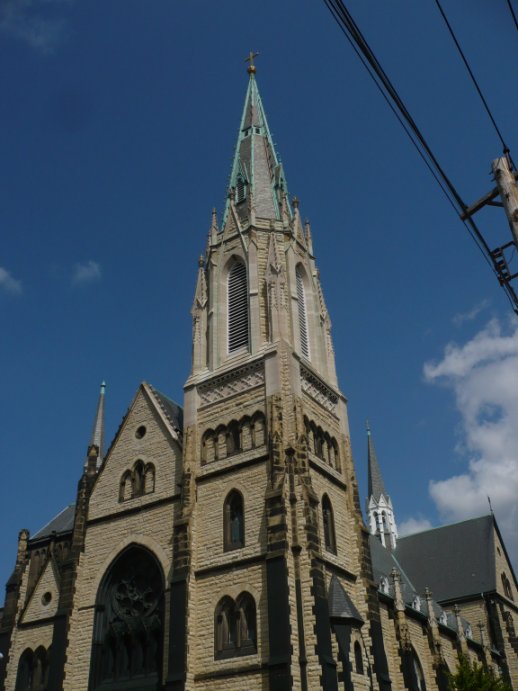
Saints Peter and Paul Catholic Church is located at 1919 South 7th Street, St. Louis, Missouri, in the Soulard neighborhood.
Saints Peter and Paul Parish was founded in June 1849 by Father Simon Sigrist. It was created to serve the Germans of the first ward of St. Louis. The first church was made of wood and was located on the site of the sanctuary of the current church, but it faced Allen Avenue. Construction began on the second church on 1 October 1851. This church, made of brick, faced 8th Street. It was dedicated on 23 October 1853.
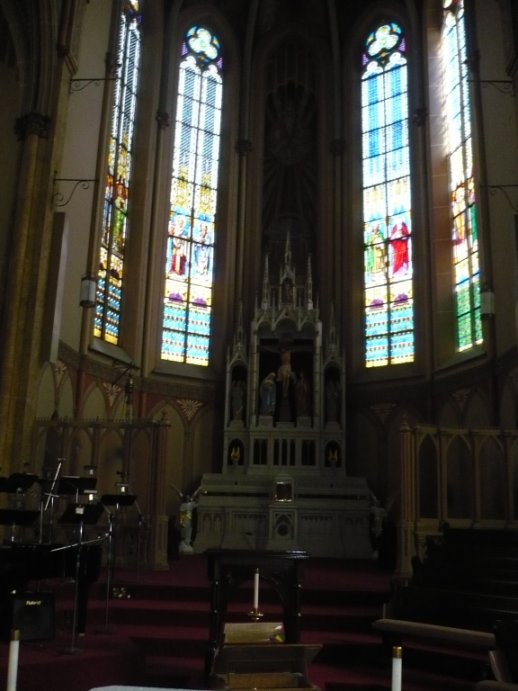
In the early 1870s, Father Franz Goller decided to build a new church with a German Gothic design. Franz Georg Himpler designed the new church, and the cornerstone was laid on 12 June 1872. The church was dedicated on 12 December 1875. The stained glass windows in the sanctuary and above the side altars were manufactured in Innsbruck, Austria. The church's tower was built in 1890, and in 1891, five bells were installed. The interior of the church was completed in 1895, when oil-painted Stations of the Cross from Beuron, Germany were installed.
My Schneider and Gersbacher ancestors attended Saints Peter and Paul Catholic Church. Family baptisms, marriages, and funerals took place there. My maternal grandmother Margaret Ann Schneider was baptized there, and she married her first husband Herbert William Foerstel there.
My cousin and I visited Saints Peter and Paul in August 2012. We were glad that we were able to see the church that was so much a part of our family history.
References
Sanctuary in Soulard: The First 150 Years of Saints Peter and Paul Parish. St. Louis, MO: Saints Peter and Paul Church, 1999.
Sts Peter and Paul Catholic Church: Our History
Wednesday, December 17, 2014
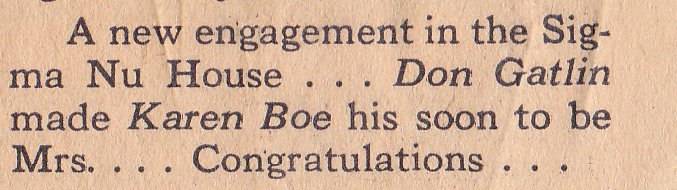
Wedding Wednesday: My Parents' Engagement Announced in Fraternity Publication
My father was a member of Sigma Nu Fraternity. His engagement to my mother was announced in a fraternity publication. Only the clipping was saved, so I do not have the exact source information.
Tuesday, December 16, 2014
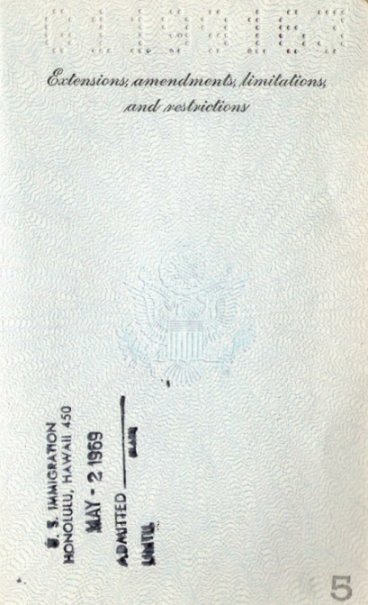
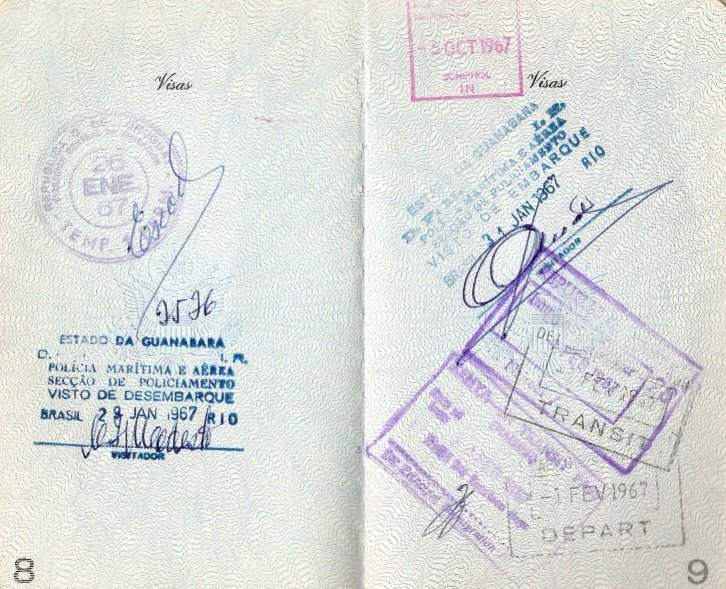
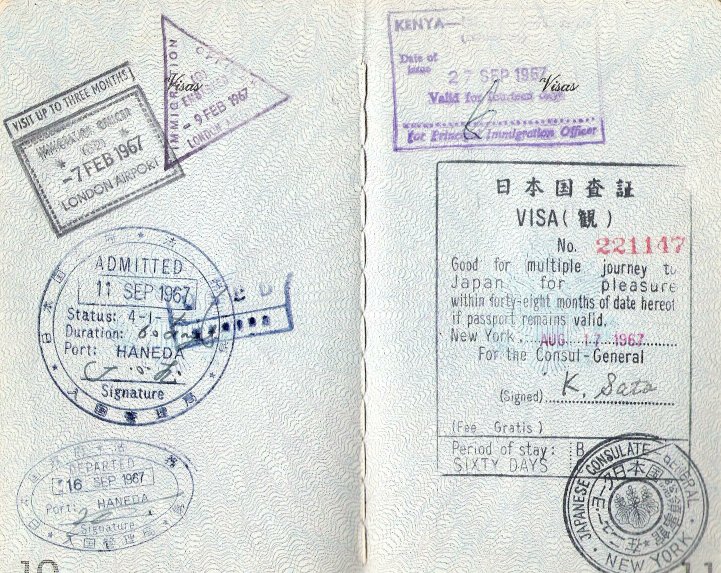
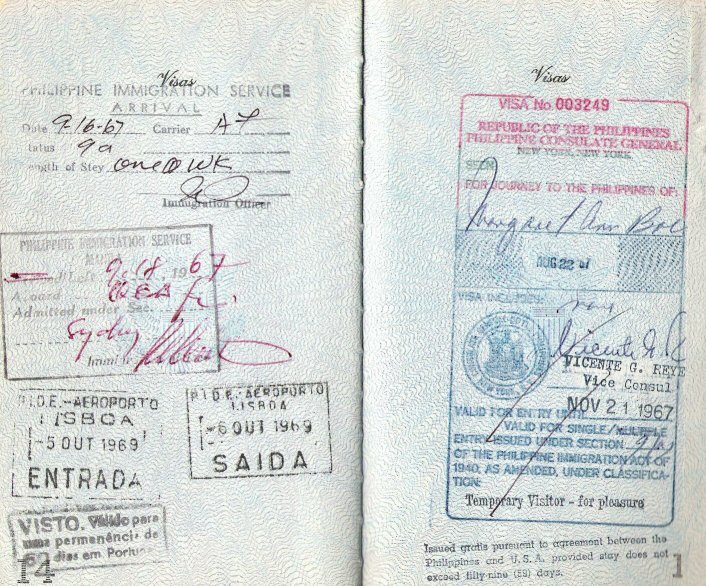
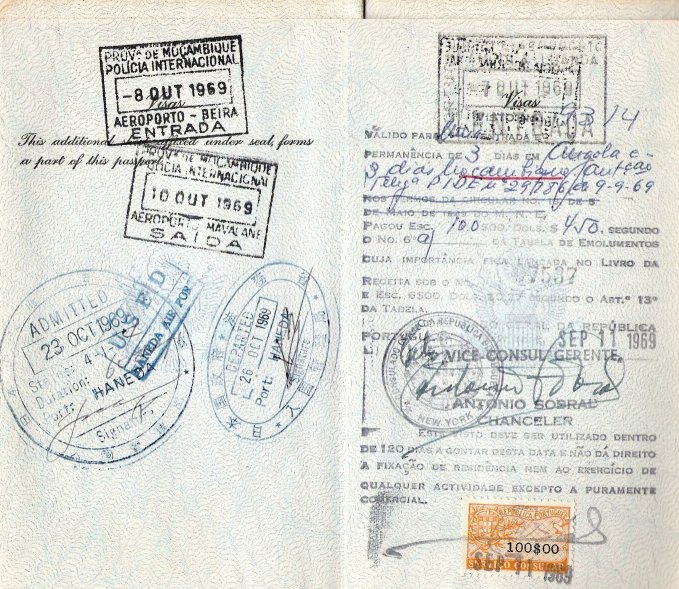
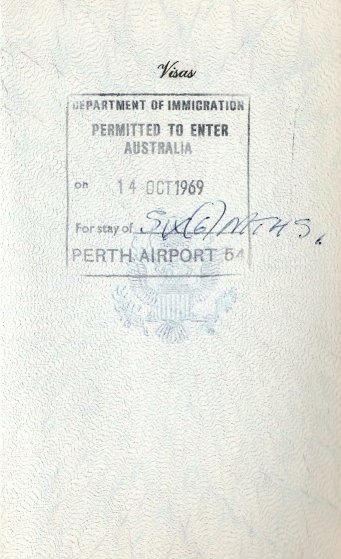
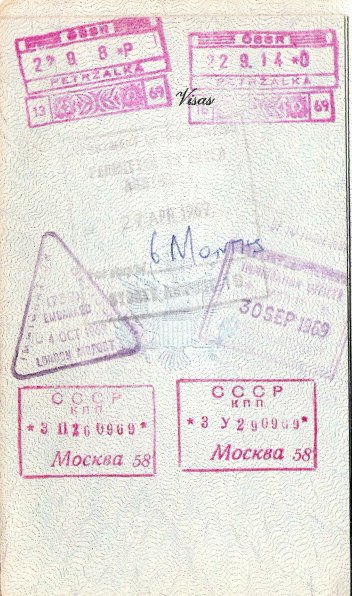
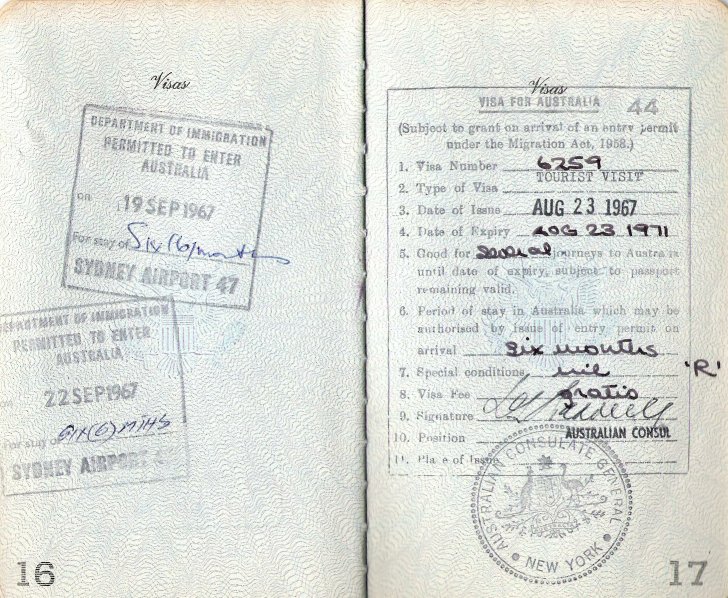
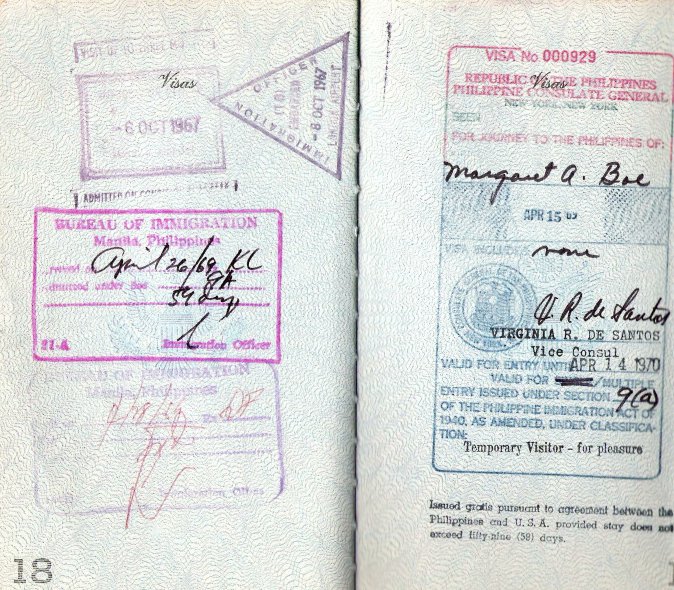
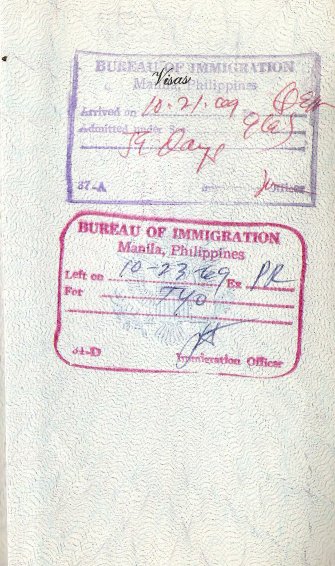
Travel Tuesday: Margaret Ann (Schneider) Boe's Passport
My maternal grandfather John Boe was Chairman of the Board and President of P. F.
Collier, and he frequently traveled. My grandmother Margaret Ann (Schneider) Boe often traveled with him. My aunt Joan has a copy of her passport, which was issued on 20 December 1966. I have scanned the passport. It is fascinating to see the places that my grandmother visited. She and my grandfather traveled all over the world.
Monday, December 15, 2014
Military Monday: Battle of Nashville
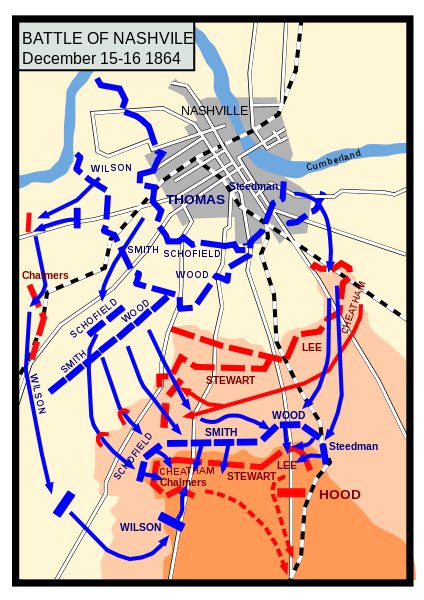
The Battle of Nashville took place on December 15-16, 1864. It was the last major battle of the Civil War. This year is the 150th anniversary of the battle.
After the Battle of Franklin, Lieutenant General John Bell Hood and his Confederate troops pursued Major General George Henry Thomas' Union troops to Nashville. They arrived on December 2. Thomas' troops attacked the Confederates on both the left and the right flanks. The attack on the right was intended to be a diversion. Troops from General James B. Steedman's Provisional Division advanced on the right flank at 8:00 AM on December 15. However, the diversion did not work; Hood realized that the main attack was coming from the left, and he moved some of Lieutenant General Stephen D. Lee's troops to the left flank.
At 10:00 AM the attack on the left flank began. Brigadier General James H. Wilson's cavalry corps and Major General Andrew Jackson Smith's "Detachment of the Army of the Tennessee" headed west and then south. Brigadier General Edward Hatch's cavalry brigade headed to the Belle Meade plantation, where they burned Brigadier General James R. Chalmers' supply wagons. Brigadier General Thomas J. Wood's IV Corps advanced on the Confederate line. The five Confederate redoubts on the left were attacked. The last one to fall was Confederate Redoubt No. 1.
On December 16, Major General Thomas once again utilized the strategy of creating a diversion. Two brigades from General Steedman's provisional division and two brigades from Samuel Beatty's division of Brigadier General Wood's IV Corps attacked Peach Orchard Hill. Hood sent reinforcements to Peach Hill; the Confederate line of defense at Compton's Hill (now Shy's Hill) became thinner.
At 3:30 PM, Brigadier General John McArthur told Smith and Thomas that unless he was given orders not to within the next five minutes, he would attack Compton's Hill and the Confederate line to its east. Shortly afterward, McArthur's three brigades began their attack. They captured 1,533 men, 85 officers (including Brigadier General Thomas Benton Smith), and eight cannons. Colonel William M. Shy was killed.
The Battle of Nashville Preservation Society's events in remembrance of the sesquicentennial of the Battle of Nashville began on Saturday, 13 December 2014, and continue on Monday, 15 December 2014 and Tuesday, 16 December 2014.
Map of the battle of Nashville, 1864. 18 March 2007. By Andrei nacu [GFDL (http://www.gnu.org/copyleft/fdl.html) or CC-BY-SA-3.0 (http://creativecommons.org/licenses/by-sa/3.0/)]. Available from Wikimedia Commons.
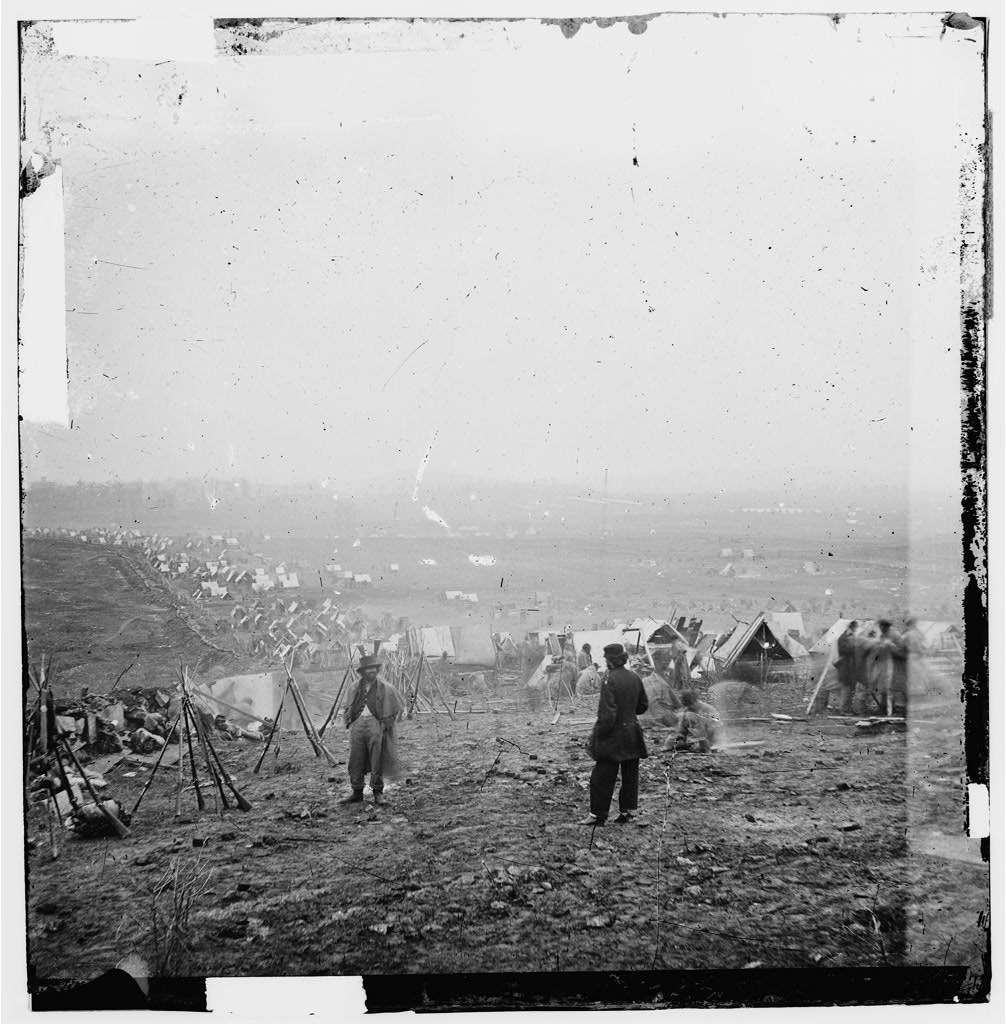
Nashville, Tenn. Federal outer line. Photo by Jacob F. Coonley, 16 December 1864. Library of Congress Prints and Photographs Division, Washington, D.C. Available from http://loc.gov/pictures/resource/cwpb.02087/.
References
Battle of Nashville
Battle of Nashville Preservation Society, Inc.
150th Anniversary (1864–2014) This Month in the Civil War: Battle of Nashville
Zimmerman, Mark. Guide to Civil War Nashville. Nashville, TN: Battle of Nashville Preservation Society, 2004.
After the Battle of Franklin, Lieutenant General John Bell Hood and his Confederate troops pursued Major General George Henry Thomas' Union troops to Nashville. They arrived on December 2. Thomas' troops attacked the Confederates on both the left and the right flanks. The attack on the right was intended to be a diversion. Troops from General James B. Steedman's Provisional Division advanced on the right flank at 8:00 AM on December 15. However, the diversion did not work; Hood realized that the main attack was coming from the left, and he moved some of Lieutenant General Stephen D. Lee's troops to the left flank.
At 10:00 AM the attack on the left flank began. Brigadier General James H. Wilson's cavalry corps and Major General Andrew Jackson Smith's "Detachment of the Army of the Tennessee" headed west and then south. Brigadier General Edward Hatch's cavalry brigade headed to the Belle Meade plantation, where they burned Brigadier General James R. Chalmers' supply wagons. Brigadier General Thomas J. Wood's IV Corps advanced on the Confederate line. The five Confederate redoubts on the left were attacked. The last one to fall was Confederate Redoubt No. 1.
On December 16, Major General Thomas once again utilized the strategy of creating a diversion. Two brigades from General Steedman's provisional division and two brigades from Samuel Beatty's division of Brigadier General Wood's IV Corps attacked Peach Orchard Hill. Hood sent reinforcements to Peach Hill; the Confederate line of defense at Compton's Hill (now Shy's Hill) became thinner.
At 3:30 PM, Brigadier General John McArthur told Smith and Thomas that unless he was given orders not to within the next five minutes, he would attack Compton's Hill and the Confederate line to its east. Shortly afterward, McArthur's three brigades began their attack. They captured 1,533 men, 85 officers (including Brigadier General Thomas Benton Smith), and eight cannons. Colonel William M. Shy was killed.
The Battle of Nashville Preservation Society's events in remembrance of the sesquicentennial of the Battle of Nashville began on Saturday, 13 December 2014, and continue on Monday, 15 December 2014 and Tuesday, 16 December 2014.
Map of the battle of Nashville, 1864. 18 March 2007. By Andrei nacu [GFDL (http://www.gnu.org/copyleft/fdl.html) or CC-BY-SA-3.0 (http://creativecommons.org/licenses/by-sa/3.0/)]. Available from Wikimedia Commons.
Nashville, Tenn. Federal outer line. Photo by Jacob F. Coonley, 16 December 1864. Library of Congress Prints and Photographs Division, Washington, D.C. Available from http://loc.gov/pictures/resource/cwpb.02087/.
References
Battle of Nashville
Battle of Nashville Preservation Society, Inc.
150th Anniversary (1864–2014) This Month in the Civil War: Battle of Nashville
Zimmerman, Mark. Guide to Civil War Nashville. Nashville, TN: Battle of Nashville Preservation Society, 2004.
Subscribe to:
Posts (Atom)